

Which Social Listening Tool Integrates Well with CRM Systems?
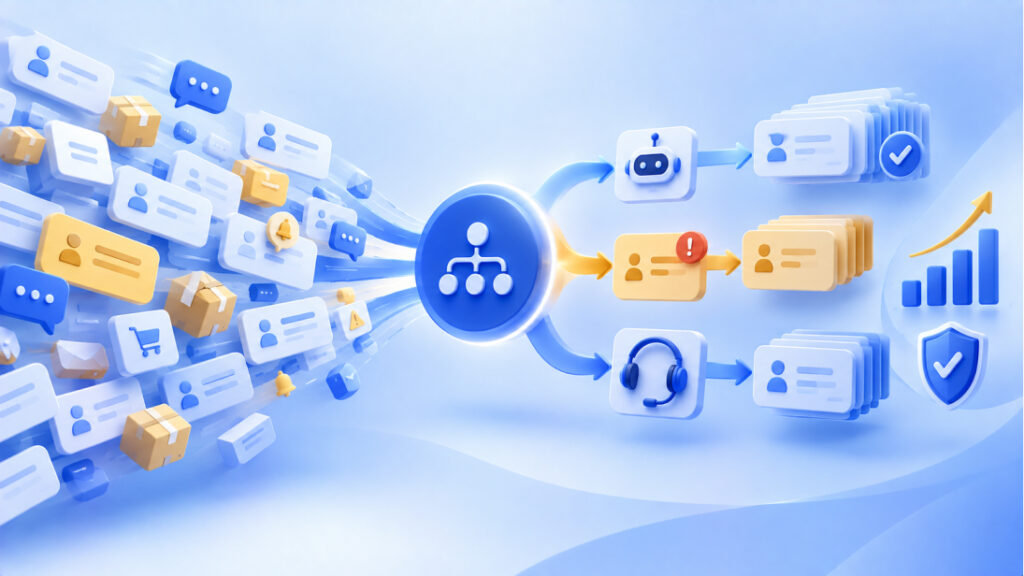
A telecom brand’s social listening tool catches a Twitter thread – 87 retweets, a billing complaint, building fast. The social team flags it. CX responds on Twitter. The customer gets a DM, then gets transferred to support. The agent opens the CRM: no social history, no thread, no note from the social team. The agent asks the customer to describe the issue from scratch.
The customer has now explained the same problem publicly, in a DM, and on a call.
They escalate.
Both tools worked. The gap between them was the problem. That gap – the distance between what social listening knows and what the CRM shows – is exactly what social listening CRM integration is supposed to close. The question is which tools actually close it versus which ones check the box.
- Social listening CRM integration is the highest-ROI integration in the marketing technology stack when done correctly. It enriches every customer interaction with the context of what that customer is saying publicly – before the agent, sales rep, or marketer engages them.
- ROI tracking through CRM data integration in social analytics programmes grew to 24.7% in 2025, the single largest advanced measurement approach in the category. The value is established. The challenge is selecting a tool that delivers it operationally, not just technically.
- Four integration depth levels determine whether a social listening software integration is genuinely useful: Level 1 is manual data export; Level 2 is a one-way mention push into CRM fields; Level 3 is bidirectional sync with CRM task creation; Level 4 is a native unified platform where listening, ticketing, and CRM context share the same data architecture.
- The tools with the deepest native CRM integration: Sprinklr and Brandwatch for enterprise Salesforce depth; HubSpot for native social-plus-CRM in one platform; Zoho Social for Zoho CRM users; and Konnect Insights for the unified architecture that connects social listening, omnichannel ticketing, and CRM intelligence without a separate connector layer.
- The failure modes that consistently produce a checkbox without value: social data mapped to CRM fields agents never open; one-way sync that enriches the record but not the workflow; batch latency that makes social intelligence stale by the time it arrives.
- Konnect Insights gives agents social mention history, support ticket context, and account data in one view – before every interaction – without requiring three tools connected by two integrations to produce it.
Why social listening and CRM integration creates genuine operational value?
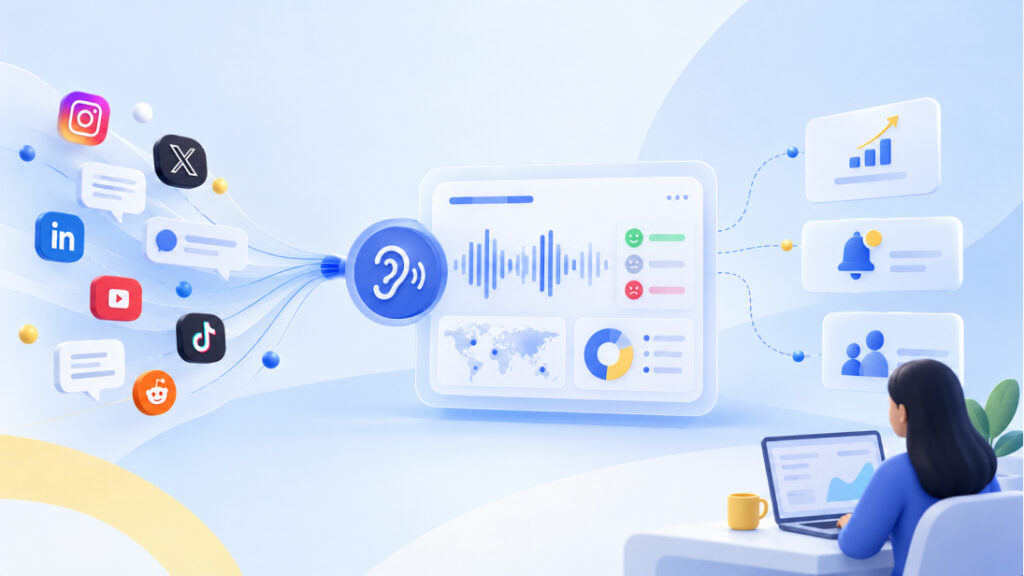
Social listening and CRM systems each provide only part of the customer picture when they operate separately. Connecting them turns public conversations, sentiment, purchase history, account value, and support activity into a shared context that teams can use to make faster and better-informed decisions.
What the integration enables that neither tool can do alone
A social listening tool without CRM context knows what a customer is saying publicly. It does not know whether that customer is a key account, a renewal-risk, or someone whose complaint is about to escalate into a public thread with 200 replies. The listening data has no operational weight without the CRM context to frame it.
A CRM without social listening data knows purchase history, support tickets, and account value. It does not know that the customer posted a frustrated thread last Tuesday, that the thread accumulated engagement, and that the sentiment trend for that account has been declining for three weeks. The CRM record is commercially accurate and contextually incomplete.
Best social listening CRM integration is the point where both pictures merge. The sales rep seeing an account with declining social sentiment alongside a renewal date makes a different decision than the one who sees only the renewal date.
The unified customer profile – social context meeting purchase and support history
The unified customer profile is not a concept. It is a specific technical outcome: a CRM contact record that includes social mention history, current sentiment classification, and complaint status alongside purchase history, open tickets, and account value.
That record changes agent behaviour because it changes what agents know. The support agent who can see that a customer is a public detractor before picking up the call approaches the interaction differently. The account manager who sees a 30-day negative sentiment trend before a renewal conversation prepares differently.
Context changes outcomes. The integration is the mechanism that delivers the context.
The ROI case for connecting social listening to CRM data
ROI tracking through CRM data integration grew to 24.7% of social listening programmes in 2025 – the most common advanced measurement approach in the category. Brands connecting social listening data to CRM records report identifying at-risk accounts 3 to 6 weeks earlier than those relying on support ticket volume alone.
The ROI case is not difficult to build. Earlier churn identification converts to saved revenue. Enriched agent context converts to higher first-contact resolution. Social sentiment as a lead signal converts to a better-qualified pipeline. The data flows that make these outcomes possible all originate from one connection: social listening feeding the CRM.
The four integration depth levels – how to evaluate beyond the checkbox
A CRM integration checkbox tells you very little about how connected the two systems actually are. The operational value depends on the depth of that connection, from basic manual data movement to bidirectional workflows and fully unified data architecture.
Level 1 – Data export and manual import
The listening tool exports a CSV or report. Someone downloads it. Someone else imports it into the CRM, or pastes the relevant data into contact notes manually.
This is not an integration. It is a workaround that creates the appearance of connected data while maintaining all the operational friction of disconnected systems. It also degrades immediately – within weeks, the manual process stops being followed and the CRM reverts to showing nothing.
Level 2 – One-way mention push into CRM fields
The listening tool pushes social mention data into a designated CRM field or object on a set schedule. The CRM record now contains social data. The agent, theoretically, can see it.
This is the level most mid-market social listening tools deliver when they claim CRM integration. It is also the level that most commonly produces the custom-field-nobody-checks problem. The data arrives. It lands in a field that was not part of the original CRM configuration. Agents are not trained on it. It accumulates unread.
Level 2 integration satisfies a procurement checkbox. It rarely changes agent behaviour.
Level 3 – Bidirectional sync with CRM task creation and alert routing
At Level 3, social data enriches the CRM record in near real time, and CRM events can trigger social listening actions. A deal moving to negotiation stage triggers a listening alert on the prospect’s brand mentions. A high-severity social complaint automatically creates a CRM task for the account owner. Sentiment decline triggers a churn risk flag on the account record.
This level requires deliberate configuration – threshold settings, routing logic, field mapping decisions – but it produces genuine operational change. Agents see enriched records. CS teams receive alerts. Sales reps have pipeline context they did not have before.
Level 3 is where social CRM integration begins to deliver on the ROI case.
Level 4 – Native unified platform with shared data architecture
Level 4 eliminates the integration problem by building social listening, ticketing, and CRM context into the same data architecture. There is no connector to maintain, no latency introduced by a sync cycle, no field mapping decision that places social data in an object nobody opens.
The listening data and the CRM data exist in the same system. The agent workflow surfaces both because they are the same record, not because an integration is passing data between two separate records.
Why most buyers discover the depth level only after they have committed
Because vendor feature pages describe capabilities, not operational outcomes. “Native Salesforce integration” can describe Level 2 or Level 3 depending on the configuration. “Bidirectional sync” can describe a daily batch process or a sub-minute real-time flow.
The only reliable way to determine depth level before committing is to ask specific questions – covered below – and to request a live integration demo in a real CRM environment, not a mock-up.
The data flows that must be present for the integration to change behaviour
Integration depth matters only if the underlying data flows actually influence what teams see and do. The most valuable connections move social and CRM signals in both directions, turning customer activity into usable context, targeted monitoring, accountable tasks, and stronger prioritisation.
Social mention enrichment of the customer CRM record
The baseline data flow: when a contact in the CRM posts a social mention – positive, negative, or neutral – that mention and its sentiment classification should enrich the contact’s CRM record. Not in a separate object. On the standard record view the agent uses for every interaction.
If this flow is not present or is not surfaced in the standard workflow, the integration is not changing agent behaviour.
CRM-triggered social monitoring – when a deal stage changes what you listen for
At Level 3 and above, CRM events should be able to trigger changes in the listening layer. A prospect moving into the final proposal stage triggers an alert on their company’s brand mentions. A customer entering the renewal quarter triggers a sentiment monitoring flag. The CRM context makes the listening more targeted; the listening data makes the CRM context more complete.
Alert-to-CRM-task flow – turning a listening alert into an accountable CRM action
A high-severity social complaint should not sit in a listening dashboard waiting for someone to notice it. It should create a CRM task – assigned to the right owner, tagged with the complaint context, trackable to resolution. Without this flow, the listening alert produces awareness without accountability.
Bidirectional sentiment – social listening data informing lead score and account health
Social sentiment is a signal. A prospect who is publicly critical of a competitor’s product is a warmer lead than one who posts nothing. A customer whose social mentions have shifted from positive to neutral over 60 days is a churn risk regardless of what their support ticket history shows.
When sentiment data from social listening informs lead scoring models and account health scores in the CRM, the CRM becomes more accurate. That accuracy drives better prioritisation and better outcomes.
Major Social listening platforms – CRM integration assessment
CRM integration varies widely across social listening platform, even when vendors appear to offer similar capabilities on paper. Looking at integration depth, data direction, native connectors, workflow automation, and ecosystem limitations provides a clearer picture of how each platform performs in practice.
Konnect Insights – Unified CXM architecture with native CRM context layer
Konnect Insights is built as a unified platform where social listening, omnichannel ticketing, and AI+ intelligence share the same data architecture. CRM integration connects this unified data layer – not just mention data – to the customer record.
What this means in practice: the Salesforce contact record enriched by Konnect Insights shows social mention history with sentiment classification, omnichannel ticket history across email, WhatsApp, chat, and social DMs, Konnect AI+ sentiment trend, and review platform data – not just the most recent tweet. The integration scope covers the full CXM picture, not just the listening layer.
Sprinklr – Deepest Salesforce and enterprise CRM integration
Sprinklr’s Salesforce integration is listed on the AppExchange as a certified connector and supports bidirectional data flows, real-time mention enrichment at the contact and account level, and CRM task creation from listening alerts. For enterprise organisations running Salesforce as their CRM backbone, Sprinklr delivers Level 3 integration depth with solid field mapping options.
The constraint is cost. Sprinklr’s enterprise positioning puts the integration capability at a price point that mid-market brands typically cannot justify when social listening and CRM connection is the primary use case rather than a feature of a broader enterprise platform investment.
Brandwatch – Enterprise integration with configurable data flows
Brandwatch offers Salesforce and Microsoft Dynamics integration with configurable data flows and API-level depth. Field mapping flexibility is good. Bidirectional capability exists at the enterprise tier. The integration requires more configuration effort than Sprinklr’s certified AppExchange connector but offers more flexibility for organisations with non-standard CRM structures.
Strongest fit: enterprise teams with Salesforce or Dynamics, a dedicated CRM administrator, and the technical resource to configure and maintain an API-level integration.
Hootsuite with Talkwalker – Salesforce and HubSpot at Advanced tier
Hootsuite’s Talkwalker acquisition added listening depth to a platform historically stronger on publishing and engagement. Salesforce and HubSpot integration is available at the Advanced tier, with mention data flowing into CRM records and some alert routing capability.
The integration depth sits at Level 2 to Level 3 depending on configuration. Field mapping options are reasonable. Real-time sync is available but requires the Advanced tier – which substantially changes the total cost of ownership calculation for teams that purchased Hootsuite for publishing and want to add listening-to-CRM capability.
HubSpot – Native social listening with built-in CRM sync
HubSpot’s native social listening connects directly to HubSpot CRM contact records without a separate integration layer. Social mention history from monitored channels appears on the contact timeline alongside email, call, and ticket history. For teams already on HubSpot CRM, this is the most frictionless best social listening CRM integration path available.
The limitation is listening depth. HubSpot’s social monitoring covers the channels a brand manages directly – it does not provide the broad keyword-based listening across unmonitored platforms that dedicated social listening tools offer. For brands that need to track brand mentions beyond their own social presence, HubSpot’s listening is insufficient as a standalone solution.
Zoho Social – Native Zoho CRM integration with ecosystem advantage
Zoho Social integrates natively with Zoho CRM within the Zoho One ecosystem, pushing social mention data and engagement history to contact and lead records. For organisations running Zoho as their primary stack, this is the cleanest integration path – no third-party connector, no API maintenance, no field mapping workaround.
Outside the Zoho ecosystem, Zoho Social’s CRM integration options thin out quickly. Salesforce and HubSpot connections exist via Zapier rather than native connectors – placing them at Level 2 at best.
Brand24 – HubSpot and Salesforce via Zapier and webhook
Brand24 is a capable mid-market listening tool that connects to HubSpot and Salesforce through Zapier or webhook configurations rather than native integrations. The connection works. It is one-directional, subject to Zapier’s reliability and rate limits, and produces Level 2 depth.
For teams that need social listening software integration at a mid-market price point and can accept Level 2 depth, Brand24 is functional. For teams that need the integration to change agent behaviour in the CRM workflow, it is not sufficient.
Mention – Third-party integration with limited native CRM depth
Mention’s CRM integration follows a similar pattern to Brand24 – Zapier and webhook connections to Salesforce and HubSpot, one-directional, Level 2 depth. The tool’s listening capability is solid for brand monitoring. The CRM connection is thin.
CRM-specific integration guide – what each platform supports
Salesforce – Which social listening tools integrate natively and at what depth
Native AppExchange-certified integrations: Sprinklr (Level 3), Salesforce Social Studio deprecated and replaced by Marketing Cloud Social (native, Level 3), Brandwatch (Level 3 via API with configuration).
Mid-market options via connector: Hootsuite Advanced tier (Level 2 to 3), Brand24 via Zapier (Level 2), Mention via Zapier (Level 2).
Unified platform option: Konnect Insights (Level 3 to 4, covering full CXM data scope not limited to social mentions).
HubSpot – The native social listening layer and third-party options
Native: HubSpot Social (built-in, Level 3 within the HubSpot ecosystem, limited listening breadth).
Third-party: Hootsuite Advanced (Level 2 to 3), Sprinklr (Level 3 at enterprise cost), Konnect Insights (Level 3 to 4).
Zoho CRM – The Zoho Social advantage and external tool options
Native: Zoho Social (Level 3 within Zoho ecosystem). External tools including Sprinklr, Brandwatch, and Konnect Insights connect via API. Zoho’s Webhook support enables Level 2 connections from most mid-market listening tools.
Microsoft Dynamics – The enterprise integration landscape
Native: Microsoft’s own Customer Insights module (Level 3 to 4 within the Dynamics ecosystem). External: Brandwatch and Sprinklr via Power Platform connectors (Level 3 with IT configuration). Konnect Insights connects via API. Mid-market tools typically connect via Power Automate rather than native integration – Level 2 depth.
The operational use cases a genuine integration enables
The value of social listening–CRM integration becomes clearest in day-to-day workflows, not feature lists. When social signals appear at the right point in sales, support, and account-management processes, teams can act on customer context earlier rather than discovering it after a problem has escalated.
Agent context enrichment – Social complaint history in the support workflow
The support agent’s CRM view shows: the customer’s last three social mentions, the sentiment classification on each, and whether any are currently open as tickets. The agent does not ask the customer to re-explain what they already posted publicly. First-contact resolution rates improve. Escalation rates drop.
Lead scoring and pipeline enrichment – Social sentiment as a sales signal
A prospect whose LinkedIn activity includes positive engagement with the brand’s content and no public criticism of competitors scores higher than a prospect with identical firmographic data and no social signal. Social listening data flowing into pipeline records gives sales teams a signal that purchase history alone cannot provide.
Churn prediction and proactive account management
Declining social sentiment from an existing customer – fewer positive mentions, more neutral or negative, engagement dropping – is a leading indicator that standard support metrics miss. When this sentiment data triggers a CRM task for the account manager 3 to 6 weeks before the customer’s behaviour becomes visible in ticket volume, proactive outreach becomes possible. Reactive damage control becomes less necessary.
Post-sale reputation monitoring with CRM-triggered alerts
A key account posting a negative mention triggers an alert to the account manager. Not three days later in a weekly listening report. Within the hour, as a CRM task with the original mention attached. That response window is the difference between a contained conversation and a public thread that accumulates engagement before the brand responds.
The integration failure modes that produce a checkbox without value
An integration can be technically functional and still deliver almost no operational value. Poor field mapping, invisible data, slow sync cycles, and excessive low-priority information are common failure points that turn a meaningful CRM connection into little more than a procurement checkbox.
Field mapping mismatches – Social data in CRM fields nobody checks
Social mention history synced to a custom Salesforce object that does not appear on the standard contact page layout. Sentiment data in a field agents were not trained to use. A related list that requires two clicks to access from the contact record. The data is there. The workflow does not surface.
Fix before committing: request a live demo on a real CRM instance. Ask the vendor to show you the contact record as an agent would see it during a support interaction. If they navigate away from the standard view to show the social data, that tells you exactly where the integration depth actually stops.
One-way sync without workflow surfacing – Enriched records agents never see
The CRM record gets richer. The agent workflow does not change. Training was not updated to show agents where the social data lives. The integration enriched the database and was invisible to the people it was supposed to help.
This failure mode is about implementation, not platform capability. It is also the most common cause of post-implementation disappointment. A proof-of-concept with one team, trained specifically on the integrated workflow, catches this before full deployment.
Batch sync latency – Intelligence that arrives stale
A social complaint posted at 9 AM that syncs to the CRM overnight is not real-time intelligence. It is an archive entry. For support teams handling inbound contacts the same day, stale social data is operationally equivalent to no social data.
Ask specifically: what is the sync frequency on the tier you are evaluating? Real-time and daily batch are both common answers. They produce entirely different operational outcomes.
Volume without context – All mentions pushed to CRM regardless of priority
A listening tool configured to push every brand mentioned to the CRM produces noise. Agents see hundreds of low-priority mentions alongside the one high-severity complaint that actually matters. The signal disappears into the volume. The integration that was supposed to prioritise attention reduces it.
Priority filtering – routing only high-severity or high-engagement mentions into CRM workflows – is not a default setting on most platforms. It requires deliberate configuration during implementation.
How to evaluate CRM integration depth before you commit?
CRM integration claims can look similar on vendor comparison pages while delivering very different results in practice. Before committing, buyers should test the connection itself, how data moves, where it appears, what workflows it enables, and which capabilities are actually included at the proposed pricing tier.
The five questions to ask every vendor about their CRM integration
- Is the integration native (built and maintained by your team) or via a third-party connector?
- Is it listed as a certified integration on the Salesforce AppExchange, HubSpot App Marketplace, or equivalent?
- What is the sync frequency on the tier I am evaluating – real-time, hourly, or daily batch?
- Does social data appear on the standard contact record layout, or in a separate object?
- Does the integration cover social listening data only, or also ticket history and sentiment trend data from other channels?
The integration demo checklist – what to request the vendor to demonstrate
Request a live demo in a real CRM environment, not a slide deck. Ask the vendor to: pull up a contact record as an agent would see it; show where social mention history appears; demonstrate creating a CRM task from a listening alert; and show a bidirectional flow if claimed – a CRM event triggering a listening action.
If the demo requires navigating to a custom object or a separate dashboard to show social data, the integration is not surfaced in the standard agent workflow.
The proof-of-concept test – Validating integration depth before full deployment
Run the integration with one team, one CRM object, and one data type before committing to full deployment. Validate: data arrives in the correct field at the expected frequency; the field is visible on the standard record layout the team uses; the team can find and use the social data without additional navigation. Problems found in the proof-of-concept are fixable. Problems found after full deployment are significantly more expensive.
Tier and pricing questions – At which plan level does the CRM integration become available
Some platforms list CRM integration as a feature and gate real-time sync, bidirectional flow, or social data depth behind enterprise tier pricing not discussed in initial sales conversations. Get the specific tier requirement for every integration capability in writing before signing.
How Konnect Insights powers social listening and CRM integration as a unified platform?
Most social CRM integration projects connect two systems that were built separately. Konnect Insights approaches this differently – social listening, omnichannel ticketing, and Konnect AI+ sentiment intelligence share the same data model before CRM integration is applied.
The operational outcome: the CRM contact record enriched by Konnect Insights carries social mention history, ticket history across every channel the customer has used, Konnect AI+ sentiment trend, and review platform data – the full CXM picture, not just the Twitter mentions. There is no separate integration to maintain between the listening layer and the ticketing layer because they are the same layer.
For a support agent handling an inbound contact, the CRM view shows everything: the tweet from last Tuesday, the WhatsApp ticket opened on Thursday, the 3-star app store review from last month, and the current sentiment classification. No separate tab. No custom object navigation. One record.
For teams that have experienced the gap described at the start of this guide – where social listening and CRM operate in silos and the agent is always the last to know – Konnect Insights provides the architecture that closes that gap without requiring three tools connected by two integrations to approximate what a unified platform delivers natively.
Conclusion
The telecom brand’s support agent did not fail the customer. The architecture failed the support agent. Both tools did exactly what they were built to do. The problem was the gap between them – the gap that the agent had to bridge manually, on a live call, with a customer who had already run out of patience.
The social listening tool CRM integration that matters is not the one that earns a checkmark in a procurement spreadsheet. It is the one that gives the agent the information they need before the call starts – so the first thing they say is not “can you describe the issue for me?”
That requires Level 3 integration depth at minimum. It requires field mapping that surfaces data in the standard workflow. It requires sync latency that makes the data current, not archival. And it requires a scope that covers the full customer feedback picture, not just the social channel the brand happens to monitor most closely.
Ask the right questions. Run the proof-of-concept. Look at the contact record on a real CRM instance. The integration depth becomes obvious in thirty seconds of actual use.
Frequently Asked Questions
Social listening CRM integration connects the platform that monitors brand mentions and social sentiment with the CRM that manages customer relationships and agent workflows. It matters because it enriches the customer record with public feedback context - giving agents, sales reps, and account managers the full picture before every interaction, rather than just purchase history and support tickets.
Sprinklr and Brandwatch offer the deepest native Salesforce integrations, both certified on the AppExchange with bidirectional sync capability. Hootsuite's Advanced tier supports Salesforce integration at Level 2 to 3. Konnect Insights integrates Salesforce with the full CXM data layer - social mention history, omnichannel ticket history, and AI+ sentiment trend - not just social mentions.
A native integration is built and maintained by the vendor directly to the CRM's data model - typically faster, more reliable, and capable of bidirectional data flow. A Zapier connector sits between the two platforms and passes data on a trigger - usually one-directional, subject to Zapier's rate limits and reliability, and less configurable for complex field mapping. Native integrations deliver Level 3 depth; Zapier connectors typically deliver Level 2.
Request a live demo in a real CRM instance, not a slide deck. Ask the vendor to show you the standard contact record as an agent would see it and demonstrate where social data appears. Ask for the sync frequency, the data flow direction, and the specific CRM objects and fields the integration writes to. Run a proof-of-concept with one team before full deployment to validate the integration works as described in production.
Field mapping mismatches - social data syncing to CRM fields or objects that agents never open in their standard workflow. The data is technically present in the CRM. It is not visible in the moment of engagement. This failure mode is avoidable with a proof-of-concept that validates data visibility in the standard agent workflow before full deployment.
Author