Two companies. Same product. Same price point. Same market.
One retains customers for years. Referrals come in without a campaign. Support costs stay flat despite growing volume. The other watches customers leave after the second interaction, spends heavily on acquisition to replace them, and wonders why the unit economics never improve.
The product isn’t the difference. Neither is the price.The experience is.
Most businesses treat customer experience management as a cost centre – something you run to keep complaint volume down and reviews from turning ugly. That framing misses the point entirely. CXM done well is one of the most direct levers a business has on revenue, retention, and reputation. It doesn’t just make customers happier. It changes the financial structure of how a brand grows.
This guide covers the concrete benefits – with numbers – and what they look like when they actually connect in practice.
TL;DR:
CXM isn’t a satisfaction initiative. It’s a retention and growth strategy. The benefits are measurable and commercial: higher retention, lower cost-to-serve, faster crisis detection, stronger brand reputation, and better cross-team alignment. Companies that lead in CX generate up to 5.7 times more revenue than those that don’t. The brands getting this right treat CXM as infrastructure, not overhead.
Why CXM is a business decision, not just a CX one
Three numbers before anything else.
Companies that lead in customer experience generate up to 5.7 times more revenue than CX laggards. 84% of companies that improve CX report a direct increase in revenue. 70% of customers abandon a brand after just two bad experiences.
Read those together and the picture is clear. CXM isn’t about making support feel warmer. It’s about retention, and retention is where most of the revenue in a mature business actually lives. Acquiring a new customer costs five to seven times more than keeping an existing one. Every point of improvement in retention compounds faster than almost any acquisition investment can match.
The benefits below reflect that. They’re not soft. They’re financial.
The core benefits of customer experience management
1. Higher customer retention
Retention is where CXM pays most visibly.
Customers who have consistently good experiences don’t just stay longer – they’re significantly less price-sensitive when competitors enter the market. A customer who has never had to repeat themselves, never been left waiting on a complaint, and always received a contextual response is not a customer who switches because a competitor drops their price by 10%.
Consider a telecom brand managing thousands of daily contacts across social, chat, and phone. Without CXM, a customer who complains on Twitter and then calls support gets two disconnected interactions. The call agent starts from zero. The customer, already frustrated, now has to explain the problem again.
Two contacts, zero resolution, and a customer who posts publicly that the company “doesn’t care.” With CXM, the agent sees the tweet before picking up the call. The call opens with context. The problem gets resolved in one interaction. That customer’s retention probability doesn’t just hold – it increases.
2. Increased revenue from existing customers
Increased revenue from existing customers most repeat purchases are not driven by discounts. They’re driven by trust in the experience.
Customers who rate an experience five out of five are more than twice as likely to make a repeat purchase as those who rate it three out of five [Qualtrics XM Institute, 2024]. Brands in the top quartile for CX generate revenue growth 5.7 times higher than competitors in the bottom quartile.
The mechanism isn’t complicated. A customer who trusts the experience accepts upsell and cross-sell offers at higher rates. They buy adjacent products. They don’t need discounts to stay. An FMCG brand that runs proactive CXM – catching and resolving product complaints before they go public, personalising re-engagement based on purchase history – builds a customer base that spends more per transaction and transacts more often. That’s revenue that doesn’t show up in CX reports but absolutely shows up in P&L.
3. Lower cost to serve
Bad experiences are expensive in ways that don’t always get accounted for directly.
A complaint that goes unacknowledged on social media generates follow-up contacts. That customer calls. Emails. Sometimes escalates to a regulatory body. What could have been one ticket becomes four. The cost multiplies before anyone notices the pattern.
CXM reduces this through two mechanisms. First, proactive listening catches problems early – before they generate the volume of secondary contacts that a reactive support model inevitably creates. Second, agent efficiency improves when every ticket arrives with full customer context attached. Handle time drops. First contact resolution rises. Fewer tickets escalate because agents have the information to resolve rather than deflect.
A retail bank that implemented unified CXM across social, email, and call channels reduced repeat contact rate by 23% in the first six months – not by hiring more agents, but by giving existing agents the context they needed to actually close issues the first time.
4. Faster issue detection and crisis prevention
This benefit is the one most brands underestimate until they need it.
A product quality problem that surfaces on social media at 9am can be trending by noon if it goes unaddressed. A payment outage that generates complaint spikes on Twitter and Reddit can become a media story before the internal operations team has been briefed. A mis-sold policy that starts appearing in complaint language across multiple channels can become a regulatory referral before anyone spots the pattern.
CXM with real-time social listening and sentiment spike detection changes the response timeline. Instead of discovering the crisis at noon when it’s already trending, the team gets an alert at 9:05. The difference in that response window determines whether the story gets managed or managed badly.
Speed of detection isn’t a CX vanity metric. It’s the variable that separates contained incidents from reputational events.
5. Stronger brand reputation
Reputation compounds. In both directions.
Brands that respond visibly and well to public complaints build a reputation for accountability. Customers who see a brand acknowledge a problem and fix it publicly are more likely to trust the brand with future purchases – even if they weren’t personally involved. That visible accountability does work that no amount of positive advertising can replicate.
The reverse is equally true. Brands that leave reviews unanswered, let social complaints age, or respond with generic copy that clearly wasn’t written for the specific situation signal to every potential customer reading: we don’t take this seriously.
A hotel group that implemented centralized CXM across 40 properties saw average Google review scores improve by 0.4 points over 12 months – not because the properties improved operationally, but because they started responding consistently and specifically to every review, positive and negative. That 0.4-point improvement in star ratings directly correlates with a measurable increase in direct booking rate.
6. Better cross-team alignment
This benefit is the least visible from the outside and often the most impactful from the inside.
When CXM data is shared across marketing, support, product, and sales, teams stop optimising in isolation. Marketing sees which campaign promises are generating the most complaint volume. Product sees which features generate the most friction post-launch. Sales sees which customer segments have the highest escalation rates. Support sees the full customer journey across email, social media, chat, reviews, and calls instead of working with disconnected conversations.
That shared picture changes how teams make decisions. A product team that can see complaint categorisation data from support – in real time, by feature – ships differently than one that waits for quarterly retrospectives.
7. Higher agent productivity and lower handle time
Agents who have full customer context before they respond handle interactions faster. PERIOD.
The cognitive load of reading a customer’s history, understanding what’s already been tried, and calibrating the response accordingly – that’s work that happens whether the system supports it or not. Without CXM, agents do it manually, pulling from memory or asking the customer to repeat themselves. With CXM, the ticket arrives with the context already assembled.
Handle time drops. First contact resolution improves. Agent satisfaction goes up because the job becomes about solving problems rather than information gathering. That last point matters – agent turnover is expensive, and agents who have the tools to do their jobs well stay longer.
8. A measurable competitive advantage
In markets where product differentiation is narrowing, experience is becoming the primary differentiator.
Customers in B2C and B2B markets increasingly report that experience quality is as important as product quality in their purchasing decisions. In categories where switching costs are low – financial services, FMCG, telecoms, retail – a better experience is often the only sustainable moat.
The brands investing in CXM now are building a competitive position that’s harder to replicate than a price cut or a product feature. A competitor can match your pricing. They can copy your features. They can’t instantly replicate a connected data architecture and the organisational habits that make consistent CX possible at scale.
What these benefits look like in practice
Scenario 1: airline under disruption pressure
An airline gets hit with a wave of complaints after a major delay.
Without CXM:
The support inbox fills up, social goes unanswered for hours, a travel blogger screenshots an ignored tweet and posts it, the story runs on three travel sites by afternoon.
With CXM:
The sentiment spike triggers an alert in the platform at the first sign of volume building. A pre-written disruption response goes out on social within minutes – specific to the delay, not a generic “we’re sorry for any inconvenience.” Tickets are auto-routed to the dedicated disruption team rather than joining a general queue. VIP and frequent flyer customers with open complaints get escalated automatically. Agents handling calls already see the flight details and delay reason in the ticket before saying hello.
Forty-eight hours later, sentiment is back to baseline. The story never ran. Not because the delay didn’t happen – it did. Because the response was fast enough and specific enough to prevent the gap between “incident” and “reputational event” from opening.
That’s not one benefit. It’s five: faster detection, lower reputational damage, better agent routing, VIP retention, and reduced cost from unmanaged escalation cascading into regulatory complaint.
This is why many modern airlines are investing in dedicated customer experience management solutions for the aviation industry to manage disruptions, protect brand reputation, and improve response coordination at scale.
Scenario 2: FMCG brand and a product quality signal
A food brand launches a new SKU. Three days in, complaint language about packaging inconsistency starts appearing across Instagram, a consumer forum, and Amazon reviews – not in huge volume, but with a specific pattern: the same batch code appearing in multiple complaints.
Without CXM:
The social team sees the Instagram comments and escalates manually, probably on day five or six. Amazon reviews get noticed in the next weekly report. The forum thread isn’t on anyone’s radar. Quality control isn’t looped in until someone calls it out in a meeting.
With CXM:
The platform detects the complaint pattern – same batch code, same complaint type, volume building across three unconnected channels – and surfaces it as a priority signal on day two. Quality control gets the alert. The batch is quarantined before distribution widens. The social team responds with specifics rather than generics. The Amazon reviews get acknowledged with a resolution path.
The recall conversation never happens. The brand health dashboard dips briefly and recovers. The cost difference between “caught on day two” and “caught at the point of media coverage” is not a marginal one.
This is why leading FMCG brands are adopting customer experience management solutions for the FMCG industry to detect product issues early, monitor consumer sentiment in real time, and protect brand trust across digital channels.
Who benefits most from CXM
High-volume consumer brands
FMCG, retail, telecom, financial services – any brand where complaint volume is high, channels are fragmented, and the gap between detecting a problem and losing it to public escalation is measured in hours. The ROI on CXM in these environments is the most direct and the fastest to demonstrate.
Brands with significant social media presence
Social is where reputation is built and damaged in real time. Brands with active social presences – and especially those in consumer categories where customers default to public complaints before private support – need listening, ORM, and care workflows connected. Social without CXM behind it is a reputation liability dressed as a marketing channel.
Enterprises running multiple customer-facing teams
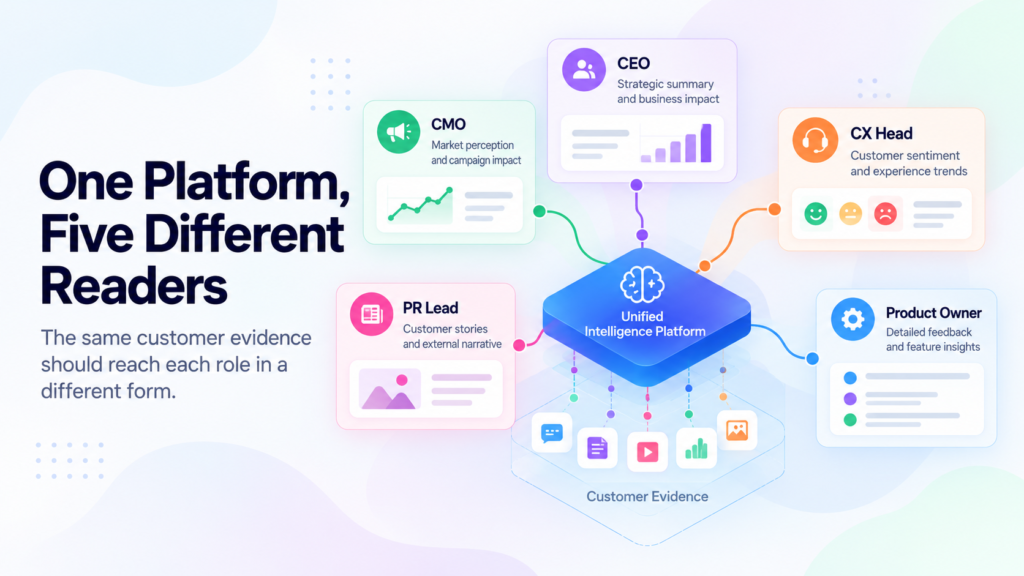
Marketing, support, sales, and product all touching customers independently creates the fragmentation problem. CXM is the connective layer that gives every team the same picture of every customer. The alignment benefit compounds with the size of the organisation – more teams, more channels, more places where context drops without a shared system.
Conclusion
The benefits of CXM aren’t soft. They show up in retention numbers, in support cost per ticket, in the difference between a complaint that gets contained and one that becomes a story.
The brands that treat CXM as infrastructure – not overhead – are the ones where every team working with a customer has the same picture of that customer, regardless of which channel they arrived on.
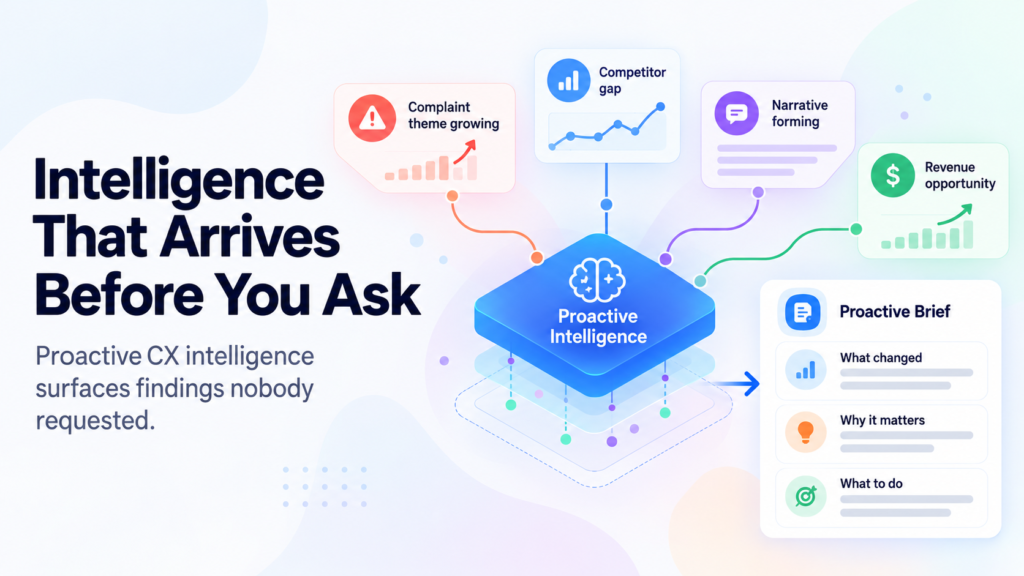
Konnect Insights gives you that connected view: social, email, calls, reviews, and surveys in one place, with AI that surfaces what matters before your team has to go looking for it.
Frequently Asked Questions
Author