A customer tweets a complaint on Monday. Gets no response. Calls on Tuesday. The agent has no idea about the tweet. The customer explains the whole thing again. Gets a partial fix. Receives an automated survey on Wednesday asking how the interaction went.
They rate it two stars. The system logs it as “resolved.”
Nothing about that sequence was unusual. It happens in companies that have invested seriously in CX technology, with teams who care about the customer, who have metrics and dashboards and quarterly reviews. The problem isn’t effort. It’s architecture.
76% of customers expect consistent interactions regardless of which channel they use. Most CX teams still manage each channel as its own project – its own data, its own performance targets, its own definition of who the customer is.
That gap is not a technology failure. It’s a design failure, compounded by an accountability failure, often disguised as a tooling problem.
This guide covers 10 things every CX leader needs to actually understand – and implement – to close it.
TL;DR:
Being on ten channels is not omnichannel CX. Omnichannel means a customer can move between any channel without repeating themselves or losing context. The foundation is a unified customer record, not a platform purchase. Organizational ownership gaps kill omnichannel strategies faster than technology gaps do. The right metrics track journey outcomes – not how each channel performed in isolation.
Omnichannel vs. multichannel: the distinction that actually changes what you build
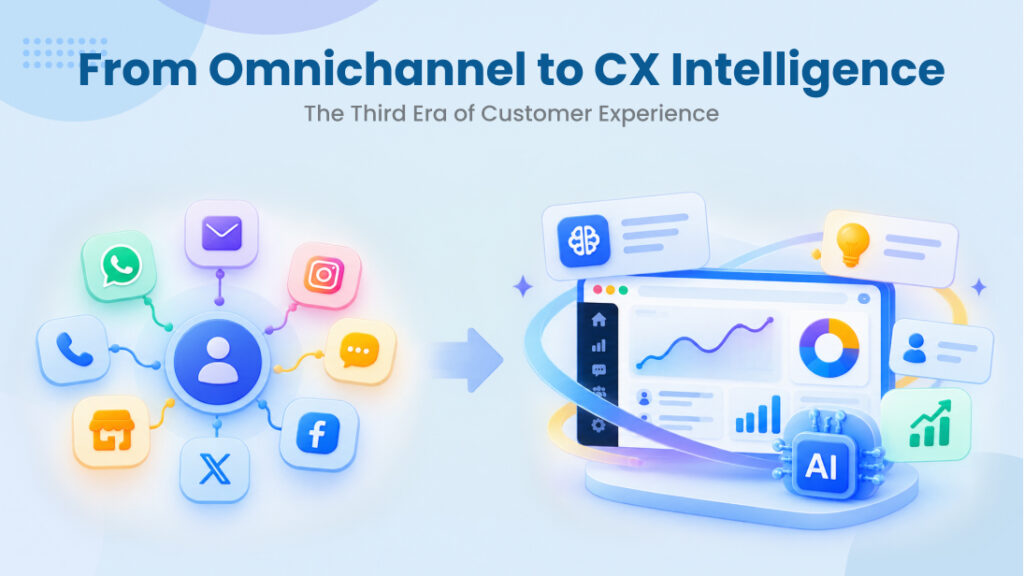
Multichannel means the customer can reach you on many channels. Omnichannel means those channels share data and context so the experience feels continuous.
A brand can be on Instagram, email, WhatsApp, and phone and still be purely multichannel if each channel runs independently. The customer who tweets at you, gets no visible response, then calls – and has to explain the whole issue again from scratch – is experiencing multichannel. The agent who picks up, sees the tweet, and opens with “I saw your message this morning, let me pull this up” – that’s omnichannel. Same channels. Completely different experience.
That distinction is the lens for everything that follows.
10 things to know and implement for omnichannel CX
1. Your customers are already omnichannel. Your business probably isn’t.
The average ecommerce transaction touches 5.5 channels before conversion [Google Consumer Insights, 2024]. Customers don’t choose a channel and stay there. They switch based on urgency, convenience, and how quickly the last channel responded.
Most CX strategy conversations start with “which channels should we add?” That’s the wrong starting question. The right one is: how well do the channels we already have share information with each other?
Adding a new channel to a fragmented stack doesn’t improve the omnichannel experience. It adds another place where context gets lost.
2. A unified customer profile is the non-negotiable foundation
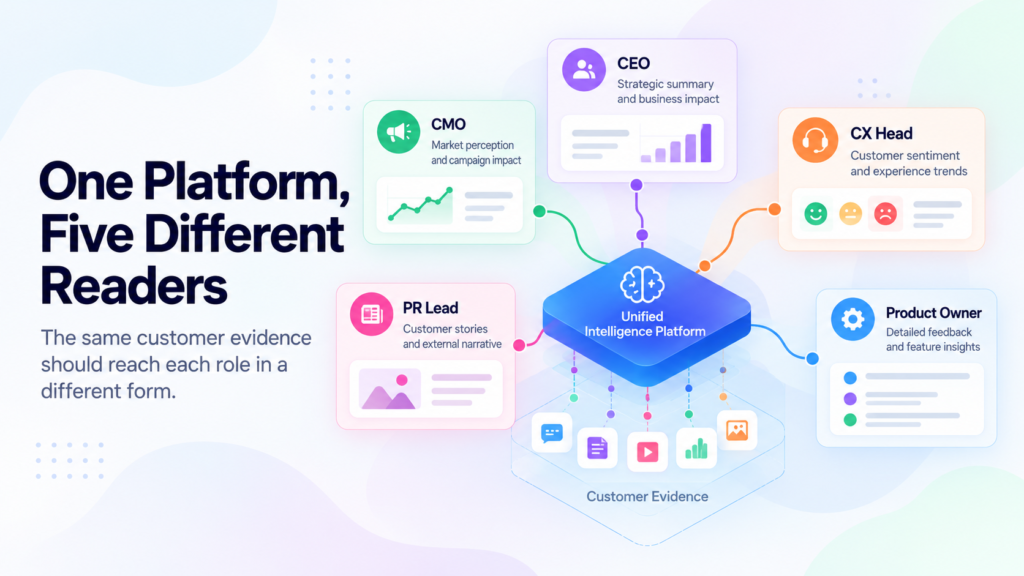
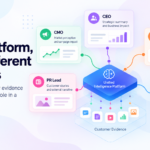
Every channel needs to read from and write to the same customer record. Purchase history, complaint history, channel preferences, open tickets, sentiment signals. All of it in one place, updating in real time.
Without this, you get the scenario that opened this piece: the agent who has no idea about the tweet. Or the chat agent who resolves an issue, and the email automation that fires the next morning treating it as still open. Or the loyalty program that offers a discount to a customer who just complained about the product.
These aren’t edge cases. They’re the standard output of CX teams with channel-level data instead of customer-level data.
Ask one question to test where you stand: can your support agent see a customer’s social complaint before picking up their call? If the answer is no, the data isn’t unified yet.
3. Silos are an organizational problem before they’re a technology problem
Most omnichannel failures trace back to teams that never shared data because they were never set up to.
Marketing owns social. Support owns tickets. Sales owns the CRM. E-commerce owns the app data. No one owns the customer.
You can buy a unified platform and still have a fragmented experience if the teams feeding data into it have different goals, different metrics, and no shared accountability for what happens when a customer crosses from one team’s territory to another’s.
Technology is a multiplier. It multiplies whatever organizational structure you put it on top of. If the structure has ownership gaps, the technology makes those gaps faster and more expensive.
Assign journey ownership to a specific function before buying anything new.
4. Design for the journey, not the channel
Most CX improvement work is scoped to a channel. Improve the chat experience. Reduce email response time. Redesign the IVR flow.
That’s valid work. It just doesn’t fix what happens between channels.
Start by mapping by outcome – complaint resolution, product onboarding, subscription renewal – and identify every channel that journey touches. Then design for consistency across that outcome, not within each channel independently.
A billing dispute that starts on Twitter, escalates to chat, and resolves on a phone call is one journey. If you design each of those three touchpoints separately, you get three coherent experiences and one broken journey.
The transition from Twitter to chat is where most complaints become crises. Nobody designed that handoff. Somebody designed the Twitter response workflow. Somebody designed the chat escalation path. The seam between them got built by default.
5. Consistency means same context, not same tone
Consistency doesn’t mean delivering the same message in the same words on every channel. A WhatsApp message should feel like a WhatsApp message. A formal email should read like a formal email. Customers understand these registers are different.
What must stay consistent is the underlying context: what the customer asked, what was promised, what is still open.
A customer who explained their issue on chat and then calls should not have to explain it again. That’s not a tone failure. It’s a data failure dressed up as a communication problem.
When the context carries across channels automatically, agents can adapt the tone to fit the channel without losing the thread of the customer’s experience.
6. Listening across channels matters as much as responding across them
Customers express dissatisfaction on channels you didn’t open a support ticket for.
A tweet. A Google review. A Reddit thread. A comment on a food delivery app. None of these go through your support system. Most of them never get seen by the team responsible for resolving the underlying issue.
If you’re only tracking what comes through your owned support channels, you’re missing a significant share of the signal – and you’re finding out about product problems, process failures, and reputational risks later than you need to.
This is where social listening and online reputation tools earn their place in the omnichannel stack. Konnect Insights monitors 20+ channels including social, forums, and review platforms, converting mentions into actionable tickets so nothing that needs a response gets missed because it arrived on a channel the support team doesn’t watch.
7. AI is a connective layer, not a replacement layer
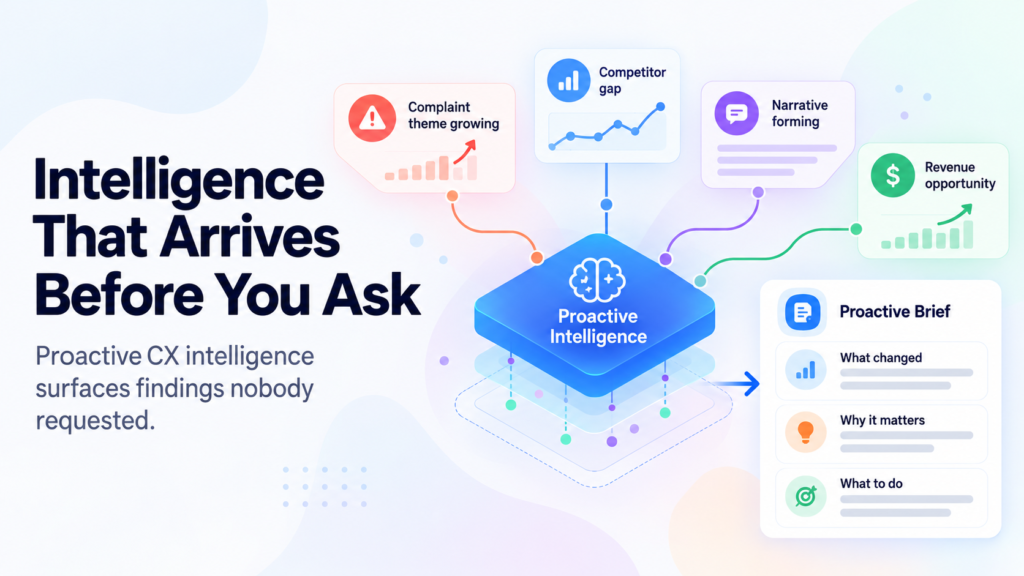
AI is most useful in omnichannel CX for three things: routing customers to the right team fast, summarising prior interactions so agents have full context before they say hello, and detecting sentiment shifts or escalation signals before they become a crisis.
What AI is not useful for – or at least, not yet – is replacing the judgment call. A chatbot that handles FAQs and has no handoff path is a dead end. Customers who hit that wall don’t become satisfied. They become frustrated on the FAQ channel and find another channel to escalate on.
The useful version: an AI layer that triages intent, summarises what happened on every prior channel, and hands off to a human with the full picture intact. The agent doesn’t start from zero. The customer doesn’t repeat themselves. The AI didn’t resolve the issue – it made the resolution faster.
8. Personalization has to work across channels, not just within them
Personalisation at the channel level is useful but limited. A relevant email. A push notification timed to the customer’s browsing history. Tailored product recommendations in the app. These are good. They’re also channel-specific – they work within the system that has the data.
Real cross-channel personalization means the context carries. What a customer browsed on the app informs what the support agent says on the call. The complaint raised on Twitter is visible when the email arrives. The purchase made in-store shows up in the chat agent’s screen.
This can’t be built on channel-specific records. It requires connected data – a single customer profile that every channel can both read and write to. Without that, personalization stays siloed, and the customer ends up with experiences that feel personal on each channel and impersonal across them.
9. Measure journey outcomes, not channel performance in isolation
Channel-level metrics tell you how individual touchpoints are performing. Email open rate. Chat CSAT. Social response time. These are useful. They don’t tell you whether the overall journey worked.
A chat that closes with a four-star rating is a good chat metric. If the same customer calls back the next day with the same issue, the journey failed. The chat CSAT won’t show you that.
Add journey-level measurement alongside channel metrics:
| Metric type | What it measures | Example |
| Channel-level | Individual channel health | Chat CSAT, email response time |
| Journey-level | End-to-end resolution quality | Cross-channel FCR, repeat contact rate |
| Sentiment-level | Unprompted customer perception | Social mention tone, review score trends |
Cross-channel first contact resolution, repeat contact rate within 7 days, and time from first touch to resolution across all channels – these tell you what happened to the customer, not what happened on the channel.
Konnect Insights BI dashboards pull sentiment, ticket, and channel data into one view, making journey-level measurement possible without manually aggregating across five separate tools.
10. Omnichannel CX needs a permanent owner, not a project team
Omnichannel CX degrades over time if no one is accountable for the full journey.
New channels get added. Integrations break. Teams change. A handoff that worked six months ago stops working when the platform it relied on gets updated. Without someone watching the whole journey, these failures get discovered by customers before they get discovered by the team.
Assign a cross-functional CX lead – or build a CX Centre of Excellence – with explicit remit over journey performance, data governance, and channel integration standards. This person or team doesn’t own any single channel. They own the customer’s experience across all of them.
The brands that sustain omnichannel quality treat it as an operating discipline. Not a project that got completed. Not a platform that got deployed. A function that keeps running.
Three brands doing this worth studying
Amazon
Single account, consistent returns logic, shared data across marketplace sellers, sub-brands, and delivery partners. The mechanism: clarity about how the system works builds trust before the interaction starts. Customers know what to expect because the rules stay consistent regardless of which entry point they used.
Starbucks
Name on the cup, favourite order in the app, behaviour-tied offers across digital and physical. Physical and digital CX share the same customer data. The mechanism: recognition at scale doesn’t come from channel-specific memory. It comes from one connected profile that every touchpoint reads from.
Uber
Two touchpoints – app and car – fully integrated so neither side has unknowns. Driver sees the ride details. Rider sees the driver. Both sides have complete context before the interaction starts. The mechanism: omnichannel doesn’t require many channels. It requires that the channels you have share complete context.
Conclusion
Omnichannel CX is not a technology decision made once. It’s a continuous discipline – connecting data, aligning teams, measuring outcomes at the journey level, and keeping the architecture current as channels and expectations change.
The brands that do it well share one thing. Every team working with a customer has the same picture of that customer, regardless of how or where contact was first made.
If your team is managing customer conversations across social, support, and messaging without a shared view of each customer – that’s the gap to close first. Everything else is downstream from it.
Frequently Asked Questions
Author