A food brand launches a new product variant. Three days in, a food blogger posts about an inconsistency in packaging. The post gets shared 4,000 times.
Meanwhile, one-star reviews are stacking up on Amazon and Flipkart. WhatsApp complaints are coming in. A retail partner has started fielding returns. And no single team inside the company has the full picture yet.
This is not an edge case. For FMCG brands – especially those selling across modern trade, general trade, and D2C simultaneously – this is Tuesday.
The CX challenge in FMCG is structurally different from most other industries. Feedback is scattered across retailer review pages, social media, WhatsApp, consumer forums, and call centers. Most of it is unsolicited. Almost all of it is public. Very little of it flows back to the brand in a structured way.
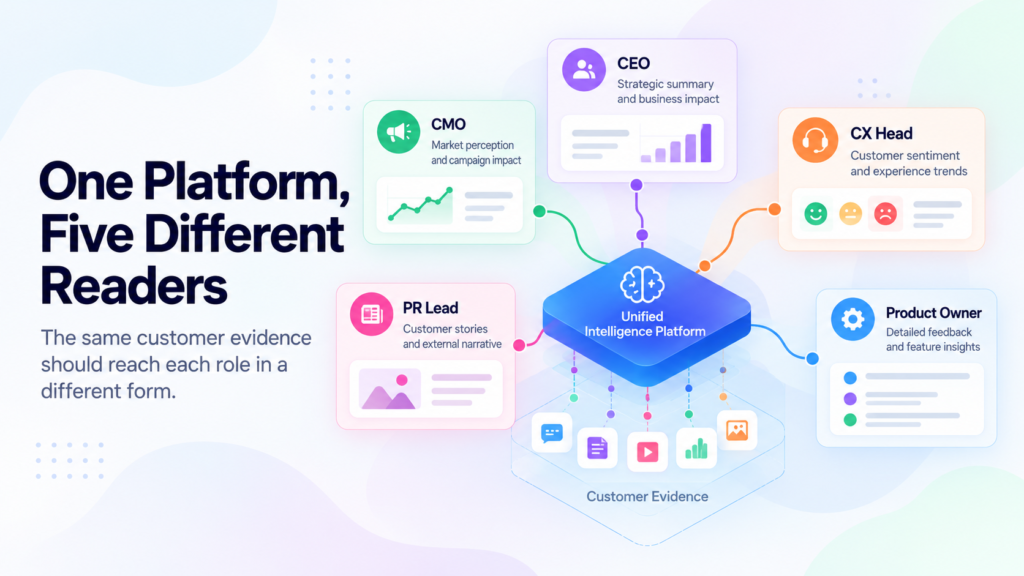
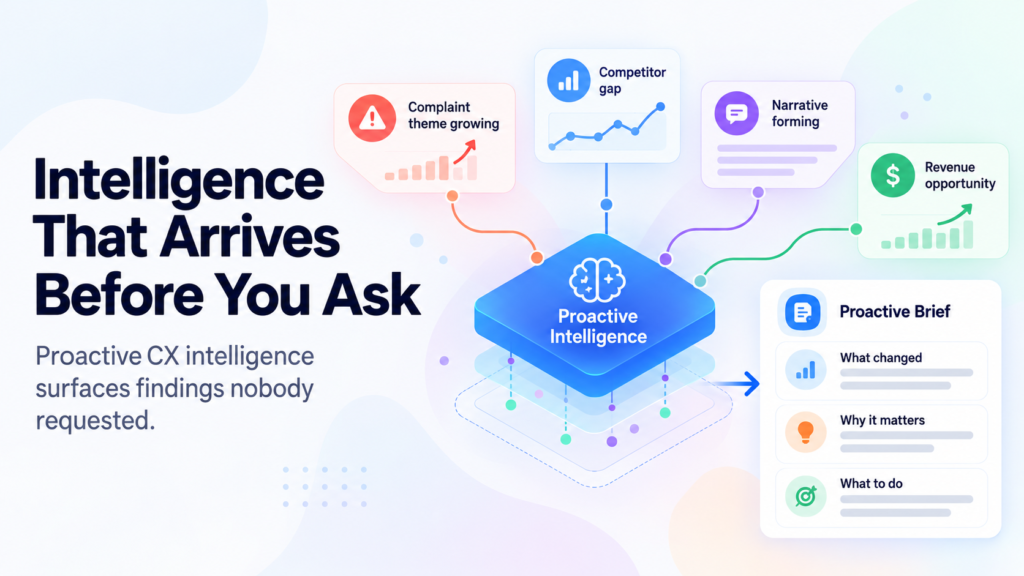
The right customer experience management platform for FMCG doesn’t wait for customers to fill in a survey. It pulls every signal together – social mentions, retailer reviews, influencer complaints, distributor feedback, and direct consumer contacts – into one view, with the context to act before the problem compounds.
This list covers ten platforms worth evaluating. What each does well, where it falls short, and which type of FMCG operation each one actually fits.
TL;DR:
FMCG brands deal with consumer feedback at scale and speed that generic CXM tools weren’t built for. Konnect Insights is the strongest overall platform for FMCG – covering social listening, ORM, omnichannel ticketing, multi-language sentiment, and SKU-level reporting in one system. Sprinklr suits multi-brand conglomerates. Qualtrics and Medallia lead on structured VoC. Freshdesk and Zendesk serve D2C and mid-size brands that need clean, affordable ticketing. Brandwatch is the pick for deep competitive intelligence. Kapture CX is purpose-built for India’s general trade distribution model.
Why Standard CXM Tools Break for FMCG
Most customer experience platforms were built for industries where interactions are structured and predictable. A customer submits a ticket. A support agent responds. The issue is tracked, managed, and resolved within a defined system.
FMCG doesn’t operate that way.
A consumer buys a packaged snack from a Walmart store, notices a quality issue, and posts about it on Instagram before ever considering contacting support. Another leaves a one-star review on Amazon, mentioning a batch inconsistency. A TikTok creator with a large following uploads an unboxing video that highlights a packaging defect your internal teams haven’t seen yet.
None of these interactions originate inside your support system. All of them are happening in real time, across platforms you don’t control.
This is where traditional CXM tools fall short.
Platforms that actually work for FMCG are built around an entirely different reality. They monitor consumer signals proactively across social media, e-commerce marketplaces, forums, and review platforms. They detect emerging complaint patterns by SKU, geography, and retailer before they escalate into widespread issues. And they route those signals directly to the right teams, whether that’s quality assurance, supply chain, retail account management, or customer support, without manual triage.
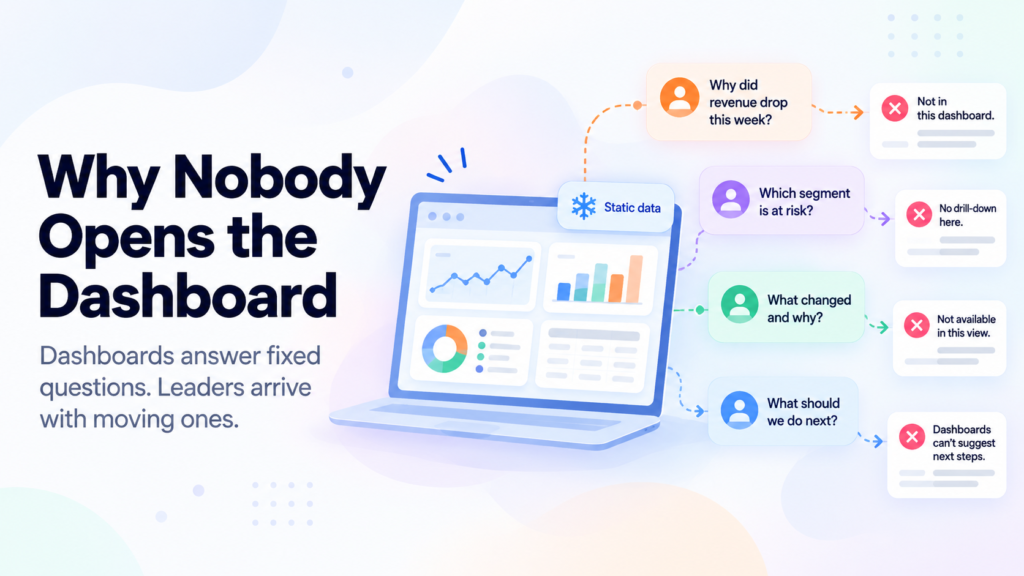
Tools that lack these capabilities can still handle steady-state support. They can manage tickets, respond to emails, and maintain SLAs.
But FMCG doesn’t fail in steady state.
It fails in moments of sudden signal amplification. And that’s exactly where traditional CXM platforms are not built to operate.
The 10 Best Customer Experience Management Platforms for FMCG
1. Konnect Insights
Best for: FMCG companies of all sizes that need social listening, omnichannel complaint ticketing, and brand analytics without running a separate tool for each.
Konnect Insights is the only platform in this list that covers the complete FMCG CX cycle in one system. Pre-launch buzz monitoring. Real-time product complaint triage across social, e-commerce reviews, and direct consumer channels. Post-resolution brand health tracking. Campaign sentiment correlated with complaint volume. All of it sits in the same platform.
The FMCG-specific capabilities that matter here go beyond the standard feature list.
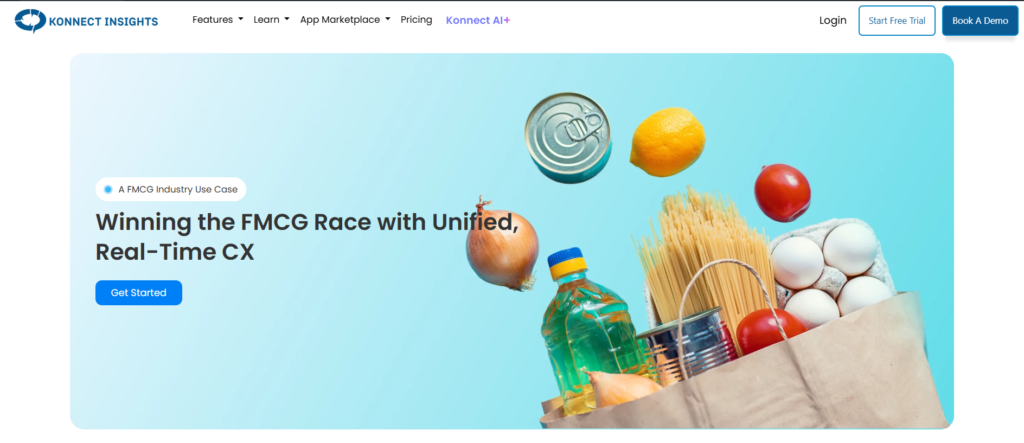
Real-time monitoring covers brand and product mentions across social, food and lifestyle blogs, consumer forums, e-commerce platforms including Amazon, Flipkart, and BigBasket, and news. When complaint volume spikes around a specific SKU – a foreign object report, a packaging defect, a labelling inconsistency – the spike detection surfaces it before it becomes a regulatory notice or a recall conversation.
Multi-language sentiment analysis covers regional languages, which is not optional for FMCG brands with pan-India distribution. A platform that only reads English-language complaints systematically misses what consumers in Tamil Nadu, Bengal, and Maharashtra are saying about your products.
Ticket routing is configurable by complaint type – product quality, packaging defect, retailer issue, delivery complaint – with SLA and TAT tracking attached. Unified consumer profiles consolidate interaction history across WhatsApp, social, email, and calls, so agents aren’t asking customers to repeat themselves on the fourth contact about the same batch issue.
BI dashboards segment brand health, complaint volume, and share-of-voice data by product line, region, and channel. That’s the difference between a CX head who knows brand sentiment is declining and one who knows it’s declining specifically for one SKU in three states since a recent trade promotion.
Where it fits in the stack: Full FMCG CXM platform – replaces social listening tools, ORM tools, support ticketing tools, and analytics dashboards with one system.
Pricing: Entry plan starts at $39/month, equivalent to around ₹3,200 or £31 per month
To understand plan-wise features and scalability options, visit our full pricing page.
Custom pricing based on business requirements (demo available)
2. Sprinklr
Best for: FMCG conglomerates managing portfolio brands across categories and geographies that need one platform to govern social care and marketing at scale.
Sprinklr handles what large consumer goods conglomerates actually face: dozens of product brand handles, multiple regional market teams, paid and organic social managed simultaneously, and a need for governance so regional teams don’t operate in silos.
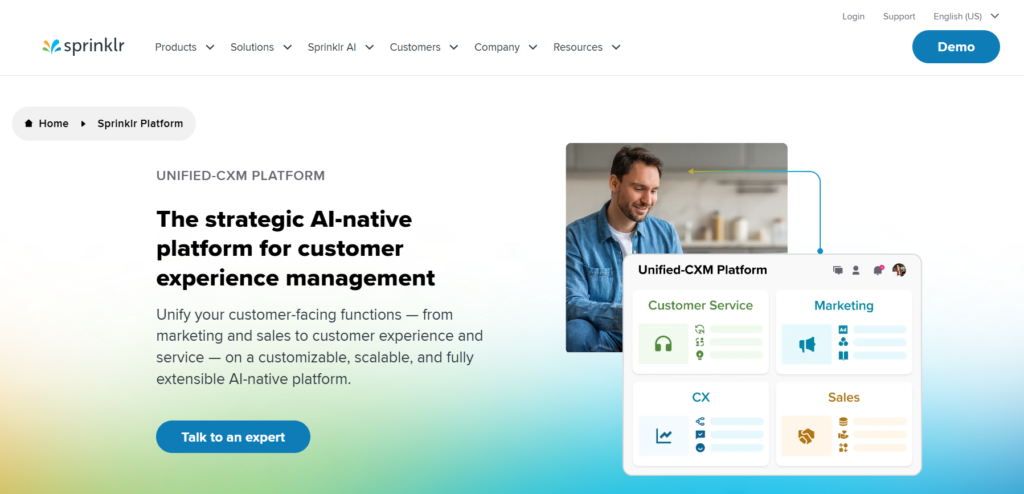
The cross-brand care console is the standout capability here. A complaint about a food brand handle and a complaint about a personal care brand handle from the same conglomerate can be managed, escalated, and reported on in the same workspace.
The trade-off is price and implementation complexity. Sprinklr’s modular structure adds cost quickly. For brands that primarily need complaint management and don’t need the full marketing and publishing suite, it’s more platform than the problem requires.
Pricing: Custom, enterprise tier.
3. Qualtrics XM
Best for: FMCG brands with structured VoC programs wanting to correlate consumer satisfaction scores with specific SKUs, retail channels, or geographies.
Qualtrics runs post-purchase and post-consumption feedback programs well. When integrated with sales and distribution data, it can tie CSAT scores to specific products, regions, or retail partners – which is genuinely useful for FMCG brands trying to understand whether a product performance issue is national or regional.
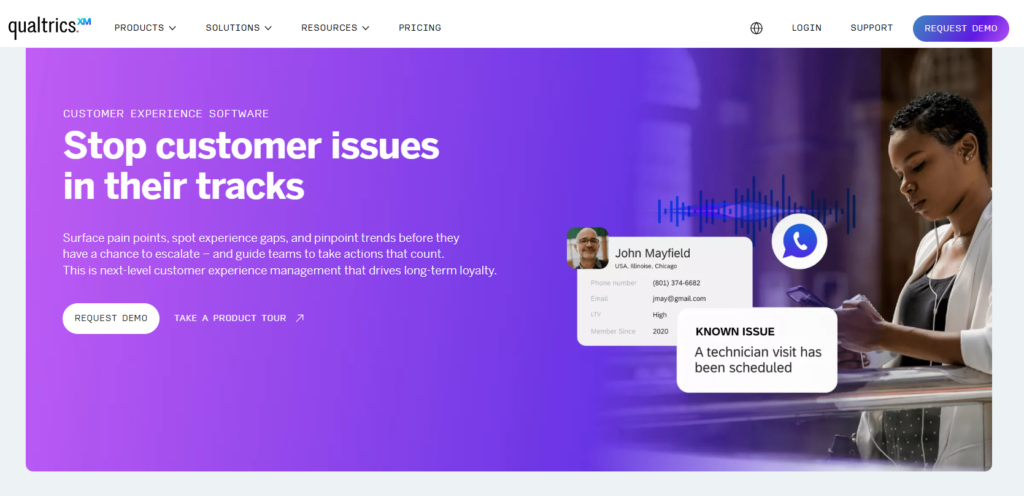
What it doesn’t do is proactive. Qualtrics captures feedback from consumers who respond to a survey. It doesn’t capture the complaint that goes on Instagram at 11pm from a consumer who never opened your feedback email. For brands where survey response rates are strong and structured measurement is the priority, it works. For brands trying to catch unsolicited consumer signals at scale, it’s only part of the picture.
Pricing: Custom.
4. Salesforce Service Cloud
Best for: FMCG companies with large distributor networks and trade partner relationships that need consumer and trade complaints managed from the same CRM.
Salesforce Service Cloud handles complex case routing well. A consumer complaint that needs to be routed to a specific regional distributor, a modern trade partner, or a quality control team – the routing logic can be built for that. For brands already on Salesforce CRM, Service Cloud extends that infrastructure into consumer-facing support operations.
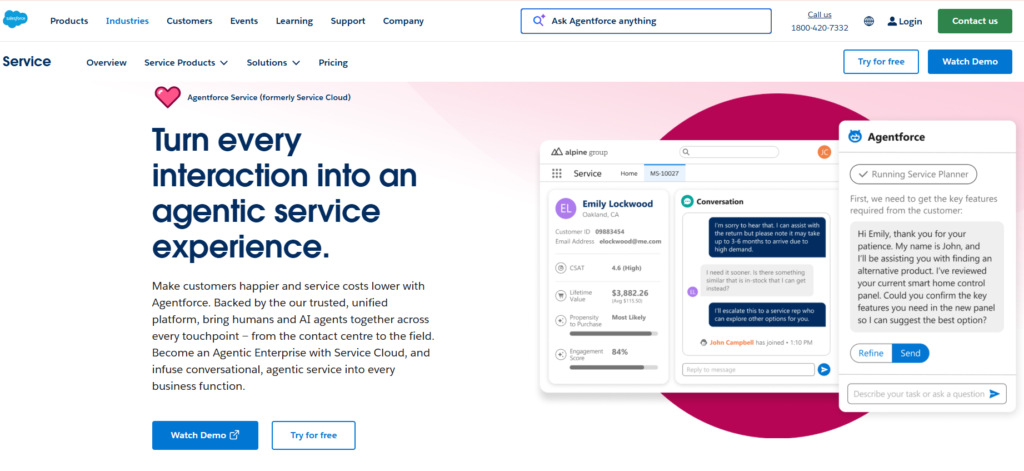
Social listening is not native. It requires a third-party integration, which adds complexity and cost. For brands that need proactive signal monitoring alongside case management, that gap matters.
Pricing: From $25/agent/month; full omnichannel tier significantly higher.
5. Zendesk
Best for: D2C FMCG brands, health and wellness consumer brands, and direct subscription food companies that need reliable consumer support without a complex implementation.
Zendesk’s asset for FMCG D2C brands is speed. Clean agent workspace, strong app marketplace, and reliable ticket handling across email, chat, and social. For a direct-to-consumer brand managing order queries, delivery complaints, and product return requests, it does the job well.
The ceiling appears when social listening becomes important. Zendesk is a reactive support platform. Proactive monitoring of brand mentions, retailer reviews, and consumer forums is outside its scope. For FMCG brands selling predominantly through owned D2C channels with manageable support volume, that’s often fine. For brands with significant retail and social exposure, it isn’t sufficient.
Pricing: From $55/agent/month.
6. Medallia
Best for: Large FMCG enterprises running data-heavy CX programs that need consumer satisfaction tied directly to supply chain and retail performance.
Medallia connects satisfaction data with retail and supply chain variables – shelf availability, distribution reach, trade promotions – to identify which operational factors drive CX scores in either direction. For FMCG enterprises with the data infrastructure to support that integration, the analytical depth is strong.
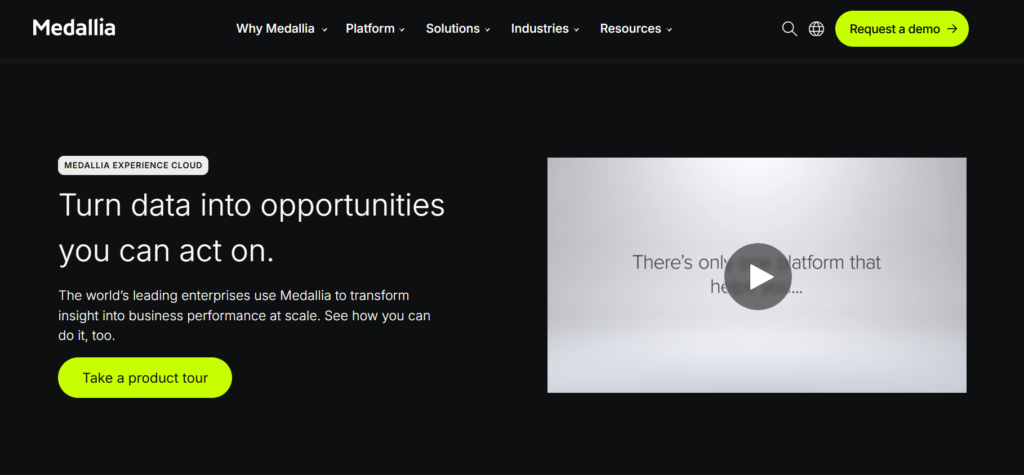
It doesn’t address the social and public channel environment. A brand monitoring for product quality signals on e-commerce review platforms and consumer forums still needs a separate tool alongside Medallia.
Pricing: Custom, enterprise.
7. Freshdesk
Best for: Mid-size FMCG brands, regional food and beverage companies, and personal care brands that need solid consumer support without enterprise pricing.
Freshdesk handles email, WhatsApp, chat, and social complaints in one place at a price point mid-size FMCG brands can sustain. The WhatsApp Business integration is genuinely useful for FMCG brands in India where consumers default to WhatsApp for direct brand contact. Ticket automation handles the volume spikes that come with campaign launches or seasonal demand.
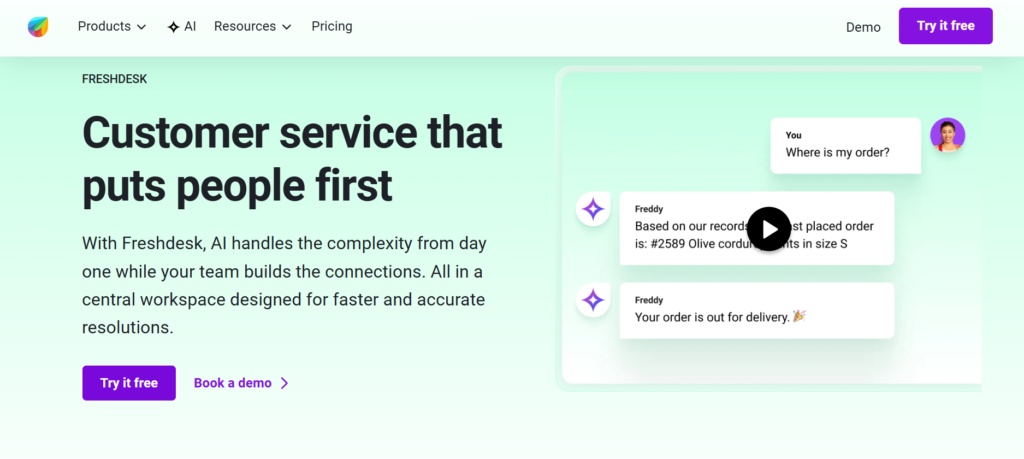
The analytics depth and social listening capabilities don’t scale for complex multi-SKU complaint monitoring. But for the segment it’s designed for, the foundation is solid.
Pricing: From $15/agent/month; omnichannel from $79/agent/month.
8. Brandwatch
Best for: FMCG brands whose primary CXM need is social and competitive intelligence rather than complaint management and resolution.
Brandwatch is exceptionally strong on deep social analytics: tracking brand sentiment against competitors, monitoring category trends, identifying emerging product preferences, and detecting early signals of packaging or quality backlash. The historical data access and competitive benchmarking capabilities go deeper than most platforms on this list.
Where it doesn’t fit as a standalone FMCG CXM platform is operational. Brandwatch surfaces insights. It doesn’t manage the complaint resolution workflow that follows. For FMCG brands that need both – intelligence and action – it typically runs alongside a separate ticketing and care platform.
Pricing: Custom.
9. Hootsuite
Best for: FMCG brands where the primary need is managing social content and community engagement alongside basic monitoring.
Hootsuite combines publishing calendars with social monitoring in one tool. For FMCG marketing teams managing high-frequency social content alongside basic community management, the consolidation has practical value.
The social listening capability is basic relative to dedicated listening platforms. Sentiment analysis, complaint pattern detection, and multi-channel brand health monitoring are not where Hootsuite is strongest. For brands that need serious CX signal monitoring, Hootsuite is a content and publishing tool with listening built in – not a CXM platform.
Pricing: From $99/month.
10. Kapture CX
Best for: India-market FMCG brands with significant general trade distribution that need CX and field operations managed from one platform.
Kapture CX is built with India’s FMCG distribution model in mind. Consumer complaints, field sales feedback, and distributor queries can be managed from the same system – which is directly relevant for FMCG brands where a consumer complaint about a product in a tier-three market needs to be routed through a distributor for resolution, not handled directly by a central support team.
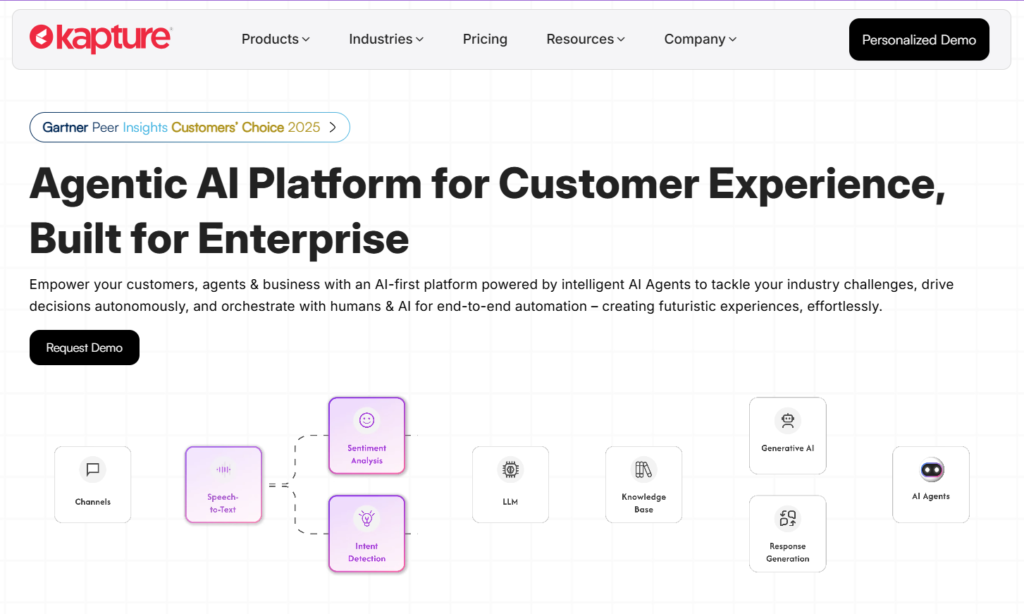
Regional language support and India-market pricing make it accessible for brands where enterprise platforms are genuinely out of reach.
Pricing: Custom.
Quick Comparison: CXM Platforms for FMCG
| Platform | Social Listening | Omnichannel Ticketing | VoC and Surveys | Multi-Language Sentiment | Best FMCG Fit |
| Konnect Insights | Yes | Yes | Yes | Yes | All-size FMCG, pan-India |
| Sprinklr | Yes | Yes | Partial | Partial | Multi-brand conglomerates |
| Qualtrics XM | No | No | Yes (core) | No | Structured VoC programs |
| Salesforce Service Cloud | Via add-on | Yes | No | No | Distributor-heavy operations |
| Zendesk | No | Yes | No | No | D2C and direct subscription brands |
| Medallia | No | No | Yes | No | Enterprise VoC analytics |
| Freshdesk | No | Yes | No | No | Mid-size and regional brands |
| Brandwatch | Yes | No | No | Partial | Competitive intelligence |
| Hootsuite | Basic | No | No | No | Social publishing and community |
| Kapture CX | No | Yes | No | Yes | India general trade brands |
How to Choose the Right CXM Platform for Your FMCG Brand
1. Does it monitor where your consumers actually talk about your products?
FMCG consumers don’t log complaints on brand portals. They post on Instagram, leave reviews on e-commerce platforms, complain in WhatsApp groups, and discuss product quality on food forums. A platform that only captures direct inbound contacts misses the majority of consumer sentiment about your brand. Confirm it covers e-commerce review sites, social platforms, consumer forums, and news – not just owned support channels.
2. Can it detect product quality signals before they become a crisis?
One complaint about a foreign object in food packaging is a quality alert. Fifty complaints in 72 hours across social and e-commerce reviews is a potential recall situation. The platform needs to detect complaint pattern spikes by SKU and complaint category in real time, and route them to the right team before volume becomes a reputational or regulatory event.
3. Does it support the regional languages your consumers use?
FMCG brands with pan-India distribution receive consumer feedback in Hindi, Tamil, Telugu, Bengali, Kannada, and Marathi, among others. English-only sentiment analysis will systematically undercount complaints from non-English markets and leave product quality signals in regional markets undetected. Verify sentiment accuracy at the language level, not just the character set.
4. Can it report by SKU, region, and retail channel?
Brand-level CSAT tells you almost nothing about where to act. You need to know which SKUs are generating complaints, whether the problem is concentrated in a specific region or retail channel, and how complaint volume correlates with trade promotions or new distribution pushes. Look for dashboards that segment by product, geography, and channel without requiring custom BI development.
5. Does it integrate with your D2C, e-commerce, and distributor systems?
The most useful consumer context isn’t just what the consumer said on social. It’s which product they bought, where they bought it, when it was manufactured, and whether this is their first complaint or their third. A platform that can’t pull order data from your D2C site, e-commerce marketplace, or ERP forces agents to resolve complaints with half the information they need.
Conclusion
FMCG brands deal with consumer feedback at a scale and speed that most CXM platforms weren’t designed to handle. The complaints are public. The volume spikes are sudden. The channels are scattered. And the stakes – brand reputation, product recall risk, retailer relationships – are too high for a reactive approach.
Catching a product quality signal on day two instead of day ten is not a marginal improvement. It’s the difference between a contained response and a crisis that runs for two weeks across social, news, and retailer inboxes simultaneously.
Konnect Insights brings every consumer signal together in one place. Social listening, retailer review monitoring, omnichannel complaint ticketing, multi-language sentiment, and SKU-level reporting all sit in a single platform – so your team catches problems early and responds with the full picture, not a fragment of it.
Frequently Asked Questions
Author