Skip to content


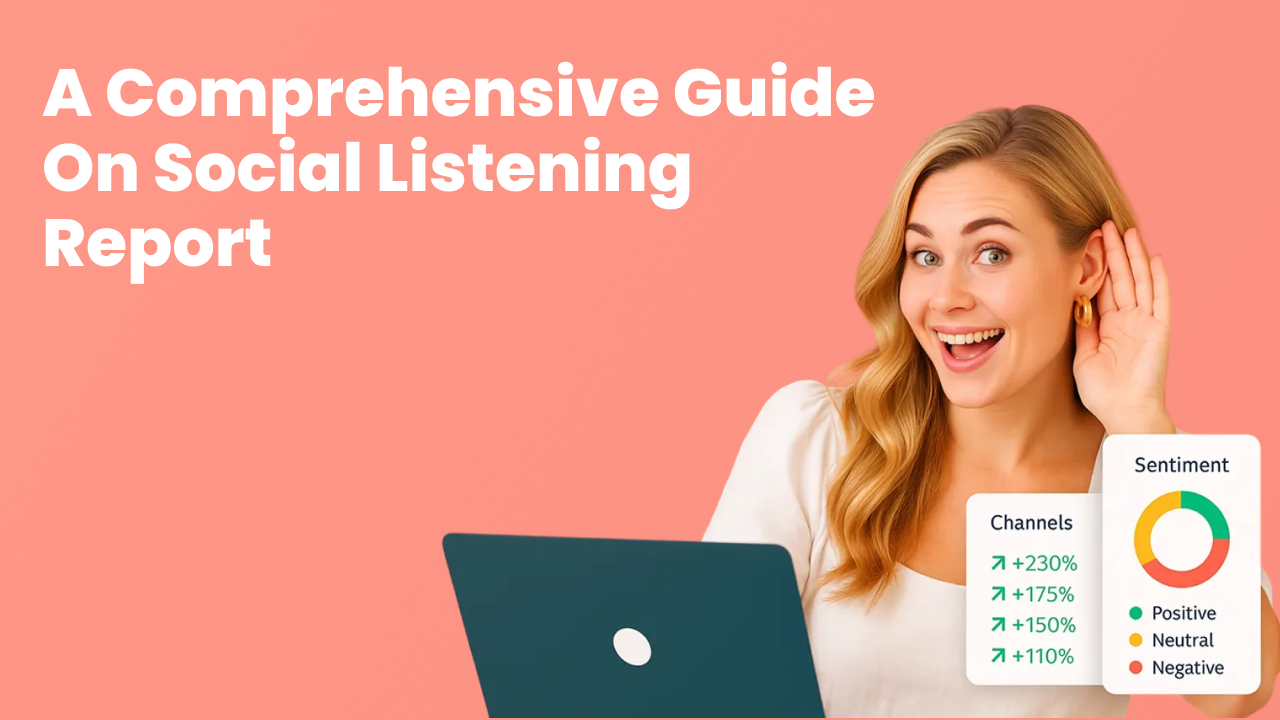
A social listening report is a structured summary of what people are saying about your brand, competitors, and industry across social media and online channels. It pulls together the key metrics, sentiment shifts, emerging themes, and insights that help teams understand what truly matters in the conversation. These reports guide decisions for marketing, CX, PR, product, and leadership teams by turning noisy social chatter into clear signals.
What Is a Social Listening Report?
A social listening report is a structured document that explains what conversations happened around your brand, why they happened, and what actions your team should take next. Unlike a dashboard, which shows raw numbers and charts, a report adds interpretation. It highlights the story behind the data: shifts in sentiment, recurring themes, rising risks, competitor movements, and opportunities worth acting on.
The purpose of a social listening report is simple. It helps teams understand the “so what” of social data. Marketing teams use it to guide campaigns, CX teams use it to identify friction points, PR teams use it to monitor reputation, and product teams use it to validate features and feedback trends.
Reporting cadence also matters.
– Weekly reports help teams react quickly to trends and complaints.
– Monthly reports are better for spotting patterns, seasonality, and competitive shifts.
– Quarterly reports help leadership evaluate long-term brand health and strategic direction.
A good social listening report brings clarity, narrative, and focus to data that would otherwise remain scattered across channels.
Social Listening Report Structure
A strong social listening report follows a consistent structure that makes the insights clear, actionable, and easy for different teams to use. Below is a practical framework you can apply whether you are building a weekly, monthly, or quarterly report.

Executive Summary
The executive summary is the part most leaders read first, and often the only section they read in detail. Your goal is to capture the essence of the report in thirty seconds. Keep this section crisp, direct, and focused on what changed and why it matters.
What leaders need in 30 seconds:
The three most important shifts in conversation
The reasons behind those shifts
The actions your team should prioritize next
Any early risks or opportunities they should be aware of
How to write insights vs observations:
A good executive summary goes beyond describing what happened. It explains the why and the so what.
- Observation: Reports what you see in the data.
“Mentions about delayed delivery increased by 42 percent this week.” - Insight: Interprets the impact and guides action.
“The increase in delivery complaints is concentrated in Tier 2 cities after the new logistics partner rollout. Stabilizing that region should reduce next week’s support volume.”
Insights are always tied to cause, impact, and action.
Key Metrics Overview
This section gives readers a quick snapshot of the numbers that define the overall conversation. Think of it as the “health dashboard” for your brand’s presence across social channels. These metrics set the context before you dive into deeper themes and insights.
Volumes
Show total mentions for the period, how they compare to the previous timeframe, and highlight any noticeable spikes. Volume trends help teams understand whether interest, complaints, or campaign activity is rising or falling.
Sentiment
Break down positive, negative, and neutral sentiment, then explain what drove each category. Sentiment shifts often point to emerging risks or opportunities that need attention.
Share of Voice (SOV)
Compare your brand’s conversation share with competitors or industry benchmarks. SOV signals how visible you are in the market and whether campaign efforts are influencing awareness.
Top Channels
Identify where the highest activity occurred. Twitter may drive real-time reactions, Instagram might reflect brand affinity, while review platforms often capture product experience. Each channel tells a different part of the story.
For more foundational context on how these metrics work, check out our guide on social listening metrics
Themes and Conversation Clusters
Themes and clusters help you explain the “why” behind the numbers. Start by grouping similar mentions together to reveal the major drivers of the conversation, such as product issues, pricing concerns, campaign reactions, influencer impact, or competitor comparisons.
To identify themes, look for repeating phrases, shared frustrations, common praise points, or sudden shifts in user behavior. Clusters should feel intuitive and represent real patterns in the data, not just isolated spikes.
When presenting themes, keep visuals simple. Use labeled blocks, short representative quotes, or small charts that show how each theme grew or shrank over time. The goal is to make the narrative easy to follow at a glance.

Sentiment Analysis Report Format
A good sentiment section doesn’t just show positive and negative percentages. It explains how sentiment shifted and what emotional drivers were behind those changes. Highlight movement from the previous period, call out the themes responsible for spikes, and show whether the shift came from a specific channel, region, or audience segment.
To add depth, include sub-sentiment categories like delight, disappointment, confusion, or urgency. These reveal the tone behind the numbers and make your recommendations more precise.
Sentiment can be derived in different ways:
- Manual review for nuance-sensitive cases
- AI-based sentiment models for scale
- Platform-generated sentiment for speed and consistency
Use a mix when possible. This ensures accuracy while keeping the workflow efficient.
Share of Voice Report (Social Media)
A Share of Voice report shows how much of the total industry conversation your brand captures compared to competitors. It is one of the clearest indicators of brand visibility, campaign impact, and competitive momentum.
Formula:
Share of Voice = (Your Brand Mentions ÷ Total Mentions in Your Category) × 100
Present SOV alongside a short competitor breakdown. Highlight who gained or lost ground, which campaigns influenced the shifts, and whether the change came from positive or negative sentiment.
For a social media report, include platform-specific comparisons as well. Twitter, Instagram, YouTube, and review sites often show different competitive dynamics. A clear SOV view helps teams understand where they are winning attention and where they are losing it.
Recommendations and Next Steps
This section turns findings into action. Every recommendation should directly address a pattern identified in the report and guide teams on what to do next across CX, product, and marketing.
A simple way to structure this is with the Signal → Insight → Action → Outcome framework:
- Signal: What changed in the conversation.
Example: Negative mentions spiked around delivery delays. - Insight: Why it happened.
Delays were concentrated in specific regions after a logistics update. - Action: What the team should do now.
Review SLAs, notify the support team, and adjust communication for affected users. - Outcome: What success looks like.
A drop in related complaints and faster sentiment recovery next week.
This keeps the recommendations focused, practical, and easy for teams to implement.
Social Listening Report Template
A strong social listening report follows a repeatable structure, which makes it easier for teams to compare trends week over week or month over month. Below are simple templates you can use as a starting point, whether you need a quick weekly pulse check or a deeper monthly analysis.
These templates help you standardize what to include, how to present insights, and how to guide decision-making across marketing, CX, PR, and product teams.
Weekly Social Listening Report Sample
A weekly report should be short, fast to read, and focused on immediate activity.
What to include:
- Quick metrics snapshot (volume, sentiment, spikes)
- Top three themes of the week
- Rising risks or opportunities
- Short recommendations for the next seven days
This format helps teams move quickly and spot early shifts before they turn into bigger problems.
Monthly Social Listening Report Example
A monthly report should offer deeper insights and clearer storytelling.
What to include:
- Trend comparison with the previous month
- Sentiment drivers and emotional tone
- Channel-level performance
- Competitor share of voice
- Campaign impact analysis
- Strategic recommendations
This structure helps leadership understand long-term patterns and informs future planning.
Storytelling in Social Listening Reports
Good storytelling turns raw social data into a narrative that teams can understand and act on. Instead of listing numbers, highlight the journey of the conversation: what triggered shifts, who influenced them, and how sentiment evolved over time.
How to turn raw data into a narrative:
- Start with the context: what happened this period that might shape conversation trends
- Explain the cause behind each spike or drop
- Use examples or short quotes to give the data a human voice
- Connect each insight to a real business implication
Before and after example:
- Before: “Negative sentiment increased by 28 percent.”
- After: “Negative sentiment rose because a product update introduced new bugs. Most complaints came from long-time Android users, and fixing this segment quickly reduced friction within a week.”
Visuals that support storytelling:
- Timeline charts showing when conversations peaked
- Theme clusters are grouped visually
- Side-by-side sentiment snapshots
- Small quote cards that represent user emotion
These elements help the report feel cohesive and make the insights easier to follow.

KPIs to Include in a Social Listening Report (Definitions + Formulas)
Key performance indicators are the building blocks of an effective social listening report. They turn raw conversation data into measurable signals that teams can track, compare, and act on. The right KPIs help you understand brand health, campaign performance, customer experience, and competitive standing.
Below are the essential metrics to include, along with simple definitions and formulas you can apply directly in your reports.
1. Volume of Mentions
What it measures: Total number of conversations about your brand.
Why it matters: Helps identify spikes, campaign impact, or rising issues.
2. Sentiment Breakdown
What it measures: Positive, negative, and neutral mentions.
Why it matters: Reveals customer emotions and the tone of the conversation.
3. Share of Voice (SOV)
What it measures: Your brand’s visibility compared to competitors.
Why it matters: Indicates market relevance and campaign reach.
Formula:
SOV = (Brand Mentions ÷ Total Industry Mentions) × 100
4. Engagement Metrics
What it measures: Likes, comments, shares, replies, and video interactions.
Why it matters: Shows how strongly people respond to your content or brand presence.
5. Channel Distribution
What it measures: Which platforms drive the most conversation.
Why it matters: Helps allocate resources where they matter most.
6. Topic and Theme Frequency
What it measures: How often key issues or themes appear.
Why it matters: Surfaces what people talk about most and why.
7. Customer Experience Signals
What it measures: Complaints, praise, product issues, delivery feedback, support-related mentions.
Why it matters: Helps teams identify friction points early based on which product and service levels can be improved.
8. Crisis or Spike Detection Metrics
What it measures: Sudden increases in volume or negative sentiment.
Why it matters: Supports early-warning systems and triage workflows.
Tooling Comparison: Social Listening Platforms vs Manual Analysis
The tools you use will shape the quality, accuracy, and speed of your social listening reports. Manual analysis can work for very small datasets, but it becomes unreliable and slow as mentions scales. Dedicated social listening platforms provide the structure, automation, and intelligence needed for consistent reporting.
Choosing the right tool is important. Here is a helpful guide to evaluate the factors that matter most: How to Select the Best Social Listening Tool
| Capability | Manual Analysis | Social Listening Platform |
| Sentiment Accuracy | Inconsistent, subjective, varies by reviewer | AI-assisted, consistent, benchmarked against large datasets |
| Multilingual Coverage | Limited to human language skills | Automated detection and translation support across languages |
| Real-Time Alerts | Not possible without tools | Instant notifications for spikes, crises, or sentiment shifts |
| API and ETL Export | Requires technical effort | Built-in APIs, smooth exports to BI tools and CRM systems |
| Governance and Compliance | Manual redaction and risk of errors | Role-based access controls, secure storage, audit trails |
| Visualization Tools | Basic spreadsheets or charts | Interactive dashboards, heatmaps, trend lines, and cluster views |
Here are essential features to look for:
Sentiment accuracy
Accuracy determines whether reports reflect real customer emotion. Look for tools with AI-driven sentiment and sub-sentiment breakdowns.
Multilingual coverage
Conversations happen in multiple languages. A good platform should detect, translate, and categorize them automatically.
Real-time alerts
Crises and spikes require immediate action. Alerts help teams respond before issues escalate.
API & export capabilities
Easy exports make it simple to integrate insights into CRM, BI dashboards, or data warehouses.
Governance and compliance
Your tool should support secure data handling, access controls, and compliance with standards like GDPR.
Visualization tools
Clear charts, theme clusters, and sentiment timelines make insights easier to understand and present.
Integrating Social Listening Reports Into Your Workflow
A social listening report becomes truly valuable when the insights flow into the systems your teams already use. Whether it is your CRM, BI dashboards, or internal ticketing automations, integration turns analysis into action. Below are simple ways to make your reporting loop tighter and more useful across the organisation.
How to Push Insights Into CRM
Your CRM is often the source of truth for customer interactions, so pushing social insights there lets sales, CX, and support teams act faster.
Fields
Create structured fields such as “Sentiment Driver,” “Issue Category,” “Influencer Impact,” or “Product Feedback Type.” These help teams filter and prioritise conversations.
Schemas
Define a consistent schema so every insight follows the same structure. For example:
Issue → Sentiment → Channel → Recommended Action.
This keeps CRM entries clean and easy to use.
Automations
Set rules to convert certain insights into tasks or tickets. A spike in delivery complaints, for instance, can automatically notify the CX lead or create a follow-up task for the operations team.
Frequency
Weekly insights are usually enough for marketing and product teams, while CX teams may need daily or real-time updates depending on volume and urgency.
How to Feed Insights Into BI Dashboards
If your organisation relies on BI tools for decision-making, integrating social listening insights there adds an important layer to your analytics ecosystem.
JSON export
Most listening platforms allow JSON exports. These fit well into BI pipelines and make it easy to merge social data with sales, support, or product metrics.
Batch processing
Set up scheduled imports daily or weekly, so your BI dashboards stay current without manual work.
Example use cases
- Tracking sentiment alongside customer churn
- Comparing campaign performance across demand and social buzz
- Mapping product feedback trends to feature adoption
BI tools help teams see how social narratives tie directly to business outcomes.
Actioning Insights Across Teams
Social listening insights shouldn’t stay inside a report. They should influence the real work teams do every day.
CX workflows
Insights about complaints or friction points can trigger ticketing automation. For example, a negative trend around delivery delays can auto-create a ticket for the logistics team or notify the support manager.
Marketing optimization
Campaign teams can refine messaging mid-flight based on sentiment, theme shifts, or influencer reactions. This improves ROI without waiting for end-of-campaign reviews.
Product roadmap inputs
Product teams can track recurring feedback patterns and map them to feature requests. When customers consistently mention the same bug or improvement, it becomes easier to justify roadmap prioritization.
Integrating insights into daily workflows ensures your social listening report drives action instead of simply sitting in a shared folder.
Measuring the Impact of Social Listening Reports
So far, we have looked at how to build a strong social listening report, structure it well, and integrate insights into your workflows. But all of this effort only makes sense if it pays off. A mature listening program should produce a clear, measurable return on investment. Below are simple ways to quantify the impact across revenue, cost savings, customer satisfaction, and operational efficiency.
How Reporting Improves Business Decisions
Campaign improvements
When campaign teams get weekly or monthly listening reports, they can identify which messages resonate and which ones fall flat. This helps refine targeting, improve creative, and increase conversion without waiting for end-of-campaign results.
Crisis prevention
Reports surface early warning signals before small issues turn into large-scale problems. Catching a rise in negative sentiment early can prevent revenue loss, PR damage, and high-volume support spikes.
Faster CX responses
By highlighting common complaints and sentiment shifts, reports help CX teams respond faster and prioritize issues that matter most. Faster responses often correlate with better CSAT and reduced churn.
Conclusion
A well-crafted social listening report does more than summarize conversations. It helps teams understand what customers feel, what influences those feelings, and what actions will create the greatest impact. When structured correctly, these reports guide smarter decisions across marketing, CX, PR, and product teams, and they provide leadership with a clear view of brand health.
By using the right metrics, strong storytelling, and consistent workflows, your reports become a reliable engine for insights rather than a monthly exercise. Pair that with the right tools and integrations, and you create a system where insights flow directly into CRM, BI dashboards, and team actions.
Social listening is most powerful when it leads to meaningful change. A good report is the bridge between what people say and what your teams do next. If you’re ready to take your reporting to the next level, Konnect Insights provides the depth, automation, and analytics you need to make every insight count.
FAQs
What is a social listening report?
A social listening report is a structured document that summarises brand conversations, sentiment, themes, and opportunities across social media and online channels. It helps teams understand what people are saying and why those conversations matter.
What should a social listening report include?
A good report includes an executive summary, key metrics, sentiment analysis, themes and clusters, share of voice, channel breakdowns, insights, recommendations, and an appendix describing the methodology.
How do I structure a social listening report?
Start with the executive summary, then add metrics, themes, sentiment, SOV, and channel-level insights. Follow with observations, actionable recommendations, and a clear appendix. Consistency makes it easier to compare reports across weeks or months.
How do I calculate Share of Voice (SOV)?
Use this simple formula:
SOV = (Your Brand Mentions ÷ Total Mentions in Your Category) × 100
SOV shows how visible your brand is compared to competitors on social media.
How do I report sentiment accurately?
Combine platform-generated sentiment with manual review for nuance. Break sentiment into positive, negative, neutral, and sub-emotions like delight, confusion, or frustration. Always explain the drivers behind major shifts.
How do I choose data sources for a social listening report?
Focus on platforms where your audience is most active. Include social networks, review sites, forums, blogs, and news mentions. Ensure your listening tool provides multilingual coverage and accurate tagging.
How do I link insights to business KPIs?
Translate insights into measurable outcomes. For example, link sentiment improvements to CSAT, campaign engagement to revenue impact, and theme analysis to product roadmap decisions. Each insight should connect to a business objective.
How do I benchmark competitors in the report?
Compare volume, sentiment, share of voice, themes, and engagement levels across your top competitors. Highlight where they outperform you and where your brand leads. This gives teams clear direction for strategy and positioning.