 Skip to content
Automobile Industry Monthly CXM Report: June 2025

Automotive brands saw steady traction in June 2025. Online engagement held strong, and support teams moved faster than the previous month. But as more customers move online to book test drives, compare models, or report post-sales issues, response and resolution speed is becoming a clear competitive differentiator. The latest numbers show progress, but there’s room to raise the bar.
CXM Diagnosis: What the Data Tells Us
Response time is improving, but it’s not fast enough. A first response time of just under 7 hours is acceptable, but still sluggish for customers who expect answers quickly, especially on real-time channels like Instagram and WhatsApp.
Resolution time has improved. At under 11 hours, customer issues are getting addressed within the day. That’s a step in the right direction, especially in a category where queries range from service appointments to delayed deliveries and payment support.
Engagement is a bright spot. A 31.8% engagement rate shows that automotive content is resonating, likely driven by campaigns around new models, EV launches, and seasonal offers. But more followers need to be brought into the fold.
CX Spotlights
Common queries this month: financing clarifications, feature comparisons, service appointment delays, and follow-ups on vehicle delivery timelines.
What’s working: Visual campaigns (walkarounds, side-by-side comparisons), influencer test drive content, and customer stories continued to drive high engagement.
What’s not: Slow follow-ups on pre-booking inquiries or test drive reschedules dampen lead momentum and lower trust in service reliability.
CX Wins
- Resolution times are down, with most tickets closed within 12 hours
- High engagement signals that brand content is drawing in the right audiences
- Ticket volumes provide rich feedback across the purchase journey
CX Risks
- A near-7-hour FRT puts off buyers in early research phases
- Subpar post-sales service or scheduling delays can erode advocacy
- Moderate NPS shows that satisfaction exists, but loyalty isn’t guaranteed
Takeaways for the Month
Prioritize Real-Time Support on Purchase-Influencing Channels
Live chat or instant callbacks can help close high-intent leads faster, especially during campaign spikes or EV drops.
Tighten Coordination Between Marketing and Customer Care
Ensure product campaigns and service centers are aligned. Delays in delivery, unacknowledged queries, or miscommunications on pricing can kill momentum.
Double Down on Customer Education
Use post-sales automation to educate customers on key features, maintenance reminders, or upgrade cycles. These are low-cost ways to improve retention and boost NPS.
Track Pre-Sale Drop-Offs
Many customers exit the journey before they speak to a salesperson. Identifying the patterns—via support queries or conversation themes—can help plug revenue gaps.
CX Forecast
July will bring more interest in hybrid and EV segments. Automotive brands that simplify pre-sales support and strengthen post-sales care will earn more than just leads—they’ll earn advocacy. The bar for fast, helpful support is rising, and those who move now will shape buying decisions before the showroom ever enters the picture.

Fast-Moving Consumer Goods (FMCG) Beverage Industry Monthly CXM Report: June 2025

The FMCG sector continues to operate at high speed—but in June 2025, speed wasn’t enough. The numbers reveal a slowdown in customer sentiment despite decent engagement and support consistency. In an industry where purchase decisions are quick and brand loyalty is fragile, these gaps are red flags. The mission now: shift from reactive support to proactive brand-building through faster service, clearer communication, and stronger post-sale experiences.
CXM Diagnosis: What the Data Tells Us
Consumers are talking—brands are slow to reply. Nearly 12 hours to respond and over 33 hours to resolve issues is far from ideal in a space where customers expect quick answers about product availability, delivery issues, or product quality.
Engagement is there—but so is disappointment. At 5.79%, engagement is strong for a sector with frequent campaigns and high repeat interactions. However, a deeply negative NPS (-26.66%) makes it clear that many interactions aren’t ending on a positive note.
High volume, higher stakes. With 386 tickets per day, FMCG brands are under operational pressure. But these aren’t just volume numbers—each ticket could be tied to product safety, missing deliveries, or incorrect charges. These aren’t just tickets—they’re trust touchpoints.
Content cadence is solid. Posting 3.79 times a day ensures consistent visibility. The challenge is backing that visibility with credibility—ensuring promises made on campaigns are matched by responsive service.
CX Spotlights
- Complaints this month often cited stale products, packaging damage during shipping, and long refund cycles—especially from quick commerce and D2C channels.
- Customer frustration grew around unclear communication from third-party logistics partners and delay in acknowledgments on returns or warranty issues.
- Positives were seen in brands that used live chatbots for instant FAQs and deployed real-time delivery tracking updates.
CX Wins | CX Risks |
Daily posts maintain top-of-mind recall | Response time breaches reduce satisfaction |
Engagement signals active consumer interest | -26.66% NPS shows dissatisfaction after purchase |
Strong digital volume offers data for deeper insights | Delay in issue resolution erodes repeat loyalty |
Takeaways for the Month
- Fix the last mile—fast. Most complaints stem from what happens after the purchase. FMCG brands need tighter coordination with logistics, quicker ticket closure protocols, and auto-notifications for common queries.
- Stop the silence. Even when the fix is delayed, an acknowledgment can make a huge difference. Introduce real-time status tracking and proactive alerts for out-of-stock items or dispatch delays.
- Don’t let volume kill context. Brands should invest in smart triaging to identify high-impact cases (like food safety or allergens) and escalate them ahead of general complaints.
- Bridge marketing and support. A flashy offer with no stock or delayed delivery only fuels frustration. Align CX teams with campaign rollouts so they can prepare for expected ticket spikes.
CX Forecast
FMCG brands are heading into back-to-school and seasonal inventory cycles. Those who invest now in better workflow automation and tighter communication loops will not only reduce friction—but turn moments of frustration into moments of loyalty. A fast-moving industry needs a fast-moving CX mindset.

Airlines Industry Monthly CXM Report: June 2025

June 2025 marked another turbulent month for airlines—both in the skies and across digital touchpoints. As passenger numbers climb, so do customer expectations around speed, transparency, and recovery from disruptions. The latest CX metrics reveal a mixed performance: brands are responding faster, but resolution delays and a dramatic drop in sentiment indicate growing frustration.
CXM Diagnosis: What the Data Tells Us
- Responsiveness is improving. With a first response time under two hours, most airline brands are succeeding in delivering fast initial contact—particularly on channels like X (formerly Twitter) and WhatsApp. However, resolution continues to lag, often due to dependencies across internal systems, airport logistics, and third-party providers.
- Engagement remains high, but sentiment is plummeting. An engagement rate of 8.17% signals active interaction, yet the NPS of -54.67% points to overwhelmingly negative experiences. This discrepancy suggests that customers are being heard—but not helped in ways that matter.
- Operational pressure is growing. An average of 887 daily tickets reflects the ongoing intensity of airline customer care. The volume is high, but not unmanageable—especially if airlines adopt smarter segmentation and triaging tools.
CX Spotlights
- Common themes in ticket volume this month: refund delays, missed connections, ambiguous cancellation policies, and dissatisfaction with in-flight service recoveries.
- Positive examples: Several carriers used proactive SMS alerts during weather disruptions, which helped preempt negative sentiment spikes.
- Customer demand signal: Travelers increasingly expect digital-first service paired with human escalation—especially for high-stress issues like rebooking and baggage mishandling.
CX Wins | CX Risks |
Sub-2-hour FRT shows strong frontline responsiveness | Resolution time of nearly 1 day undermines customer trust |
Engagement rate remains strong across social channels | NPS collapse reveals growing dissatisfaction |
Higher ticket volumes offer a rich data source for improvement | Lack of clear, timely escalation paths frustrates frequent flyers |
Takeaways for the month
- Proactive Disruption Management
Preemptively notify customers about delays, cancellations, or gate changes using multichannel communication—ideally personalized based on their itinerary. - Streamline Escalation Protocols
Introduce real-time routing rules to prioritize high-impact issues, such as trip disruptions or stranded travelers, over minor service requests. - Rebuild Confidence in Refunds and Credits
Make refund and compensation policies transparent, predictable, and automated—especially in cases of operational errors or system downtime. - Empower Agents with Context
Give frontline teams access to a unified customer profile to reduce back-and-forth and personalize recovery efforts.
CX Forecast
With holiday travel increasing across multiple regions, the pressure on support systems will only intensify. Airlines that combine real-time transparency with empathetic resolution—while reducing systemic delays—will be best positioned to recover brand equity and earn lasting loyalty.

EdTech Industry Monthly CXM Report: June 2025

Edtech platforms are no longer just digital content providers—they’re lifelines for learners, institutions, and parents. In June 2025, the sector saw record-breaking engagement but faced persistent challenges in responsiveness and resolution. The numbers reveal strong momentum, but also a warning: don’t confuse virality with satisfaction.
CXM Diagnosis: What the Data Tells Us
The audience is present—and loud. With an engagement rate soaring past 200%, Edtech is dominating digital interaction. Learners, educators, and parents are actively engaging with content, asking questions, and voicing frustrations in real time.
Support is buckling under momentum. While the first response time of 5 hours, 51 minutes is passable, nearly 20 hours to close a ticket is far from ideal. In a sector where downtime can affect exam prep, live classes, or assignment deadlines, speed is not optional.
Growth is outpacing CX. An 11.13% spike in followers signals brand magnetism—but that influx creates pressure. If resolution systems aren’t retooled, ticket volumes (currently 147 daily) will overwhelm agents and erode goodwill.
CX Spotlights
- Most complaints centered around login issues, payment glitches, and video buffering—common issues that can and should be preemptively solved.
- Platforms offering real-time tutoring or peer-to-peer engagement scored higher on sentiment and lower on ticket escalations.
- Clear friction was observed on weekends and evenings—exactly when most learners engage. CX resources are still aligned with traditional business hours.
CX Wins | CX Risks |
Extraordinary digital engagement signals trust and visibility | But poor resolution times may be stalling user retention |
Fast follower growth reflects sharp brand momentum | But it’s a red flag if support doesn’t scale accordingly |
Positive NPS shows that the learning impact is valued | But a delay in ticket handling creates a perception of indifference |
Takeaways for the Month
- Build for after-hours. Edtech isn’t 9-to-5. Support must reflect that. Consider split shifts, on-call academic support, or intelligent chatbot escalation.
- Preempt repetitive issues. If the same login or video issues arise every weekend, flag them earlier. Predictive workflows and alerts should kick in before users complain.
- Create support hubs for specific user roles. Students, parents, and institutions have different needs. Don’t treat them all the same in ticket queues.
- Reward high-intent learners. Track and prioritize long-term subscribers or high-engagement users for faster assistance and proactive outreach.
CX Forecast
July is likely to bring fresh enrollments, summer crash courses, and upskilling bursts. The winners will be those who can support at scale, handle spikes without lag, and make each user feel like more than just a ticket number. In a hyper-engaged ecosystem like Edtech, response is table stakes—resolution is reputation.

Apparel Industry Monthly CXM Report: June 2025

The apparel industry continues to build strong emotional connections with its audience—but the operational backend is struggling to keep up. June’s metrics reflect a customer base that’s eager to engage, loyal in spirit, but frequently left waiting for answers.
CXM Diagnosis: What the Data Tells Us
Customer sentiment is strong, but service isn’t keeping pace. An impressive NPS of 59.12% shows that when brands get it right—great fit, smooth delivery, helpful agents—customers stay loyal. But the nearly 2-day resolution time indicates that many buyers are waiting too long for basic queries around size exchanges, delayed shipments, or return tracking.
Engagement is steady. A 7.57% engagement rate and moderate follower growth show that lifestyle brands continue to build community. Storytelling, influencer collaborations, and collection drops keep audiences interested—but retention hinges on how the post-click experience feels.
Support needs a rework. An FRT of 13+ hours means many customer concerns (often related to order timing, damaged items, or tracking) go unacknowledged for far too long. This delay is risky in an industry where customers expect speed and simplicity.
CX Spotlights
- Exchange requests and delivery delays made up the bulk of ticket volume in June.
- Positive trend: several brands implemented real-time return status updates via app notifications, reducing follow-ups.
- A growing number of customers used Instagram DMs and WhatsApp to reach out—brands that replied within 6 hours saw significantly better sentiment.
CX Wins | CX Risks |
High NPS signals strong product-market fit and brand affinity | But delays in support can chip away at loyalty over time |
Strong engagement across visual platforms | But not enough support availability during peak sale days |
Clear sizing charts and personalization features reduce pre-purchase queries | But post-purchase experience still feels manual and inconsistent |
Takeaways for the Month
- Accelerate exchange and return handling. Consider automating approval flows for standard returns and exchanges. This will reduce support backlog and shorten wait times.
- Use intent tagging to sort tickets faster. Not all customer queries require the same response time. Identify urgent intents (e.g., “wrong product received”) and route them accordingly.
- Leverage the NPS goodwill. With customers already inclined to promote the brand, this is the right time to roll out referral programs and loyalty rewards—especially post-resolution.
- Close the social loop. DMs are fast becoming the default for support. Ensure response SLAs on Instagram and WhatsApp are tracked and met.
CX Forecast
With monsoon season campaigns and mid-year sales driving volume spikes, the pressure on apparel brands will increase. Smart automation, quicker exchanges, and support staffing aligned with campaign calendars will be essential to keep customers happy—and returning.

Consumer Packaged Goods (CPG) Industry Monthly CXM Report: June 2025

CPG brands continue to dominate attention spans—but struggle to translate buzz into brand love. In June 2025, the industry posted strong engagement and follower growth, yet NPS dipped into negative territory. The disconnect suggests that while customers are talking, they’re not necessarily happy with what happens after the conversation starts.
CXM Diagnosis: What the Data Tells Us
Engagement is high, but experience is falling short. A 21.94% engagement rate signals that audiences are actively interacting with brand content, especially around product drops, seasonal launches, and D2C offers. But an NPS of -17.60% is a red flag: many of these interactions likely turn into complaints or unmet expectations.
Support efficiency needs a reset. A first response time of over 13 hours and resolution stretch beyond 1.5 days suggests that CPG brands aren’t keeping up with consumer expectations for quick answers, particularly on channels like Instagram or email, where customers now expect near real-time support.
Ticket volumes are modest, but that’s not always good. With just 33 daily tickets on average, brands may not be capturing the full scope of feedback. This often happens when consumers feel their concerns won’t be addressed, or when feedback loops are buried deep in packaging or digital journeys.
CX Spotlights
- Common issues: complaints about product quality, packaging defects, missed deliveries in D2C setups, and lack of clarity on allergens or usage.
- Brands that responded personally (even if slowly) to quality concerns were able to mitigate NPS drops. Generic auto-replies tended to worsen sentiment.
- Campaign-driven spikes in engagement—especially for health-conscious SKUs or sustainability launches—were rarely matched by equivalent customer service preparedness.
CX Wins | CX Risks |
Strong engagement suggests high interest and brand momentum | Resolution times are misaligned with consumer expectations |
Brands are driving organic visibility through launches and storytelling | High engagement without action deepens frustration |
Opportunity to convert D2C buyers into long-term fans | Negative NPS indicates value perception is slipping |
Takeaways for the Month
- Close the experience gap. If marketing is winning attention, CX must win trust. Make sure CX teams are looped in on product launches and promos ahead of time.
- Use product packaging as a CX channel. QR codes for instant support, batch-specific feedback forms, or embedded how-to content can bridge physical and digital gaps.
- Fix the basics fast. Delivery delays, damaged products, and refund issues still dominate complaints. Set up alert systems to catch spikes and act fast.
- Capture the silent churners. Those who don’t raise a ticket but leave quietly are your biggest risk. Use social listening to detect this silent dissatisfaction.
CX Forecast
Heading into Q3, CPG brands should brace for deeper scrutiny from consumers. Clean labels, ethical sourcing, and fast response times are no longer differentiators—they’re expectations. The brands that listen actively and act visibly will be the ones that retain loyalty in an increasingly choice-rich market.

Real Estate Industry Monthly CXM Report: June 2025

The real estate industry continues to draw interest, but customer experience delivery still lags behind expectations. In June 2025, brands generated strong engagement but struggled with resolution timelines and sentiment. With property searches becoming increasingly digital, real estate companies must act faster, communicate more clearly, and humanize support interactions that often feel transactional.
CXM Diagnosis: What the Data Tells Us
People are engaging. With a 14.06% engagement rate and consistent content cadence, real estate brands are reaching their audience—particularly around new listings, investment guides, and virtual tour promotions. But follower growth at 1.35% suggests that reach is not expanding as fast as it could.
Support feels slow and fragmented. An 8-hour first response time followed by over 30 hours to resolve issues tells a clear story: inquiries are not being handled with the urgency that high-investment decisions demand. In real estate, slow responses can cost trust—and sometimes deals.
Low ticket volume masks deeper issues. Just 26 daily tickets across the board might sound manageable, but in a category where questions are high-stakes—property ownership, legalities, site visits—each missed or delayed interaction has outsized impact.
Sentiment is negative. An NPS of -14.50% reflects dissatisfaction not with the product (i.e., the property) but with the buying journey, delayed updates, or confusion around process steps.
CX Spotlights
- Most common complaints: long wait times for callbacks, non-transparent pricing, unclear next steps in home buying or rental journeys.
- Customers frequently mentioned a lack of follow-through—agents promising updates and then going silent for days.
- Positive sentiment was associated with brands that offered dedicated relationship managers or quick WhatsApp support for scheduling site visits and documentation pickups.
CX Wins | CX Risks |
Engagement is healthy—people are paying attention | Negative NPS shows trust is being eroded |
Content consistency builds presence and awareness | Delayed resolution impacts deal momentum |
Low ticket volume allows for more personalized support | Missed opportunities in expanding digital-first experience |
Takeaways for the Month
- Speed needs to be a habit, not an exception. Real estate customers don’t want to chase updates. Automate follow-ups and provide live visibility into progress—especially in stages like document verification and site scheduling.
- Content should educate, not just market. People engage more with useful resources—financing tips, local price trends, or buyer checklists—than with glossy listings alone.
- Bridge online and offline better. Ensure consistency between digital channels and on-ground experience. A great Instagram feed means nothing if the site visit doesn’t match the promise.
- Treat every query like a lead. Every ticket is a potential transaction. Real estate teams must be trained to treat service requests with the same urgency as sales.
CX Forecast
As the market heats up mid-year, real estate brands have a window to build credibility. Those who respond faster, clarify faster, and follow through consistently will win not just deals—but long-term brand equity in a highly competitive market.

Hospitality Industry Monthly CXM Report: June 2025

June brought a fresh wave of travel, dining, and staycations—and hospitality brands largely rose to the occasion. With guests returning in steady numbers and expectations reset by the digital-first economy, the challenge wasn’t just service—it was delivering delight. The CX data shows that hospitality brands are responding well, and their customers are noticing.
CXM Diagnosis: What the Data Tells Us
NPS leads the way. A standout score of 61.49% shows that customers aren’t just satisfied—they’re becoming advocates. This is rare in industries with high variability in experience (room readiness, food quality, check-in delays), and speaks volumes about how well some brands are handling unpredictability.
Response and resolution are impressively fast. A first reply in just over two hours and issue resolution in seven make the hospitality sector one of the quickest in service recovery. For industries where customer sentiment can swing with a late room key or lukewarm meal, these numbers are critical.
Engagement is high, but could be deeper. A 17.71% engagement rate is healthy, but when paired with a modest post frequency (1.54 per day), it hints at untapped potential. Guests clearly want to engage—brands simply need to give them more to engage with.
CX Spotlights
- Loyalty is being earned through proactive care—like welcome-back messages, personalized dining suggestions, and real-time updates on room availability.
- Negative sentiment, when it appeared, mostly centered around billing confusion and inflexible refund policies—both fixable with smarter CX design.
- Several brands ran interactive stories and polls that drove spikes in engagement—proof that digital hospitality is more than just replying to DMs.
CX Wins | CX Risks |
Excellent NPS shows a strong emotional connection with guests | Billing disputes and refund policies remain a common pain point |
Fast response and resolution times reinforce reliability | Low post frequency risks underutilizing a highly engaged audience |
Lower ticket volumes enable more personalized support | Lack of follow-up can flatten peak experiences |
Takeaways for the Month
- Turn first-time guests into regulars. Use post-checkout engagement—like thank-you notes, discount codes, or tailored offers—to extend the guest relationship beyond the stay.
- Elevate mid-journey communication. Whether it’s ETA reminders, concierge chatbots, or dinner queue notifications, there’s value in proactive messaging between booking and check-in.
- Get creative with content. Spotlight local events, chef stories, or customer testimonials. If the experience is memorable in-person, it should be equally vivid online.
- Simplify conflict resolution. Clearly communicate refund and cancellation policies upfront, and offer human intervention options for edge cases.
CX Forecast
As travel season stretches into July, guest volume will grow—and so will expectations. Hospitality brands with clear communication, memorable touchpoints, and prompt resolutions will continue winning trust. Those who don’t adapt may find their next guest interaction happening in the reviews section.

Telecommunications (Telecom) Industry Monthly CXM Report: June 2025

Telecom brands are in a tricky spot. They’re providing a service people rely on every hour of the day—but customers rarely think about the network until it fails. In June 2025, CX performance in the telecom sector showed signs of solid responsiveness, but persistent dissatisfaction with resolution outcomes kept overall sentiment in the red.
CXM Diagnosis: What the Data Tells Us
Customers are being acknowledged—but not reassured. With an FRT under 6 hours and an average resolution time of 12 hours, telecom brands are moving faster than many other industries. But an NPS of -36.81% makes it clear that customers still don’t feel supported.
Engagement is functional, not emotional. At 5.77%, the engagement rate indicates moderate traction across social channels, often driven by complaints, outage reports, or service queries. What’s missing is consistent brand presence outside of crisis moments.
Ticket volumes are manageable, but expectations are higher. 190 tickets per day on average isn’t overwhelming, but the types of queries—SIM activation issues, bill discrepancies, signal drops—require swift and confident handling.
CX Spotlights
- Peak ticket spikes occurred around regional outages and billing cycle resets.
- Brands that proactively notified customers about planned maintenance saw significantly lower volumes of angry follow-ups.
- Usage of chatbots helped deflect low-complexity questions (like data balance), but failed to retain customers when deeper issues were at play.
CX Wins | CX Risks |
Strong mid-day response patterns reduce overall backlog | FRT and resolution times still feel slow during service interruptions |
Moderate ticket volume allows for triaging and escalation | Negative NPS suggests support interactions feel transactional |
Chatbots and IVRs are improving first-touch containment | But escalation paths aren’t always clear or well-prioritized |
Takeaways for the Month
- Move from ‘ticket closed’ to ‘issue resolved’. Resolution metrics may look fine, but customer sentiment suggests that outcomes aren’t satisfying. Focus more on clarity, transparency, and closure.
- Make outages human. When service fails, generic updates won’t cut it. Contextual messaging, region-specific timelines, and escalation options build trust.
- Measure frustration signals early. Look for signs like repeated contact, angry tone, or ticket reopen rates. These are early warning signs for churn.
- Double down on proactive service. When you know service might drop—due to infrastructure upgrades or regulatory changes—communicate early and often.
CX Forecast
July typically brings higher data consumption and travel-driven roaming queries. Brands that tune their listening systems, personalize support flows, and empower agents to own conversations will be better positioned to handle the load—and shift sentiment in their favor.

Electronics Industry Monthly CXM Report: June 2025

In the electronic accessories segment, agility is everything—especially when customers expect quick fixes for everyday tech. But in June 2025, the data paints a picture of sluggishness in support, waning digital enthusiasm, and customer sentiment dipping into negative territory. While demand remains steady, experience delivery is lagging behind.
CXM Diagnosis: What the Data Tells Us
The wait is killing sentiment. Taking over 16 hours to respond and more than a full day to resolve basic issues—especially in a product category where turnaround matters—has led to visible erosion in satisfaction. The NPS in negative territory (-4.45%) signals that too many customers are walking away frustrated.
Engagement is lukewarm. With a 3.53% engagement rate and sub-1% follower growth, customers aren’t excited or involved. The category has room to play with dynamic content—troubleshooting reels, accessory compatibility guides, unboxing shorts—but it’s not being fully tapped.
Ticket volumes are high and likely avoidable. With 270 support tickets per day, brands need to ask: how many of these are repetitive? The answer could unlock efficiency. Common issues—pairing failures, warranty confusion, and late deliveries—can be solved through automation and smarter helpdesk design.
CX Spotlights
- Charging cables, audio accessories, and smart wearables continued to dominate complaints—mostly related to durability, setup, and customer service accessibility.
- Brands offering tiered customer support (e.g., premium assistance for registered users or product bundlers) were able to reduce overall resolution times.
- Post-purchase support content is either buried or missing in many brand ecosystems—resulting in unnecessary inbound volume.
CX Wins | CX Risks |
High post frequency means brands are present | But visibility without response is amplifying frustration |
Moderate engagement still exists in product discovery | But failure to resolve issues promptly is canceling out goodwill |
Ticket volume gives data to act on | Negative NPS shows customers feel neglected |
Takeaways for the Month
- Fix first-touch delays. Introduce contextual autoresponders, chatbot triage, and a visible status tracker to reduce perceived wait times.
- Create searchable solutions. Invest in rich self-serve portals with video FAQs, installation flows, and warranty status checkers.
- Rethink your support SLAs. Customers buying wearables or accessories expect response times like e-commerce—not like enterprise IT.
- Turn tickets into insight. Analyze patterns in ticket spikes to identify product design or fulfillment issues that need immediate attention.
CX Forecast
Electronic accessories brands sit at the intersection of convenience and speed. In July, success will depend on shrinking resolution times, owning post-purchase journeys, and showing customers you’re not just available—but accountable. If the support experience doesn’t evolve, loyalty will remain elusive in a category built on impulse, utility, and trust.

Gaming Industry Monthly CXM Report: June 2025

June was another high-intensity month for the gaming industry—and the numbers back it up. With nearly 1,500 tickets a day and one of the fastest response times across industries, gaming brands are clearly built for speed. But there’s more to the story: while engagement and volume are sky-high, user sentiment suggests that not every interaction is ending in a win.
This space is loud, loyal, and demanding. Gamers are highly active, emotionally invested, and not shy to speak up when something breaks. Great CX here isn’t just about fixing bugs—it’s about reinforcing trust in real-time.
CXM Diagnosis: What the Data Tells Us
Engagement is off the charts. At 52.81%, this isn’t just high—it’s industry-defining. Gaming audiences interact constantly, often in real-time, especially during launches, updates, or outages. The key challenge? Matching this intensity with equally responsive support.
Response times are impressive. With an FRT of just 13 minutes and resolution within 3 hours, most gaming brands are demonstrating what agile CX looks like in practice. Fast replies often determine whether a user sticks around or rage-quits—so this is a major strength.
Sentiment is steady, but room for growth remains. A Net Promoter Score of 32.01% is solid, but not exceptional for a community so vocal and invested. The gap likely stems from unresolved frustrations around server reliability, in-game purchases, or support escalation clarity.
Ticket volume is enormous. Nearly 1,500 tickets a day is among the highest across industries. That pressure exposes weak links instantly—whether it’s under-trained agents, missing automation, or untagged issue types that clog the queue.
CX Spotlights
- Peak ticket surges happened during patch releases, season resets, and unexpected downtime across multiplayer servers.
- Positive feedback centered around brands that shared live status updates on Discord and Twitter, along with self-serve troubleshooting guides.
- Frustration often came from generic replies to high-emotion queries (e.g., lost in-game currency, broken achievements), showing a need for more contextual empathy.
CX Wins | CX Risks |
13-minute FRT builds trust in a high-speed environment | High volume leads to automation fatigue and impersonal replies |
Strong engagement drives a loyal community | 32.01% NPS indicates that brand loyalty isn’t bulletproof |
Fast resolution time reflects operational maturity | Lack of clarity in the escalation flow during crises can cause blowback |
Takeaways for the Month
- Prioritize context, not just speed. Fast isn’t enough. Make sure ticket responses reflect in-game progress, history, and past interactions—especially for repeat issues or high-tier players.
- Build tiered triage paths. Not every ticket needs a human. But not every ticket should be bot-handled either. Use sentiment + severity detection to route smartly.
- Turn launches into loyalty moments. Updates are stressful. Brands that pair them with community engagement (FAQs, streams, acknowledgments) can turn tension into trust.
- Invest in moderation + community health. Many tickets stem from harassment, bugs, or toxic behavior. CX teams need tighter loops with community managers and platform security to address root causes.
CX Forecast
With summer gaming spikes and big-title drops incoming, CX teams need to stay sharp. Brands that combine high-speed triage with deeper personalization and stronger escalation strategies will not only retain players—they’ll turn them into advocates.

Over-The-Top (OTT) Platform Industry Monthly CXM Report: April 2025
April 2025 showcased the paradox of digital entertainment: massive engagement, rapid growth, and yet a deepening challenge with customer sentiment. OTT platforms continue to dominate user attention spans, but delivering seamless, always-on experiences across millions of screens has never been more demanding. While operational metrics like response and resolution times are impressive, the low NPS reveals an urgent need for better customer experience design.
Digital Engagement and Growth Metrics
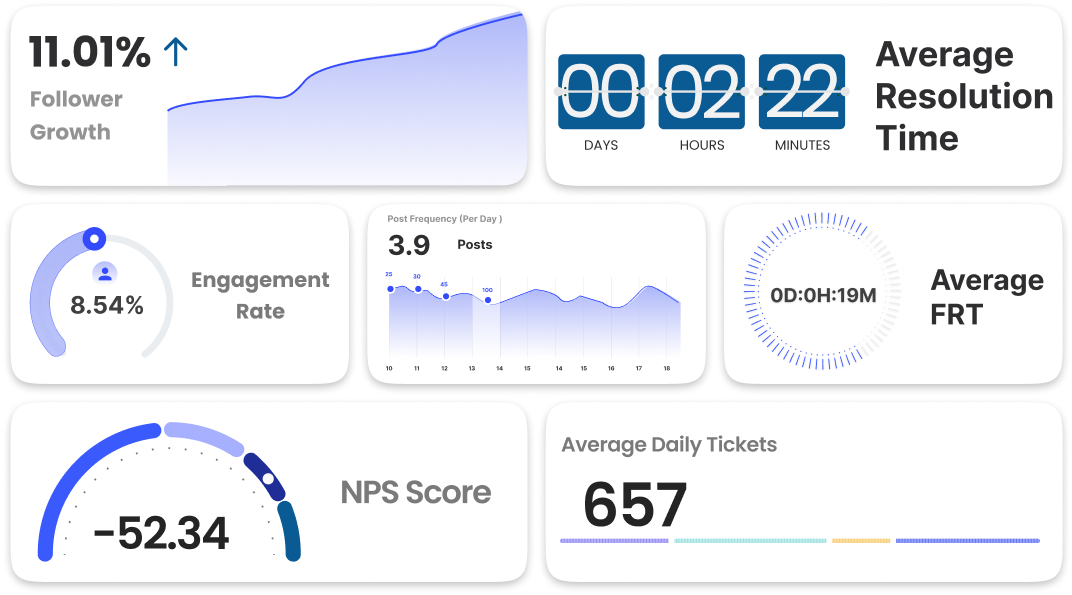
- Follower Growth: 11.01%
The OTT industry continues its steep digital ascent. With more users subscribing and following across social platforms, brands must be prepared to handle higher volumes of interaction—not just in content promotion but in real-time customer support. - Engagement Rate: 8.54%
Strong engagement underscores audience interest in show announcements, trailers, cast interactions, and meme-worthy moments. However, rising engagement also acts as a double-edged sword—exposing service issues, pricing dissatisfaction, and content criticisms in equal measure. - Post Frequency: 3.90 per day
A high publishing cadence keeps OTT brands top-of-mind. The opportunity here is to strike a balance between promotional posts and service-oriented communication that addresses user concerns (e.g., outage clarifications, subscription guides, and content navigation tips).
Customer Service Performance
- Average First Response Time (FRT): 19 minutes
Exceptionally fast. Most OTT platforms have mastered real-time triaging using automation, which sets a high industry benchmark for others. Maintaining this pace during peak traffic moments (e.g., premiere weekends or outages) will be crucial. - Average Resolution Time: 2 hours, 22 minutes
A stellar resolution time, especially considering the scale. However, resolving quickly is not always equivalent to resolving well. Negative sentiment suggests that many users still leave these interactions unsatisfied. - Net Promoter Score (NPS): -52.34
A deeply concerning figure. While users flock to OTT platforms for entertainment, loyalty suffers due to pricing confusion, poor content recommendations, login or playback issues, and generic support responses. The emotional connection is shallow, and frustration escalates quickly. - Average Daily Tickets: 657
A high volume reflective of the low barrier to customer outreach. Platforms must not only scale efficiently but ensure that responses are empathetic and personalized—not just fast.
Strategic Recommendations for May 2025
- Rebuild Trust Through Personalization
Negative NPS often stems from users feeling unheard or underserved. Start by refining content recommendation algorithms, offering more control over profiles and billing, and personalizing support interactions beyond templated replies. - Use Social Listening to Pre-Empt Escalations
Customer complaints rarely start as tickets. By proactively monitoring social buzz around playback glitches, price hikes, or unpopular UI changes, platforms can get ahead of discontent and win back goodwill. - Balance Automation With Human Touch
While response speed is a win, low NPS suggests a disconnect. Introduce hybrid resolution flows—use bots for basics but escalate billing, access, and account complaints to trained agents. - Invest in Clearer Communication
Many users are confused by pricing tiers, trial cut-offs, and regional availability of content. Clear in-app guides, billing breakdowns, and proactive notifications can resolve friction before it becomes anger.
Looking Ahead to May 2025
The OTT industry doesn’t lack attention—it commands it. But attention isn’t loyalty. CX leaders in this space must move beyond vanity metrics and focus on delivering consistent, transparent, and emotionally intelligent service. Because in a world where switching platforms takes seconds, experience is the only long-term differentiator.
Manufacturing Industry Monthly CXM Report: June 2025

In June 2025, the manufacturing industry maintained a steady but cautious pace in its customer engagement journey. As global supply chains stabilize and D2C channels grow, customer expectations continue to evolve—from just product delivery to reliable after-sales service, transparent updates, and responsive digital support. The numbers from this month show a decent baseline—but also expose the gaps that still need attention.
CXM Diagnosis: What the Data Tells Us
Service speed is passable, not impressive. A 9.5-hour first response time and nearly 15 hours for resolution might be acceptable for B2B procurement cycles, but not for today’s digitally active customer—especially in D2C setups or when support involves technical breakdowns and warranty claims.
Engagement is stable. At 5.81%, the engagement rate is in line with industry norms. What’s working: how-to videos, maintenance tips, and behind-the-scenes stories. What’s missing: more personalized responses and real-time dialogue.
Ticket load is moderate. With 100 tickets a day, support teams aren’t overwhelmed—but that also means expectations for individual attention are higher. It’s not a volume problem. It’s a quality and consistency opportunity.
NPS is decent—but has headroom. A score of 23% indicates satisfaction, but not deep loyalty. Many customers are content—but aren’t evangelizing. The path from ‘satisfied’ to ‘loyal’ depends on predictable service and proactive communication.
CX Spotlights
- A noticeable share of queries centered around product tracking, installation support, and replacement requests.
- Brands that shared production or delivery status updates via WhatsApp and SMS saw fewer escalations.
- On the factory floor, delays are expected. On the customer’s screen, they aren’t. Transparency helps bridge that gap.
CX Wins | CX Risks |
Reasonable resolution time offers a good baseline | First response time still feels sluggish to retail and D2C buyers |
Decent engagement shows content is being consumed | Lack of high-NPS moments could indicate functional but forgettable experiences |
Ticket volumes are manageable | Missed opportunity to upsell or retain due to limited personalization in responses |
Takeaways for the Month
- Accelerate the first response. Even an automated acknowledgement that’s contextual can reduce perceived wait time and improve sentiment.
- Close the loop, clearly. Provide timestamps and estimated completion windows in customer replies. Ambiguity in industrial delivery cycles causes avoidable escalations.
- Make service part of the brand. Don’t let support exist in isolation. Bring customer care into the content mix—highlight technicians, share unboxing or usage tips, and invite feedback.
- Train agents on empathy + efficiency. Most manufacturing queries are factual. But resolving them with a little empathy goes a long way in building trust.
CX Forecast
With increased D2C penetration and more informed B2B buyers, manufacturing brands need to move from reactive assistance to structured, expectation-setting support. Doing so consistently will turn average interactions into long-term partnerships—regardless of whether you’re shipping forklifts or coffee machines.
