 Skip to content
Automobile Industry Monthly CXM Report: July 2025

July 2025 put the spotlight on brand affinity and post-sale support across the automotive sector. From EV launches to service delays, conversations weren’t just about vehicles—they were about trust. The latest CX data shows an industry that’s engaging well but struggling to turn attention into advocacy.
KPI | Value |
Follower Growth | 1.60% |
Engagement Rate | 42.34% |
Post Frequency | 4.56 per day |
First Response Time | 4 hours, 56 minutes |
Resolution Time | 12 hours, 55 minutes |
Net Promoter Score | 13.25% |
Average Daily Tickets | 526 |
CXM Diagnosis: What the Data Tells Us
Engagement is high—brand interest is not the problem.
At 42.34%, engagement in automotive content is among the highest we’ve seen this month. Product drops, feature explainers, and influencer-led test drives are driving clicks. Customers want to talk. The opportunity? Make sure someone is truly listening.
Support is responsive, but sentiment is lukewarm.
With a first response time of under 5 hours and average resolution in just over half a day, the ops are solid. But the NPS of 13.25% shows there’s a disconnect between performance and perception. Customers are being served, but not wowed.
Ticket volume is heavy and steady.
526 daily tickets reflect ongoing pressure on CX teams—especially as cars become more software-driven and service-linked. From infotainment bugs to servicing delays, the volume reflects a sector that’s moving fast—but not always smoothly.
CX Spotlights
Top complaint categories:
- Delayed service appointments and parts availability
- Inconsistent digital experiences across platforms (web, app, showroom)
- Long turnaround times on warranty-related queries
Bright spots worth replicating:
- Some brands have begun offering service slot booking through WhatsApp with automated reminders—cutting support volume and improving satisfaction
- In-depth video explainers shared post-purchase are helping reduce ticket load on basic feature usage
What customers are signaling:
They don’t want to chase. From tracking service requests to understanding EV charging compatibility—people want information, autonomy, and confirmation. Not follow-ups and frustration.
CX Wins
- Industry-leading engagement shows storytelling and product communication are working
- Sub-5 hour FRT helps manage expectations early in the journey
CX Risks
- Sentiment is soft. NPS is positive, but barely.
- Service and support delays are eroding post-sale loyalty
Takeaways for the Month
Automate Post-Sale Communication
Most CX gaps stem from a lack of updates. Build automated flows that proactively share service status, part availability, or estimated completion times.
Get Granular with Feedback
Dig deeper into the NPS drivers. Is the drop-off happening during support, delivery, service, or ownership? Use micro-surveys tied to each stage.
Support Your Dealers
CX isn’t only a head-office game. Dealerships still handle a large portion of daily interactions—equip them with better tools, training, and escalation routes.
Layer in Soft Skills
As customer interactions increase around high-investment decisions, soft skills—empathy, tone, assurance—matter. Automate what you can. Humanize what you can’t.
CX Forecast
EV growth, rising interest in subscriptions, and smart-car integrations are reshaping expectations. Automotive brands need to evolve from being reactive problem-solvers to proactive experience partners. The race isn’t just for horsepower anymore—it’s for attention, emotion, and trust.

Fast-Moving Consumer Goods (FMCG) Beverage Industry Monthly CXM Report: July
2025

In July 2025, FMCG brands maintained consistent digital output—but consistency didn’t translate into customer satisfaction. While the category remains volume-driven and fast-moving by nature, the real CX challenge lies in meeting expectations for speed, transparency, and accountability. This month’s metrics reflect a category strained by delayed resolutions and declining sentiment.
KPI Snapshot
KPI | Value |
Follower Growth | 1.51% |
Engagement Rate | 5.57% |
Post Frequency (per day) | 4.17 |
First Response Time (FRT) | 10 hours, 46 minutes |
Average Resolution Time | 3 days, 5 hours, 5 minutes |
Net Promoter Score (NPS) | -34.11% |
Average Daily Tickets | 422 |
CX in Focus: What the Numbers Reveal
High visibility, low velocity.
At 4.17 posts per day, FMCG brands are maintaining steady top-of-mind presence—but it’s not matched by CX responsiveness. A first response time nearing 11 hours may be tolerable for low-stakes questions, but for complaints about expired products, delivery failures, or health concerns, it’s far from acceptable.
Three-day resolution time is a red flag.
In a category where the product is often consumed within days—or hours—of purchase, taking more than three days to close a ticket is simply too long. Most customers aren’t just annoyed; they’ve moved on.
Negative sentiment is catching up.
The NPS of -34.11% is the most telling number. It reflects deep-rooted frustration, often from repeated poor service experiences. It’s not just about a missed delivery or damaged packaging—it’s the silence or confusion that follows.
Pain Points That Need Urgent Fixing
- Ticket overflow without triage: Many FMCG brands face an overwhelming ticket load without proper classification. High-priority issues get buried under routine inquiries.
- Disconnected CX systems: Social, email, chat, and voice are often handled in silos—leading to duplicated effort and inconsistent messaging.
- Support teams lack product context: Agents often don’t have real-time access to product recalls, batch info, or delivery timelines—causing friction during resolution.
What’s Working
- Post frequency is healthy: Consistent content delivery, especially for seasonal promos or campaign launches, helps maintain engagement.
- Steady follower growth: Even with modest numbers, customers are still tuning in—this indicates brand interest remains intact, if not loyalty.
What Needs to Change
Automate the basics
Use AI to resolve repeat issues—wrong flavor, price mismatch, return request—instantly. Route more complex cases with full context to human agents.
Centralize support
Integrate your social and CRM tools. Customers don’t care if their issue came in via Instagram or email—they just want answers.
Pre-empt product issues
Proactively communicate known delays, substitutions, or quality concerns. Owning the narrative avoids social blowouts.
Empower agents with product intelligence
Arm frontline support with SKUs, inventory updates, and policy info. This builds trust in seconds and reduces back-and-forth dramatically.
The Road Ahead
FMCG brands are built on speed—but that promise can’t stop at the shelf. From order to resolution, customers expect a frictionless journey. If the goal is to build repeat purchase behavior and brand affinity, CX teams need to treat every ticket like a make-or-break moment. Because in FMCG, there’s always another brand ready to step in.

Airlines Industry Monthly CXM Report: July 2025

July 2025 continued to test the limits of airline customer experience. While operational stability slightly improved, customer expectations—especially around support speed, transparency, and emotional recovery—remained unforgiving. CX teams saw some wins in response time, but challenges around resolution and sentiment suggest deeper structural gaps that still need addressing.
KPI | Value |
Follower Growth | 0.93% |
Engagement Rate | 6.16% |
Post Frequency | 3.45 per day |
First Response Time | 41 minutes |
Resolution Time | 23 hours, 11 minutes |
Net Promoter Score | -45.05% |
Average Daily Tickets | 322 |
CXM Diagnosis: What the Data Tells Us
Speed is improving—but resolution is still the bottleneck.
An FRT of just 41 minutes is encouraging and places the industry ahead of most sectors when it comes to rapid acknowledgment. However, the near 24-hour average resolution time reveals that customer concerns aren’t being closed fast enough. In aviation, where issues like cancellations, delays, and baggage mishandling are highly time-sensitive, this gap is costly.
Sentiment remains negative.
Despite an engaged audience (6.16% engagement rate) and reduced ticket volume compared to previous months, the NPS of -45.05% suggests customers are still dissatisfied with the support journey. Engagement alone isn’t translating into perceived value or satisfaction.
Lower ticket volume offers breathing room.
With 322 daily tickets—down from the spikes seen earlier this year—airline support teams have more space to re-strategize. This is a critical window to review escalation protocols, training, and technology investments before holiday travel season begins.
CX Spotlights
What’s surfacing most in ticket logs:
- Prolonged refund timelines and unclear claim processes
- Frustrations around last-minute schedule changes
- Unreliable updates about baggage and rebooking status
Where some airlines got it right:
- Push notifications for rebooking options within minutes of disruptions
- Social media support teams that resolve via DMs within hours, not days
Customer signal:
People aren’t just expecting fast responses—they want ownership. Passing issues between departments or redirecting customers multiple times is killing brand trust.
CX Wins
- Sub-hour FRT shows teams are taking responsiveness seriously
- Improved post frequency (3.45/day) keeps brands visible during key moments
CX Risks
- Resolution still takes nearly a day—too long in high-stakes travel scenarios
- NPS in the red reflects that customers may be switching brands after one bad experience
Takeaways for the Month
Own the Resolution, Not Just the Response
Fast replies only go so far. Equip agents with better context and authority to resolve issues in one touch wherever possible.
Standardize Disruption Protocols
Establish consistent playbooks for flight delays, baggage problems, and weather-related changes. Remove guesswork for agents and anxiety for passengers.
Prioritize High-Stakes Scenarios
Not all tickets are equal. Use AI to flag and fast-track urgent queries—especially those impacting travel within the next 6 hours.
Close the Loop with Clear Follow-Ups
Once an issue is marked “resolved,” ensure the customer agrees. A short confirmation message or feedback prompt can make a lasting difference.
CX Forecast
With peak season on the horizon and operational challenges likely to continue, airlines need to double down on resolution speed and emotional intelligence. The goal is simple: make every disruption feel less like a failure and more like an opportunity to build trust.

EdTech Industry Monthly CXM Report: July 2025

July was a month of high attention and high expectations in the EdTech space. With exam cycles, back-to-school planning, and mid-year enrollment peaks, education platforms saw another surge in digital interaction. This momentum was reflected in both the engagement rate and ticket volume—but so was the pressure to deliver answers quickly and meaningfully.
KPI Snapshot
KPI | Value |
Follower Growth | 4.87% |
Engagement Rate | 91.05% |
Post Frequency (per day) | 2.45 |
First Response Time (FRT) | 3 hours, 51 minutes |
Average Resolution Time | 11 hours, 31 minutes |
Net Promoter Score (NPS) | 26.3% |
Average Daily Tickets | 144 |
CXM Diagnosis: What the Data Reveals
EdTech brands are commanding attention—now it’s about consistency.
A 91.05% engagement rate is exceptionally high. Students, parents, and educators are clearly interacting with content. But high engagement comes with high accountability. Every ad, every comment, every DM sets a tone that must be matched by support experiences.
FRT is decent, but not yet competitive.
A 3-hour average response time is respectable, especially for brands handling emotionally charged queries like exam results, payment issues, or access to learning materials. But considering the urgency of many student requests, there’s still a need for quicker triage and clearer communication.
Resolution time is stable, but every hour counts.
At just over 11 hours, most support queries are closed within the same day. However, delays in solving issues related to login failures, curriculum confusion, or technical errors during live classes can erode trust quickly.
CX Themes from July
- Clarity is king.
A noticeable share of tickets stem from unclear onboarding, confusing dashboard flows, or ambiguous instructions. Simplifying the user journey—and backing it up with just-in-time support—remains a strategic win. - Proactive support is gaining traction.
Brands that are using analytics to predict student bottlenecks—such as dropout likelihood, deadline anxiety, or incomplete profiles—are already seeing better NPS scores. - Multilingual support is no longer optional.
As EdTech platforms scale into Tier 2/3 regions and international markets, language-sensitive support (both human and automated) is emerging as a key CX differentiator.
CX Priorities for August
- Integrate in-app micro-support
Embed real-time FAQs, tooltips, and AI assistants within dashboards and learning portals. Meet users where the confusion begins, not just where they complain. - Build human backup for AI-first models
Chatbots are doing heavy lifting—but when escalation happens, handoffs should feel natural, not jarring. Ensure your human agents see complete context and conversation history before jumping in. - Empower educators with CX tools
In many platforms, teachers are the front line. Equip them with knowledge bases, escalation triggers, and simple ways to raise support tickets for students in distress. - Use engagement signals to personalize support
High-engagement learners might need reminders and deeper learning resources, while low-engagement users may need nudges, simplified content, or motivational outreach. Don’t treat all users the same.
Final Word
EdTech brands are not just delivering content—they’re delivering futures. And with that comes responsibility. The strongest platforms are blending real-time responsiveness with long-term trust building. July’s numbers show plenty of potential, but also a clear message: as learner expectations mature, your support strategy must evolve to match them—fast, clear, and always one step ahead.

Apparel Industry Monthly CXM Report: July 2025

July painted a curious picture for the apparel and lifestyle space. While brands continued to publish content and build out customer support processes, customer enthusiasm—at least in public—seems to have dipped. This month’s CX numbers suggest the need for fresh energy: sharper content, faster responses, and more emotional connection with the audience.
KPI Snapshot
KPI | Value |
Follower Growth | 0.83% |
Engagement Rate | 0.77% |
Post Frequency (per day) | 1.65 |
First Response Time (FRT) | 8 hours, 34 minutes |
Average Resolution Time | 9 hours, 39 minutes |
Net Promoter Score (NPS) | 40.14% |
Average Daily Tickets | 82 |
CXM Diagnosis: What the Data Tells Us
Engagement is low—and not for lack of trying.
A 0.77% engagement rate reflects low interaction despite consistent content delivery (1.65 posts/day). This gap suggests that content might be missing the mark emotionally or creatively. Static images and generic product promotions won’t cut it anymore—especially when consumers crave more personality and storytelling from fashion brands.
Follower growth is sluggish.
At just 0.83%, growth barely moved. That’s a red flag in a visually-driven industry. While existing customers might be sticking around (supported by a solid NPS of 40.14%), reaching new audiences will require bolder, more distinctive campaigns.
Support metrics are quietly strong.
The average response time of 8 hours and resolution time just under 10 hours are respectable. This shows that once customers reach out, they’re being taken care of. Maintaining this efficiency while scaling engagement efforts should be a core focus moving forward.
CX Signals from July
- Fit issues, delivery timelines, and exchange policies dominated ticket volume.
As expected in apparel, many support queries involved sizing misalignment and delays during final-mile fulfillment. However, the quick resolution time reflects competent issue management. - Visual fatigue is real.
Industry watchers pointed out a repetitive aesthetic across brands—overuse of minimal backdrops, muted tones, and non-descript captions. Gen Z and younger millennials are beginning to tune out. - Few brands are tapping into post-purchase storytelling.
Customers love to share style inspiration, unboxings, and how they wore an item—but most brands aren’t curating or re-sharing this content. That’s a missed opportunity.
CX Priorities for August
- Revamp creative and storytelling strategy
Move beyond flat product shots. Embrace reels, street-style content, community tags, and themed series to get the scrolls and shares going again. - Build a feedback loop from support to merchandising
If sizing complaints or return requests show patterns, feed that data into product development and ecommerce descriptions. Real-time insights should drive operational fixes. - Grow community with UGC and creator collaborations
Involve micro-influencers and customers themselves in showing how items are worn, styled, and lived in. Make followers part of the brand—not just viewers of it. - Turn loyalists into evangelists
With an NPS of 40.14%, you have a base of satisfied customers. Use referral incentives, early access drops, and “customer stylist” programs to turn them into vocal advocates.
Final Word
The apparel sector isn’t struggling—it’s just stuck. And in fashion, stagnation is the enemy. July’s numbers are a nudge to re-energize the voice, sharpen the brand’s cultural presence, and reconnect with the joy of self-expression. The brands that get that right won’t just grow—they’ll resonate.

Consumer Packaged Goods (CPG) Industry Monthly CXM Report: July
2025

The CPG sector is still one of the most visible, competitive, and fast-moving spaces online—but in July 2025, customer satisfaction didn’t quite keep pace with content visibility. While engagement remains respectable, prolonged resolution timelines and a slipping NPS are holding brands back from earning true loyalty.
KPI Snapshot
KPI | Value |
Follower Growth | 0.99% |
Engagement Rate | 14.29% |
Post Frequency (per day) | 2.32 |
First Response Time (FRT) | 12 hours, 41 minutes |
Average Resolution Time | 1 day, 21 hours, 27 minutes |
Net Promoter Score (NPS) | -18.71% |
Average Daily Tickets | 35 |
What the Numbers Say
Solid digital interaction, but disappointing follow-through.
An engagement rate of 14.29% is a bright spot—it shows consumers are reacting to content, from product drops to snackable reels. However, a nearly two-day resolution timeline brings momentum to a halt, especially when dealing with shelf-life questions, delivery complaints, or return issues.
Customer loyalty is slipping.
With NPS falling to -18.71%, even the most engaging brands are losing goodwill. Many customers report delays in response, inconsistent support experiences, and poor handling of complaints, especially with bulk or combo product issues.
Support is under-leveraged.
Despite manageable ticket volumes (35 daily), the time to respond and resolve suggests a lack of triage or automation. This is an avoidable bottleneck—especially for an industry that deals with common, predictable queries.
Where CPG CX Faltered in July
- Lack of Speed: Timeliness matters in low-involvement categories. Whether it’s a broken seal or a missing promo item, brands are not responding fast enough to retain trust.
- Sentiment Gaps: Customers love content but aren’t loving the post-sale experience. This gap between brand voice and support voice is damaging credibility.
- Missed Moments: Most brands aren’t using delivery confirmations, post-purchase thank-yous, or reorder nudges to extend the customer journey meaningfully.
What’s Working
- Engaging content that keeps people talking—especially around health-forward products, ethical sourcing, and local sourcing initiatives.
- A steady cadence of posting (2.32/day) that keeps brands top of mind without overwhelming feeds.
What Needs Work
- Reducing dependency on manual support workflows.
- Addressing common complaints with contextual FAQs, chatbot flows, and instant fixes.
- Bringing marketing and support closer together—consistency in tone, messaging, and care matters.
CX Actions for August
Turn Insights into Interventions
Use historical ticket data to flag top complaint types and set up automated playbooks. Many issues don’t need human handling—they need speed.
Fix the ‘Resolution Drag’
Getting back to a customer is not enough. The handoff between response and resolution must be tightened. Equip agents with full order histories, channel context, and product details.
Reinforce Post-Purchase Trust
Keep customers warm after the buy. Follow-up emails with usage tips, recipe suggestions (for food products), or refill reminders build stickiness.
Bridge the Sentiment Divide
Engagement and satisfaction should go hand-in-hand. Ensure that the tone and promise of content are reflected in the support experience as well.
Outlook
The CPG sector thrives on emotion, impulse, and repetition. Brands that smooth the post-purchase experience—especially for online orders—will earn more than clicks. They’ll earn loyalty. The opportunity is within reach, but only if CX is treated with as much creativity as content.

Real Estate Industry Monthly CXM Report: July 2025

In July 2025, real estate brands saw digital momentum, but that traction hasn’t yet translated into satisfaction. As buyers and renters navigate increasingly digital property journeys, timely service and trust-building communication are more important than ever. The data tells us that while engagement is climbing, experience delivery is still a step behind.
KPI Snapshot
KPI | Value |
Follower Growth | 3.70% |
Engagement Rate | 24.01% |
Post Frequency (per day) | 2.05 |
First Response Time (FRT) | 8 hours, 58 minutes |
Average Resolution Time | 1 day, 1 hour, 47 minutes |
Net Promoter Score (NPS) | -4.97% |
Average Daily Tickets | 42 |
What the Numbers Say
Digital traction is building fast.
Follower growth at 3.70% and an engagement rate of 24.01% highlight that property seekers are highly active online. Whether it’s virtual walkthroughs, market insights, or short-form explainers on home loans and rent laws, audiences are paying attention.
But responsiveness isn’t keeping pace.
With nearly 9 hours to respond and over a day to resolve issues, many prospective buyers and tenants are left waiting—often during critical decision-making windows. When delays happen in real estate, they don’t just cost time—they can cost trust, leads, and deals.
NPS confirms this friction.
A Net Promoter Score of -4.97% reveals underlying dissatisfaction. The gap between strong content engagement and weak service follow-through is creating a credibility issue for many real estate brands.
Where Real Estate CX Lagged in July
- Support blind spots: Ticket volumes are manageable, but many responses lack personalization—especially on complex queries like down payment structures or lease disputes.
- Delayed follow-ups: Missed callbacks, slow WhatsApp responses, and inconsistent escalation protocols are frustrating high-intent customers.
- Disconnected journeys: While marketing teams push out engaging content, service teams often operate in isolation—causing misalignment in tone, context, and urgency.
What’s Working
- Strong storytelling around property investments and urban development trends is driving up engagement.
- Interactive content like polls (“Rent or buy in 2025?”), webinars, and “property of the week” spotlights are attracting attention and resharing.
What Needs Work
- Faster acknowledgment and triaging of queries across platforms.
- Better CRM integration to surface previous conversations and preferences.
- Proactive nudges: agents should follow up before prospects drop off—not after.
CX Actions for August
Respond faster with context
Use AI to classify incoming queries—buyer vs. renter, urgent vs. casual—and route them accordingly. Give teams a unified customer view with lead score, past queries, and property interests.
Shorten the resolution loop
Enable cross-functional support between marketing, agents, and legal/compliance teams. Many resolution delays stem from poor internal handoffs.
Add more human touchpoints
Real estate is a high-investment, emotionally loaded category. Personal callbacks, virtual consultations, and concierge-style support will improve sentiment dramatically.
Bridge the content-service gap
Make sure support agents are aware of what’s being promised in digital campaigns. Equip them with templated responses or knowledge base articles that mirror marketing offers.
Outlook
With digital discovery now central to home-buying and leasing, CX is no longer a backend function—it’s the competitive edge. Brands that show up with the right message and timely, informed service will earn the trust that turns browsers into buyers.

Hospitality Industry Monthly CXM Report: July 2025

July 2025 reflected a promising upward trend in digital engagement for the hospitality sector. With summer travel peaking, customer expectations remained high—but so did satisfaction levels. A notable rise in social interaction and service responsiveness highlights how hospitality brands are building loyalty through thoughtful, timely, and human support.
KPI Snapshot
KPI | Value |
Follower Growth | 2.01% |
Engagement Rate | 16.6% |
Post Frequency (per day) | 1.81 |
First Response Time (FRT) | 3 hours, 8 minutes |
Average Resolution Time | 10 hours, 40 minutes |
Net Promoter Score (NPS) | 53.0% |
Average Daily Tickets | 26 |
CXM Analysis: Where the Industry Stands
Trust is being earned through consistency.
A 2.01% follower growth alongside a high engagement rate of 16.6% shows that hospitality brands aren’t just being seen—they’re being appreciated. The relatively lean posting cadence (1.81 per day) didn’t hinder interaction, suggesting that brands are prioritizing quality over quantity and leaning into meaningful storytelling, guest features, and travel inspiration content.
Responsiveness is strong across the board.
A first response time of 3 hours and resolution within 11 hours is a healthy benchmark, especially for an industry that deals with real-time issues like booking changes, special requests, or service complaints. These timelines reflect mature support structures—most likely blending live chat, automation, and localized teams.
Sentiment is solid.
A Net Promoter Score of 53.0% places hospitality among the top performers this month. This figure reflects the payoff of empathetic service—especially in handling last-minute changes, guest grievances, or loyalty-related queries. Customers are not just heard but often feel understood, which is a critical edge in a competitive category.
Key CX Insights from July
- Personalization is driving delight.
Brands that responded to guests using prior interaction context or booking details saw a marked increase in satisfaction scores. This signals the importance of unified customer profiles across digital and on-premise touchpoints. - Timely gratitude earns goodwill.
Hotels and resorts that followed up with thank-you messages, review requests, or next-stay vouchers converted neutral guests into promoters. These micro-interactions go a long way in building long-term loyalty. - Event- or weather-triggered comms matter.
Some brands used AI-driven alerts to notify guests about local events, traffic disruptions, or weather changes—turning potential frustrations into moments of surprise and care.
Actionable Priorities for August
- Enhance the Booking-to-Check-out Journey
Integrate pre-arrival support, real-time in-stay assistance, and post-stay feedback loops. Customers remember the whole experience, not just isolated touchpoints. - Use AI to Preempt Friction
Predict guest needs based on stay history or sentiment analysis. For example, suggest room upgrades to returning guests who once gave low ratings for comfort. - Create Content That Serves and Sells
Balance promotional posts with high-utility content—think packing tips, local guides, or accessibility info. These drive engagement and reduce incoming queries. - Tighten Response for High-Value Segments
Frequent travelers, loyalty members, and event bookers should have expedited support channels—these are the guests with high stakes and high lifetime value.
Final Thought
The hospitality sector is performing well—but not all brands will convert high engagement into long-term advocacy unless they sustain momentum across service and content. The brands that win will be those who make digital feel personal, timely, and frictionless—because in hospitality, it’s never just about rooms or restaurants. It’s about how guests feel every step of the way.

Telecommunications (Telecom) Industry Monthly CXM Report: July 2025

Telecom brands continue to walk a fine line between being essential and being invisible. In July 2025, the data reveals a familiar tension: customers are engaged, service times are improving, but sentiment remains stubbornly negative. This month’s CX signals underscore a critical truth—being fast isn’t enough when the experience still feels frustrating.
KPI Snapshot
KPI | Value |
Follower Growth | 1.07% |
Engagement Rate | 5.44% |
Post Frequency (per day) | 3.21 |
First Response Time (FRT) | 3 hours, 30 minutes |
Average Resolution Time | 8 hours, 6 minutes |
Net Promoter Score (NPS) | -16.25% |
Average Daily Tickets | 261 |
CXM Diagnosis: What the Data Tells Us
Response time is on point.
A first response time of just over three hours is a strength—especially in a high-volume industry like telecom. Brands are clearly investing in frontline responsiveness across support channels, including social and messaging platforms.
But fast doesn’t mean satisfying.
Resolution time is a relatively quick 8 hours, yet the NPS sits at -16.25%. That’s a warning sign. The fixes may be timely, but they’re not always hitting the mark in tone, clarity, or final outcome. For customers, unresolved billing issues, plan confusion, or network instability can quickly erode trust—even if an agent gets back to them promptly.
Engagement is moderate but lacks emotional lift.
With a 5.44% engagement rate and 1.07% follower growth, the sector isn’t flatlining—but it’s not exactly building community either. The brand voice, campaign creativity, and customer education strategy all need a refresh.
CX Signals from July
- Top ticket topics included billing disputes, plan upgrades, SIM activation delays, and network outages.
- Anger around repeated contacts: Customers are still having to explain themselves twice—or more. Lack of historical context in tickets leads to frustration.
- Smartphone launches boosted engagement temporarily, but sentiment dropped again when activation or porting issues followed.
CX Priorities for August
- Make support more contextual
Equip agents with full interaction history and usage patterns. Customers shouldn’t have to repeat account info, issue context, or prior resolutions. - Overhaul billing transparency
Most telecom complaints trace back to unexpected charges or unclear terms. Create short-form, visual explainers for plans, bundles, and upgrades. And simplify invoice structures. - Shift from customer service to customer success
Build micro-moments into the lifecycle: data usage nudges, personalized plan recommendations, or proactive outage alerts. Customers notice when you help them stay ahead—not just fix what’s broken. - Humanize the brand without trying too hard
Drop the generic chatbot replies and rigid scripts. Train agents to be clear, calm, and human—especially when tension runs high.
Final Word
Telecom may be infrastructure, but CX is still the brand. The numbers show you’re faster—but customers still don’t feel heard. Fixing that is less about tech, and more about intent. Own the resolution. Educate preemptively. And talk like you care. That’s the path to rebuilding trust—one interaction at a time.

Electronics Industry Monthly CXM Report: July 2025

The digital accessories category continues to evolve quickly—powered by rising consumer interest in smart tech, wearable gadgets, and the convenience-driven lifestyle economy. In July 2025, brands in this space saw strong interaction rates and increased support volume, but a few critical CX gaps remain, particularly around service speed and customer satisfaction.
KPI Snapshot
KPI | Value |
Follower Growth | 1.73% |
Engagement Rate | 4.82% |
Post Frequency (per day) | 4.04 |
First Response Time (FRT) | 21 hours, 54 minutes |
Average Resolution Time | 1 day, 3 hours, 12 minutes |
Net Promoter Score (NPS) | 4.58% |
Average Daily Tickets | 311 |
CXM Diagnosis: What the Data Reveals
Volume is rising, but satisfaction is flat.
311 tickets per day reflect the continued boom in gadget purchases and tech-driven lifestyles—but the NPS of 4.58% suggests many users leave the support journey with unresolved frustration. For brands in this space, usability and post-purchase clarity are just as important as product features.
Customers are reaching out, but not getting fast answers.
A first response time of nearly 22 hours simply doesn’t align with the expectations of customers used to “plug-and-play” convenience. In an industry where device downtime affects daily routines, even simple questions like “Why isn’t this pairing?” or “Where’s my charger?” deserve swift responses.
Content is working, but it could work harder.
A 4.82% engagement rate is respectable in this category. The challenge now is to turn that engagement into education—especially around setup, maintenance, and real-world use cases. Community-driven tutorials, troubleshooting reels, and influencer walkthroughs can play a big role in reducing ticket volume.
CX Themes from July
- Most tickets are avoidable.
A large share of queries could be resolved with better documentation or in-app guidance. Think: installation how-tos, warranty clarity, or compatibility checks—all surfaced proactively at the right moment. - Customers want to escalate faster.
With service times stretching beyond a day, many users are bypassing formal channels and going straight to social media. Brands with real-time escalation paths—especially via chat—are seeing better sentiment. - Price is no longer the only deciding factor.
Consumers are showing signs of valuing reliability and post-purchase support, especially in premium accessory categories (wireless audio, home automation, wearable tech). This makes CX a real differentiator.
CX Priorities for August
- Tackle the FRT issue head-on
Introduce a 24/7 automated support layer across key channels—especially WhatsApp, Instagram, and in-app chat. Even a helpful first interaction can dramatically reduce perceived wait time. - Segment and personalize support
Not all customers need the same resolution workflow. Use smart routing to prioritize warranty claims, device pairing issues, or shipping concerns differently. - Turn FAQs into bite-sized, visual content
The same questions show up again and again. Create GIF-based how-tos, carousel explainers, or short videos pinned to your social handles and embedded in your checkout flow. - Improve the handoff between marketing and support
Many pre-sale campaigns create expectations that support teams aren’t aligned with. Improve internal sync to ensure messaging and reality match—especially for limited editions, preorders, or bundled offers.
Final Word
In the electronic accessories category, customer experience isn’t just about solving problems—it’s about preventing them before they happen. Brands that show up quickly, explain clearly, and follow through reliably will find themselves earning loyalty that outlasts even the shiniest new gadget. The next quarter is a chance to close the gap between product promise and post-sale performance.

Gaming Industry Monthly CXM Report: July 2025

July 2025 reinforced the gaming industry’s reputation as one of the most agile, responsive, and community-driven spaces in CX. With a hyper-engaged audience and high support volumes, gaming brands are operating under constant scrutiny—but the latest numbers show they’re largely keeping pace.
KPI Snapshot
KPI | Value |
Follower Growth | 4.57% |
Engagement Rate | 41.11% |
Post Frequency (per day) | 5.99 |
First Response Time (FRT) | 15 minutes |
Average Resolution Time | 2 hours, 41 minutes |
Net Promoter Score (NPS) | 36.93% |
Average Daily Tickets | 1,230 |
CX in Focus: What the Numbers Reveal
Fans are loyal—but demanding.
A 4.57% rise in followers and an engagement rate over 40% is no small feat. Gamers are plugged in, vocal, and quick to engage—but they also expect swift, competent support. The average of 1,230 tickets per day reflects a passionate user base that won’t hesitate to report bugs, suggest features, or escalate concerns.
CX speed is the industry’s weapon.
A first response time of just 15 minutes paired with an average resolution time under 3 hours is rare in any industry, let alone one with this kind of volume. Brands clearly understand the stakes—when players can’t log in, lose progress, or encounter server issues, response delays can cause mass frustration.
NPS holds strong despite the pressure.
A score of 36.93% reflects healthy satisfaction, especially considering the high volume of inbound issues. Players feel heard—and importantly, helped. This is a direct result of fast response loops and empowered support teams.
Where Gaming CX Stands Out
- Always-on support: Real-time channels like Discord, in-game help, and social DMs are being monitored and responded to almost instantly.
- Community management = CX: Many gaming brands blend support with community engagement—solving problems while building loyalty.
- Automation without compromise: FAQs, self-help bots, and ticket deflection flows are helping resolve minor issues quickly, without sacrificing the human element for high-stakes tickets.
CX Pressure Points
- Event surges: Ticket volumes spike during in-game events, season launches, and server outages. While response times are excellent now, scalability during peak events is crucial.
- Patch rollouts and bugs: With frequent updates, the window for QA and support prep is tight. Support teams need real-time visibility into known issues to respond meaningfully.
- Player toxicity: Moderation and behavioral concerns are still a CX function. Balancing user freedoms with safety requires well-trained moderation teams and clear escalation paths.
What’s Next: Priorities for August
- Predict the spikes.
Use historical gameplay and event data to staff and prep support teams ahead of demand—especially during rollouts, holidays, or tournaments. - Double down on in-game help.
Reducing ticket creation with in-game support widgets, context-aware FAQs, and embedded help articles will keep players immersed and reduce friction. - Humanize CX through community leads.
As players build emotional connections with mods, streamers, and community reps, formalizing these roles in the CX ecosystem can drive both loyalty and trust. - Keep listening.
Gaming brands often find their biggest wins in Reddit threads, stream chats, and forum posts. Ongoing social listening and sentiment tagging can help teams spot and respond to new pain points before they trend.
Final Thought
Gaming CX isn’t just about resolving issues—it’s about building worlds players want to stay in. The brands that win aren’t just fast; they’re part of the community, constantly leveling up alongside their players. July shows the playbook is working—now it’s time to keep pressing ‘Start’ on innovation.

Over-The-Top (OTT) Platform Industry Monthly CXM Report: April 2025
April 2025 showcased the paradox of digital entertainment: massive engagement, rapid growth, and yet a deepening challenge with customer sentiment. OTT platforms continue to dominate user attention spans, but delivering seamless, always-on experiences across millions of screens has never been more demanding. While operational metrics like response and resolution times are impressive, the low NPS reveals an urgent need for better customer experience design.
Digital Engagement and Growth Metrics
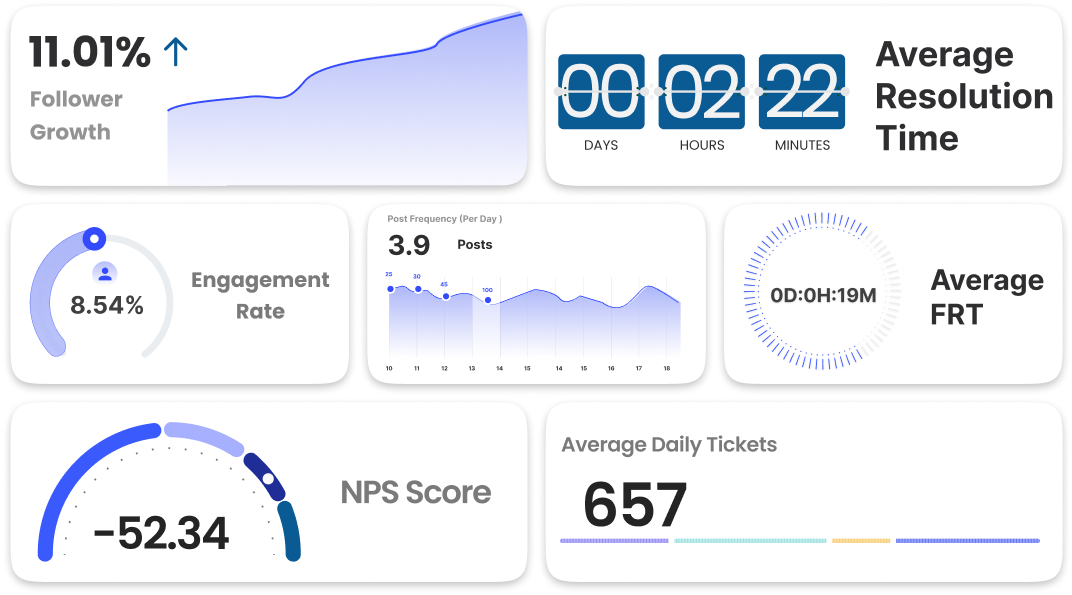
- Follower Growth: 11.01%
The OTT industry continues its steep digital ascent. With more users subscribing and following across social platforms, brands must be prepared to handle higher volumes of interaction—not just in content promotion but in real-time customer support. - Engagement Rate: 8.54%
Strong engagement underscores audience interest in show announcements, trailers, cast interactions, and meme-worthy moments. However, rising engagement also acts as a double-edged sword—exposing service issues, pricing dissatisfaction, and content criticisms in equal measure. - Post Frequency: 3.90 per day
A high publishing cadence keeps OTT brands top-of-mind. The opportunity here is to strike a balance between promotional posts and service-oriented communication that addresses user concerns (e.g., outage clarifications, subscription guides, and content navigation tips).
Customer Service Performance
- Average First Response Time (FRT): 19 minutes
Exceptionally fast. Most OTT platforms have mastered real-time triaging using automation, which sets a high industry benchmark for others. Maintaining this pace during peak traffic moments (e.g., premiere weekends or outages) will be crucial. - Average Resolution Time: 2 hours, 22 minutes
A stellar resolution time, especially considering the scale. However, resolving quickly is not always equivalent to resolving well. Negative sentiment suggests that many users still leave these interactions unsatisfied. - Net Promoter Score (NPS): -52.34
A deeply concerning figure. While users flock to OTT platforms for entertainment, loyalty suffers due to pricing confusion, poor content recommendations, login or playback issues, and generic support responses. The emotional connection is shallow, and frustration escalates quickly. - Average Daily Tickets: 657
A high volume reflective of the low barrier to customer outreach. Platforms must not only scale efficiently but ensure that responses are empathetic and personalized—not just fast.
Strategic Recommendations for May 2025
- Rebuild Trust Through Personalization
Negative NPS often stems from users feeling unheard or underserved. Start by refining content recommendation algorithms, offering more control over profiles and billing, and personalizing support interactions beyond templated replies. - Use Social Listening to Pre-Empt Escalations
Customer complaints rarely start as tickets. By proactively monitoring social buzz around playback glitches, price hikes, or unpopular UI changes, platforms can get ahead of discontent and win back goodwill. - Balance Automation With Human Touch
While response speed is a win, low NPS suggests a disconnect. Introduce hybrid resolution flows—use bots for basics but escalate billing, access, and account complaints to trained agents. - Invest in Clearer Communication
Many users are confused by pricing tiers, trial cut-offs, and regional availability of content. Clear in-app guides, billing breakdowns, and proactive notifications can resolve friction before it becomes anger.
Looking Ahead to May 2025
The OTT industry doesn’t lack attention—it commands it. But attention isn’t loyalty. CX leaders in this space must move beyond vanity metrics and focus on delivering consistent, transparent, and emotionally intelligent service. Because in a world where switching platforms takes seconds, experience is the only long-term differentiator.
Manufacturing Industry Monthly CXM Report: July 2025

In July 2025, the manufacturing industry continued to show signs of a maturing digital presence. With steady audience growth and improving customer engagement, CX leaders in this space are finding that attention spans are no longer just for B2C brands. Customers—whether individual buyers or procurement teams—expect quick, clear, and consistent service. And those who deliver it are beginning to see the rewards in advocacy.
KPI Snapshot
| KPI | Value |
| Follower Growth | 1.31% |
| Engagement Rate | 7.95% |
| Post Frequency (per day) | 2.10 |
| First Response Time (FRT) | 9 hours, 20 minutes |
| Average Resolution Time | 14 hours, 3 minutes |
| Net Promoter Score (NPS) | 25.88% |
| Average Daily Tickets | 104 |
CXM Diagnosis: What the Data Reveals
Digital channels are gaining traction.
A follower growth of 1.31% may seem modest, but for an industry not traditionally associated with high social engagement, it’s a clear sign that manufacturers are increasingly part of broader online conversations—particularly around sustainability, supply chain reliability, and product innovation.
Engagement is strong—but depth matters.
The 7.95% engagement rate is a standout, pointing to content that’s connecting with audiences. What’s important now is to move beyond promotional posts and start building expertise—through behind-the-scenes tours, explainer videos, or product lifecycle storytelling.
Response and resolution times are improving.
FRT under 10 hours and sub-15-hour resolution show that customer service systems are functioning well—but in manufacturing, the impact of delays can be significant. When a spare part or component is mission-critical, every hour counts. Speed should continue to be a focus, especially for high-value accounts or logistics issues.
The volume is high—but manageable.
With 104 daily tickets, support teams aren’t overwhelmed. This opens up a big opportunity: apply the same discipline and empathy from high-volume industries and convert good service into repeat business and referrals.
CX Themes from July
- Proactive logistics support is still missing.
Many inbound tickets stemmed from shipping or tracking queries—problems that could often be solved with real-time delivery updates and exception notifications. - Post-purchase guidance drives loyalty.
Customers increasingly expect brands to support them beyond the invoice—especially with installation, configuration, or maintenance. Brands that offered onboarding touchpoints saw higher satisfaction scores. - Sustainability and traceability are becoming CX issues.
Customers want transparency—where was it made, how, and what happens after end-of-life. Smart manufacturers are building service strategies around these questions.
CX Priorities for August
- Sharpen Response for Priority Customers
Introduce segmentation in your ticketing system to identify and fast-track queries from OEM partners, repeat buyers, or accounts with urgent SLA timelines. - Add Value Beyond Delivery
Automate post-sale journeys: send setup guides, troubleshooting tips, and proactive service reminders that anticipate needs before issues arise. - Build Content Around Expertise
Position your brand as a category educator—not just a supplier. Use CX feedback loops to surface common questions, then address them via content that supports both new buyers and technical audiences. - Make Supply Chain Visibility a CX Feature
If you know a delay is coming, tell them early. Build goodwill by being transparent and offering alternatives, rather than waiting for frustration to show up in your inbox.
Final Word
For manufacturing brands, customer experience is no longer confined to after-sales support. It’s a competitive advantage—rooted in operational clarity, post-sale value, and trust. The ones who treat CX as a partnership, not a cost center, are already shaping the future of the industry. In August, the challenge is clear: make every shipment, interaction, and follow-up feel like part of something reliable.
