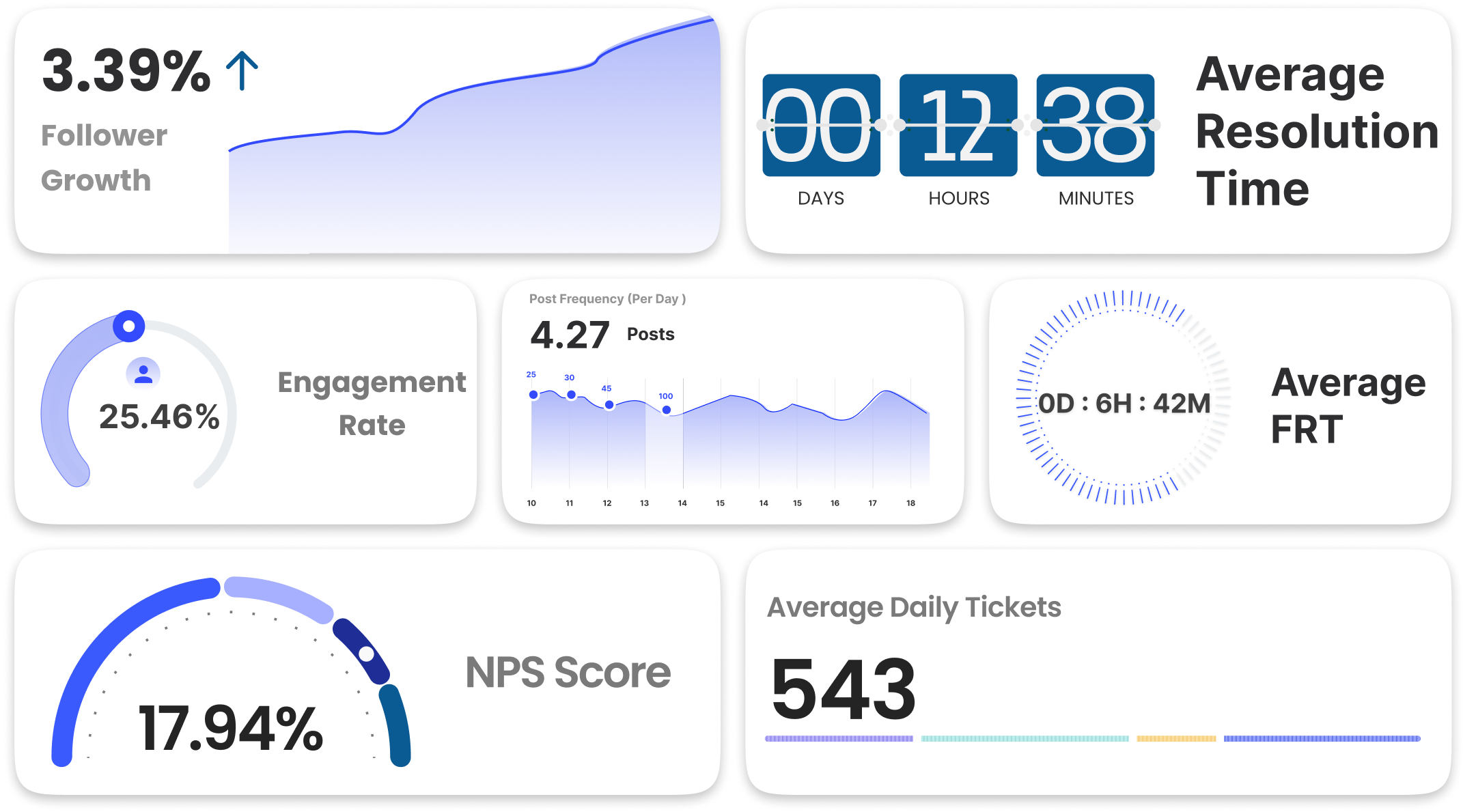
Automobile Industry Monthly CXM Report: September 2025

September was a strong month for the automobile sector, both in customer engagement and sentiment. The industry continues to benefit from high consumer interest—whether in new launches, EV transitions, or ownership experiences—and it shows in the data. Customers are not just following brands; they’re actively interacting with them at levels most industries can only aspire to.
But high engagement also raises the stakes. With over 500 daily tickets on average, brands face the challenge of balancing enthusiasm with execution. The numbers tell a story of an industry that is admired and trusted, but still navigating the operational strain of scaling meaningful conversations.
KPI Snapshot
|
KPI |
Value |
|
Follower Growth |
3.39% |
|
Engagement Rate |
25.46% |
|
Post Frequency (per day) |
4.27 |
|
First Response Time (FRT) |
6 hours, 42 minutes |
|
Average Resolution Time |
12 hours, 38 minutes |
|
Net Promoter Score (NPS) |
17.94% |
|
Average Daily Tickets |
543 |
CXM Diagnosis: What the Data Tells Us
An engagement rate of 25.46% is exceptional, signaling that automobile brands are fueling strong customer conversations—whether it’s around new launches, sustainability efforts, or ownership experiences. Paired with a healthy 3.39% follower growth, the industry is pulling in attention and retaining it.
On the service side, the picture is mixed. Resolution speed at 12.5 hours is competitive given the ticket load, and a positive NPS of 17.94% suggests customers feel supported overall. However, the 6-hour FRT remains a gap; in an era where customers expect instant replies, delayed acknowledgment can erode goodwill, even if the ultimate resolution is satisfactory.
The takeaway: customers are enthusiastic, but responsiveness needs sharpening to match the momentum.
What’s Driving Customer Frustration or Sentiment
- Delayed replies during peak campaign or launch periods.
- Vehicle delivery delays and waitlist frustrations for popular models.
- Service center complaints: scheduling difficulties, slow updates.
- EV charging infrastructure concerns—availability and reliability.
- Positive momentum from sustainability initiatives and innovative campaigns driving buzz and advocacy.
CX Priorities for October
- Tighten response times: Bring FRT closer to 1–2 hours to align with customer expectations.
- Strengthen after-sales support: Improve service center communication and proactive updates.
- Capitalize on campaign buzz: Use spikes in engagement during launches to identify advocates and nurture loyalty.
- Address EV anxieties head-on: Provide transparent updates on charging partnerships and infrastructure expansion.
- Scale personalization: With high ticket volumes, ensure responses carry contextual understanding rather than generic replies.
Final Word
Automotive brands have what many industries crave: customer passion. September’s numbers show strong sentiment and sky-high engagement, but the next challenge is to move from being admired to being responsive at speed. The brands that close the FRT gap while sustaining resolution quality will turn attention into advocacy and transactions into trust.
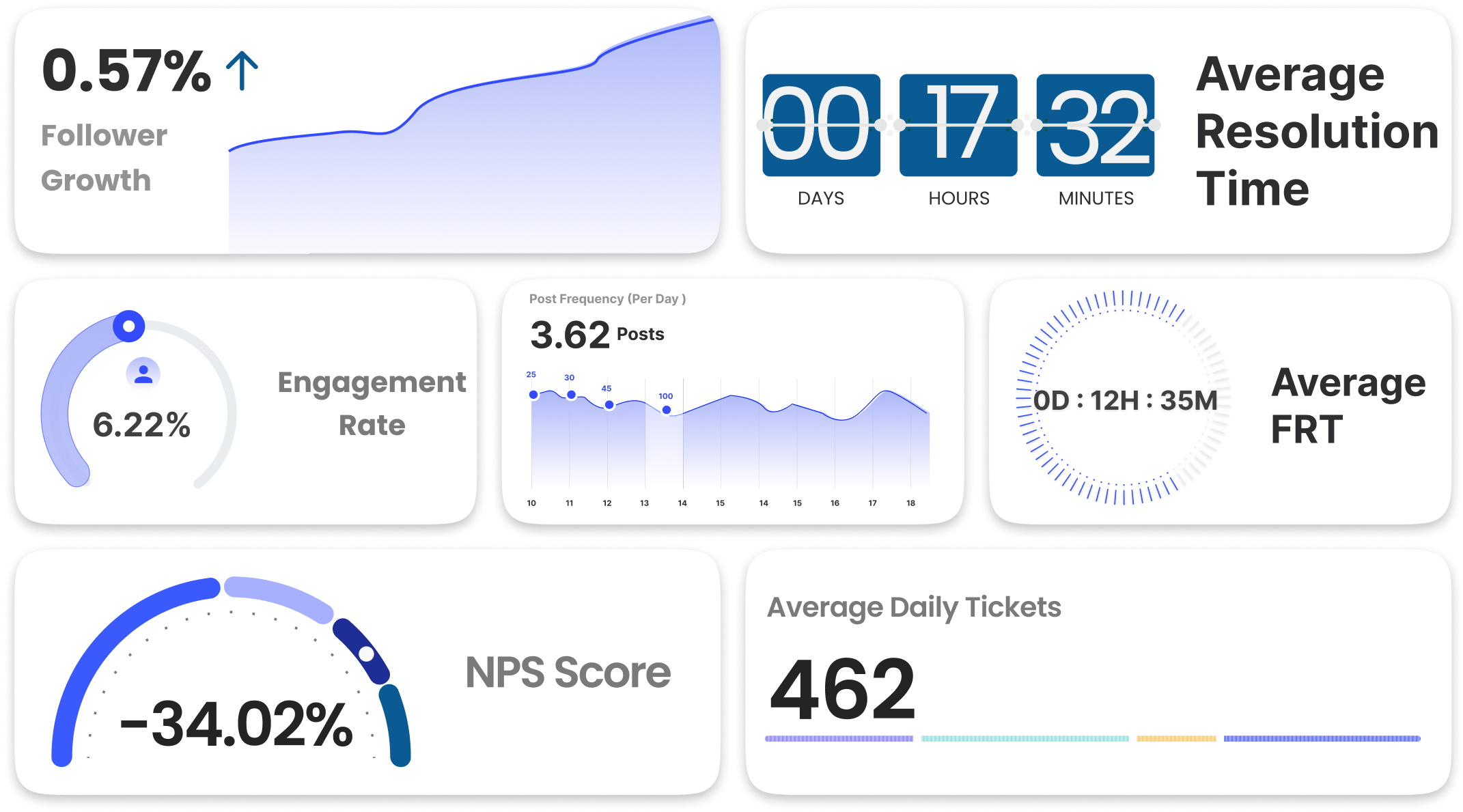
Fast-Moving Consumer Goods (FMCG) Beverage Industry Monthly CXM Report: September 2025

For fast-moving consumer goods (FMCG), volume is both the strength and the strain. September’s data highlights how scale amplifies challenges: with hundreds of daily tickets and constant social chatter, brands are struggling to balance speed with quality.
The sector is active, posting 3.62 times per day, and customers are engaging at a moderate 6.22%. But sentiment tells a harsher truth: an NPS of -34.02% signals that customer frustration outweighs satisfaction. The core issue isn’t resolution—most tickets are closed in under a day—it’s the slow acknowledgment (12+ hours FRT) that leaves customers feeling ignored before their problems are addressed.
KPI Snapshot
|
KPI |
Value |
|
Follower Growth |
0.57% |
|
Engagement Rate |
6.22% |
|
Post Frequency (per day) |
3.62 |
|
First Response Time (FRT) |
12 hours, 35 minutes |
|
Average Resolution Time |
17 hours, 32 minutes |
|
Net Promoter Score (NPS) |
-34.02% |
|
Average Daily Tickets |
462 |
CXM Diagnosis: What the Data Tells Us
Follower growth is sluggish at 0.57%, but the volume of tickets (462 per day) shows brands are not short of attention—much of it complaint-driven. The 6.22% engagement rate suggests customers are active, but the tone of interaction leans toward problem escalation rather than advocacy.
The 12.5-hour FRT is the most damaging metric. In a category defined by everyday consumption, customers expect quick acknowledgment, if not immediate resolution. While issues are technically being closed in under 18 hours, the lag in initial responses means customers perceive service as dismissive. This disconnect explains the highly negative NPS despite relatively fast resolutions.
What’s Driving Customer Frustration or Sentiment
- Delayed acknowledgment of product quality complaints (damaged goods, taste/texture concerns).
- Confusion around promotions, discounts, and pack changes.
- Poor escalation handling for health/safety-related issues.
- Frustration with inconsistent retailer experiences versus brand promises.
- Positive: customers respond well to interactive campaigns and product innovation stories.
CX Priorities for October
- Accelerate acknowledgment: Target under-3-hour FRT to reassure customers promptly.
- Prioritize high-risk issues: Escalate safety or quality complaints immediately with clear communication.
- Clarify promotions and packaging: Reduce confusion by simplifying messaging around offers and changes.
- Harness campaigns for advocacy: Balance complaint-heavy chatter by spotlighting user stories and product wins.
- Invest in escalation intelligence: Equip teams to close the loop decisively instead of bouncing issues between departments.
Final Word
FMCG brands live in the customer’s daily routine, which means small lapses are magnified quickly. September’s benchmarks show an industry responsive in resolution but slow in reassurance, resulting in declining trust. The winners will be those who match their operational scale with real-time care—acknowledging fast, resolving smart, and turning daily interactions into long-term loyalty.
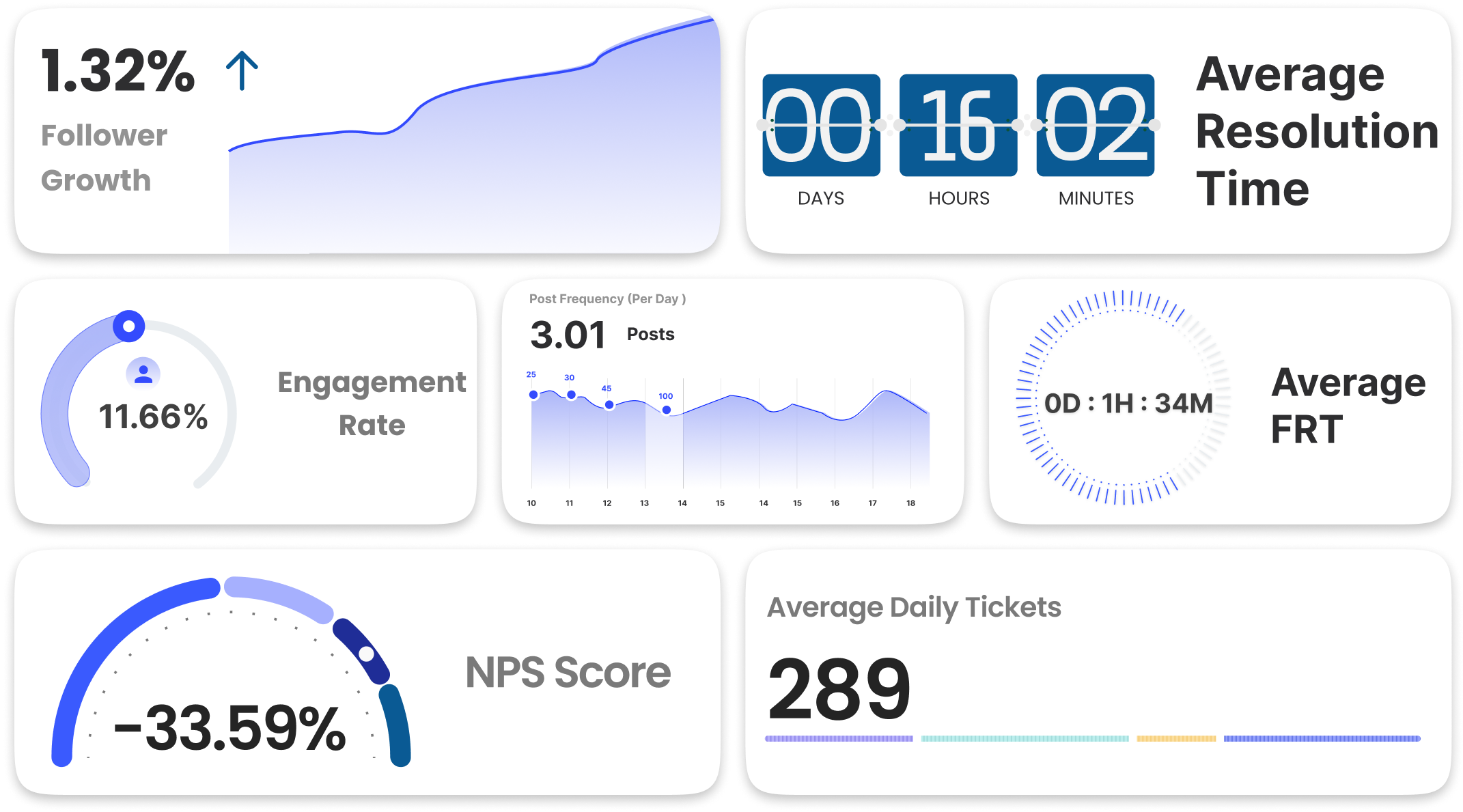
Airlines Industry Monthly CXM Report: September 2025

Air travel is bouncing back in volume, but the experience customers report online tells a more complicated story. In September, engagement soared—passengers are vocal, sharing both praise and frustration—but the gap between quick responses and actual resolution is where airlines are losing trust. The data shows a sector trying hard to keep up, but still struggling with consistency and empathy at scale.
The opportunity is clear: airlines have customers’ attention and are meeting them fast, but they’re not always leaving them satisfied. To translate engagement into loyalty, the focus must shift from “fast replies” to “better outcomes.”
KPI Snapshot
|
KPI |
Value |
|
Follower Growth |
1.32% |
|
Engagement Rate |
11.66% |
|
Post Frequency (per day) |
3.25 |
|
First Response Time (FRT) |
1 hour, 34 minutes |
|
Average Resolution Time |
16 hours, 2 minutes |
|
Net Promoter Score (NPS) |
–-33.59% |
|
Average Daily Tickets |
289 |
CXM Diagnosis: What the Data Tells Us
An engagement rate of 11.66% is remarkably high compared to most industries, but it’s not purely good news—it signals that passengers are compelled to speak up, often about service issues. The volume of daily tickets (289) reinforces the weight of customer demand on service teams.
Response speed stands out as a strength: a 1.5-hour FRT shows frontline teams are prioritizing immediacy. But the 16-hour resolution window undermines that advantage. Customers don’t just want acknowledgment; they want closure. That lag, combined with an NPS of -33.59%, reflects deep dissatisfaction—passengers leave the interaction still carrying the burden of their problem.
Overall, airlines are managing to be present, but not yet persuasive in proving that customer concerns will be truly resolved.
What’s Driving Customer Frustration or Sentiment
- Flight delays and cancellations with poor real-time communication.
- Lost or delayed baggage handling and lack of updates.
- Long resolution loops—customers repeating details across touchpoints.
- Inconsistent treatment of loyalty program members versus standard passengers.
- Positive notes: appreciation for fast social media replies and frontline staff empathy when empowered to act.
CX Priorities for October
- Shorten the resolution cycle: Equip agents with tools and authority to resolve issues in fewer steps.
- Proactive disruption management: Send automated alerts for delays, cancellations, and baggage updates before passengers reach out.
- Empower escalation handling: Train teams to close the loop decisively without unnecessary handoffs.
- Leverage engagement positively: Turn high interaction into an opportunity—spot advocates, amplify good experiences, and balance negative sentiment.
- Rebuild trust with NPS follow-ups: Personally re-engage detractors to recover confidence and prevent churn to competitors.
Final Word
Airlines don’t just move people—they move expectations. September’s data reveals a sector that’s fast on the draw but slow on delivery. To earn back loyalty, airlines must close the gap between response and resolution, turning moments of frustration into proof points of care. The winners next month will be those who show customers not just that they’ve been heard, but that they’ve been helped.
EdTech Industry Monthly CXM Report: September 2025

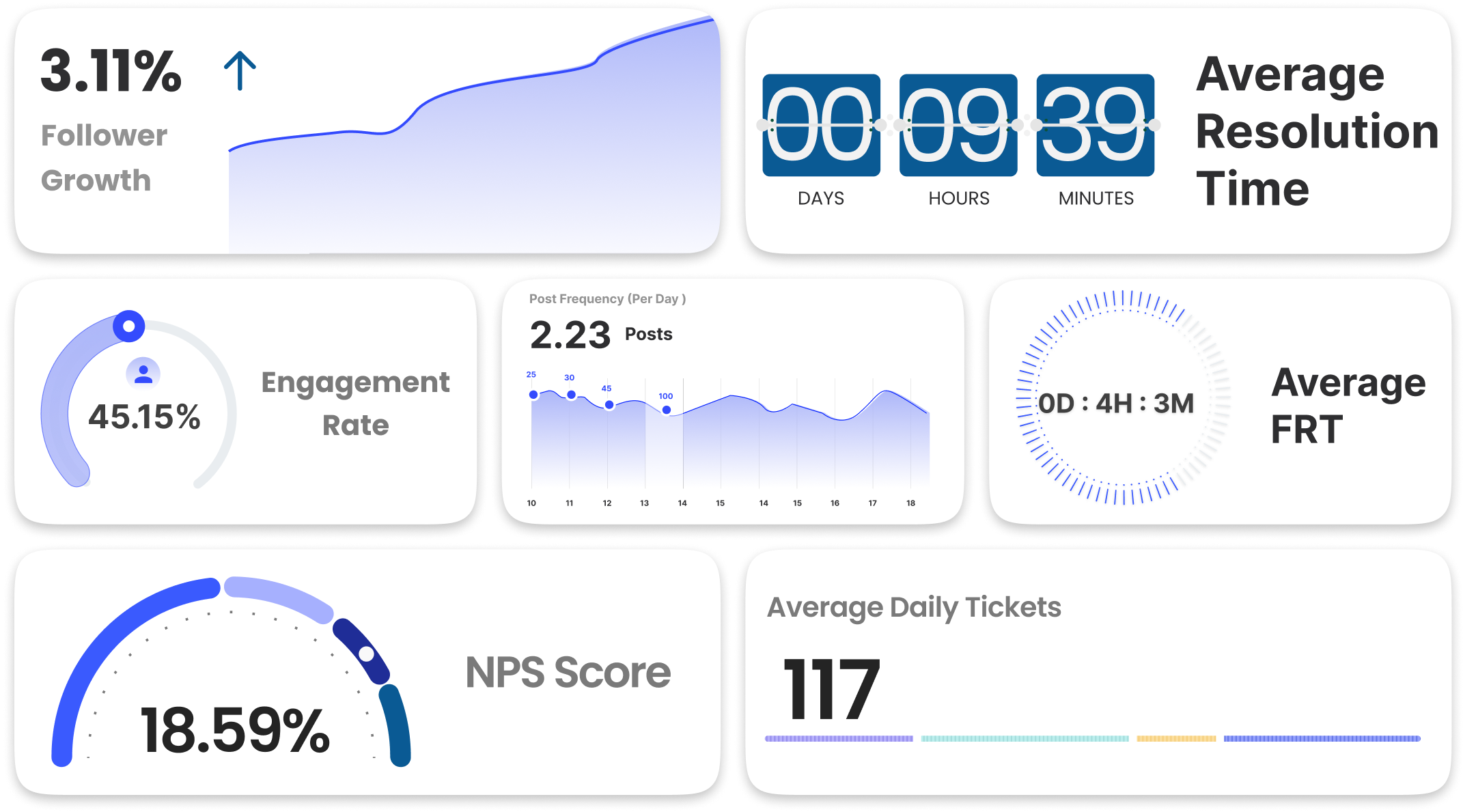
September was a standout month for the Edtech sector, with engagement levels that far exceed most industries. An engagement rate of 45.15% reflects not just curiosity but deep involvement from students, parents, and educators. Edtech platforms aren’t just tools—they’re becoming communities where learning and service intersect.
The service side also looks promising. With an FRT of just over 4 hours and average resolution times under 10 hours, the sector is delivering timely responses to its 117 daily tickets. Combined with a positive NPS of 18.59%, the data shows that customers are largely satisfied with how their issues are handled, even as the industry scales. The challenge ahead is sustaining this momentum while managing rising demand.
KPI Snapshot
|
KPI |
Value |
|
Follower Growth |
3.11% |
|
Engagement Rate |
45.15% |
|
Post Frequency (per day) |
2.23 |
|
First Response Time (FRT) |
4 hours, 3 minutes |
|
Average Resolution Time |
9 hours, 39 minutes |
|
Net Promoter Score (NPS) |
18.59% |
|
Average Daily Tickets |
117 |
CXM Diagnosis: What the Data Tells Us
Follower growth of 3.11% indicates that Edtech brands are steadily expanding their reach, while the extraordinary engagement rate demonstrates a highly participatory audience. This level of interaction is rare and positions the sector as one of the most vibrant in customer conversations.
On the service front, both acknowledgment and resolution metrics are strong compared to other industries. A 4-hour FRT ensures customers aren’t left waiting, and a sub-10-hour resolution time reflects efficient workflows. With a positive NPS, the sentiment is trending in the right direction. Still, high engagement means expectations are also higher—any lapses in empathy or clarity could quickly amplify dissatisfaction.
What’s Driving Customer Frustration or Sentiment
- Occasional delays in resolving billing and subscription-related queries.
- Confusion around course access, renewals, or content availability.
- Frustration when platform updates disrupt class schedules.
- Positive: high praise for interactive features, personalized learning experiences, and supportive educator involvement.
- Positive: strong engagement around success stories, student testimonials, and community-driven campaigns.
CX Priorities for October
- Maintain service speed: Keep FRT under 4 hours and resolution under 12 hours as volumes increase.
- Strengthen clarity: Provide proactive guidance on billing, renewals, and platform updates to reduce confusion.
- Scale personalization: Use AI and data insights to tailor support responses for different learner segments.
- Leverage engagement: Turn the high interaction rate into advocacy by amplifying student success stories.
- Monitor sentiment closely: Stay ahead of spikes in negative feedback to protect the positive NPS momentum.
Final Word
Edtech is no longer just a service—it’s a learning partner. September’s benchmarks showcase an industry combining high engagement with fast, effective support, resulting in positive sentiment and growing loyalty. The opportunity ahead lies in scaling personalization and proactive care, ensuring that every student and parent feels valued in their educational journey.
Apparel Industry Monthly CXM Report: September 2025

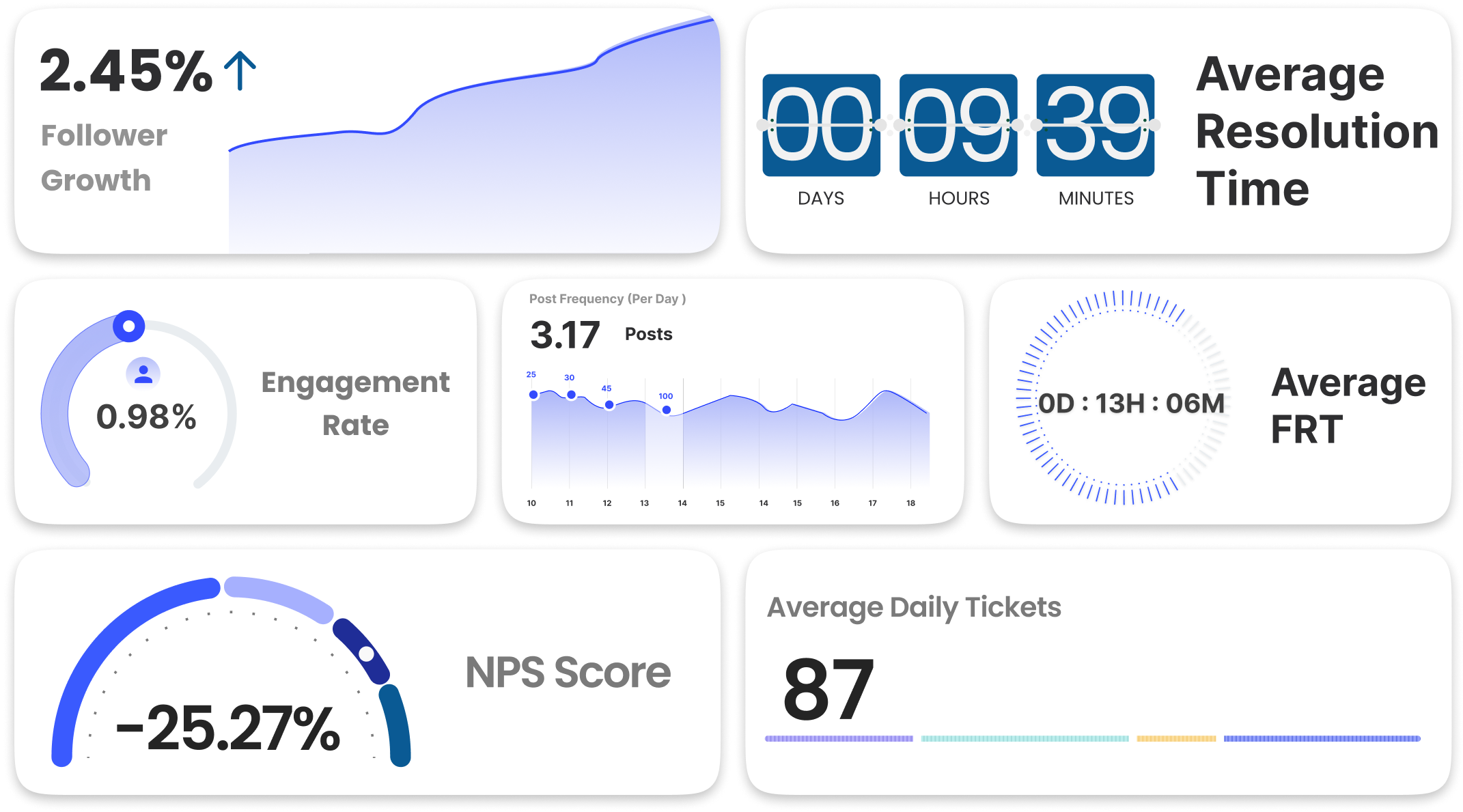
September was a mixed month for the apparel and lifestyle sector. While brands continued to grow their following at a healthy 2.45%, engagement levels remained low at just 0.98%, signaling that customers are more passive observers than active participants. The challenge is clear: while marketing and campaigns are reaching audiences, they aren’t inspiring meaningful conversation or advocacy.
On the service front, the metrics are inconsistent. Resolution times are relatively quick at under 10 hours, but acknowledgment lags significantly, with an FRT of over 13 hours. This gap leaves customers waiting too long before their concerns are even recognized. Coupled with an NPS of -25.27%, sentiment is negative—highlighting frustration with responsiveness, clarity, and service empathy.
KPI Snapshot
|
KPI |
Value |
|
Follower Growth |
2.45% |
|
Engagement Rate |
0.98% |
|
Post Frequency (per day) |
3.17 |
|
First Response Time (FRT) |
13 hours, 6 minutes |
|
Average Resolution Time |
9 hours, 39 minutes |
|
Net Promoter Score (NPS) |
-25.27% |
|
Average Daily Tickets |
87 |
CXM Diagnosis: What the Data Tells Us
The apparel sector is visible and growing, but its low engagement suggests campaigns aren’t cutting through. Customers may admire products but aren’t compelled to interact beyond transactions. Ticket volumes are modest (87 per day), so delays in acknowledgment are less about capacity and more about prioritization.
Resolution times under 10 hours show efficiency once issues are addressed, but the late acknowledgment erodes goodwill. The negative NPS points to frustrations outweighing positive experiences—likely fueled by issues around delivery, returns, and product quality.
What’s Driving Customer Frustration or Sentiment
- Slow acknowledgment of return, refund, and size/fit-related queries.
- Frustration with delayed deliveries or incomplete orders.
- Limited transparency in promotions, discounts, or stock availability.
- Perceived lack of empathy in resolving complaints.
- Positive: appreciation for quick resolutions when agents are empowered to act decisively.
CX Priorities for October
- Cut acknowledgment delays: Reduce FRT from 13 hours to under 3 hours to rebuild trust.
- Enhance post-purchase support: Streamline returns, exchanges, and refunds to reduce friction.
- Clarify campaign messaging: Ensure promotions and stock availability are communicated transparently.
- Inject empathy into responses: Train agents to address sensitive issues (fit, quality) with care, not templates.
- Boost engagement: Leverage creative content, UGC, and community building to lift interaction beyond transactional touchpoints.
Final Word
Fashion moves fast—but CX in this sector hasn’t kept pace. September’s benchmarks show growth without depth, with low engagement and negative sentiment weighing down strong resolution times. The path forward is clear: faster acknowledgment, clearer communication, and more authentic engagement will help apparel brands turn casual followers into loyal advocates.
Consumer Packaged Goods (CPG) Industry Monthly CXM Report: September 2025

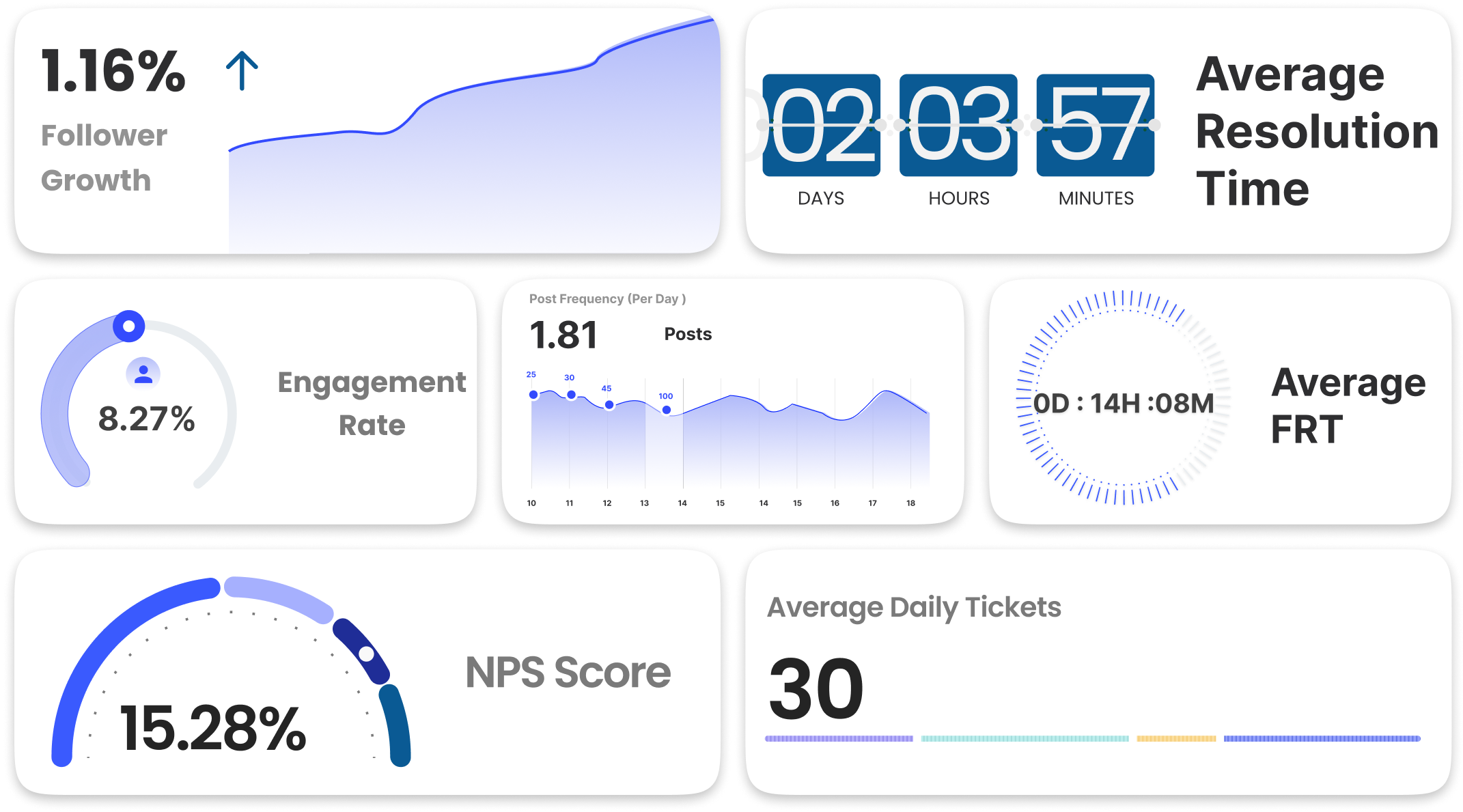
The consumer packaged goods (CPG) sector thrives on scale—millions of products, countless daily interactions, and brand impressions that often come down to a single shelf choice. In September, the data reflects an industry that benefits from strong brand affinity but struggles with responsiveness. Customers are engaged and willing to interact, yet the pace of replies and resolutions lags far behind expectations.
Interestingly, despite long wait times—an FRT of 14 hours and average resolution stretching beyond 2 days—the sector still records a positive NPS of 15.28%. This suggests that while service isn’t flawless, the strength of products, campaigns, and overall brand equity cushions some of the frustration. The challenge ahead is converting goodwill into consistent service delivery.
KPI Snapshot
|
KPI |
Value |
|
Follower Growth |
1.16% |
|
Engagement Rate |
8.27% |
|
Post Frequency (per day) |
1.81 |
|
First Response Time (FRT) |
14 hours, 8 minutes |
|
Average Resolution Time |
2 days, 3 hours, 57 minutes |
|
Net Promoter Score (NPS) |
15.28% |
|
Average Daily Tickets |
30 |
CXM Diagnosis: What the Data Tells Us
Engagement at 8.27% is strong for a high-volume industry like CPG, showing that campaigns, product launches, and consumer conversations are resonating. Follower growth is steady at 1.16%, reflecting sustained interest.
But the cracks are clear: a 14-hour FRT signals that customer inquiries aren’t being acknowledged quickly, and a resolution time of more than 2 days is far out of step with consumer expectations for quick answers. That said, the positive NPS indicates that when customers do get support, the outcome is generally satisfactory and aligned with brand promises. It’s less a question of quality than of speed and accessibility.
What’s Driving Customer Frustration or Sentiment
- Delayed acknowledgment of product complaints or inquiries.
- Long wait times for replacements, refunds, or clarifications.
- Confusion over promotions, packaging changes, or availability.
- Limited escalation pathways for customers seeking faster resolution.
- Positive signals: strong appreciation for new product launches and marketing campaigns that drive community engagement.
CX Priorities for October
- Accelerate acknowledgment: Move FRT from half a day to under 3 hours to reassure customers early.
- Shrink resolution windows: Streamline internal processes to resolve within 24 hours, especially for low-complexity issues.
- Clarify promotions and product info: Pre-empt confusion by ensuring FAQs and campaign messaging are crystal clear.
- Leverage positive sentiment: Spotlight and amplify customer excitement around launches to offset complaint-driven chatter.
- Invest in escalation readiness: Ensure high-priority cases can be fast-tracked without waiting in the standard queue.
Final Word
In CPG, brand love is often the buffer against service gaps. September’s numbers show an industry carried by strong engagement and loyalty, but weighed down by slow responses and resolutions. To sustain trust, the priority must shift from “eventual fixes” to “timely care.” Brands that combine their product strength with faster, more proactive service will turn everyday buyers into long-term advocates.
Real Estate Industry Monthly CXM Report: September 2025

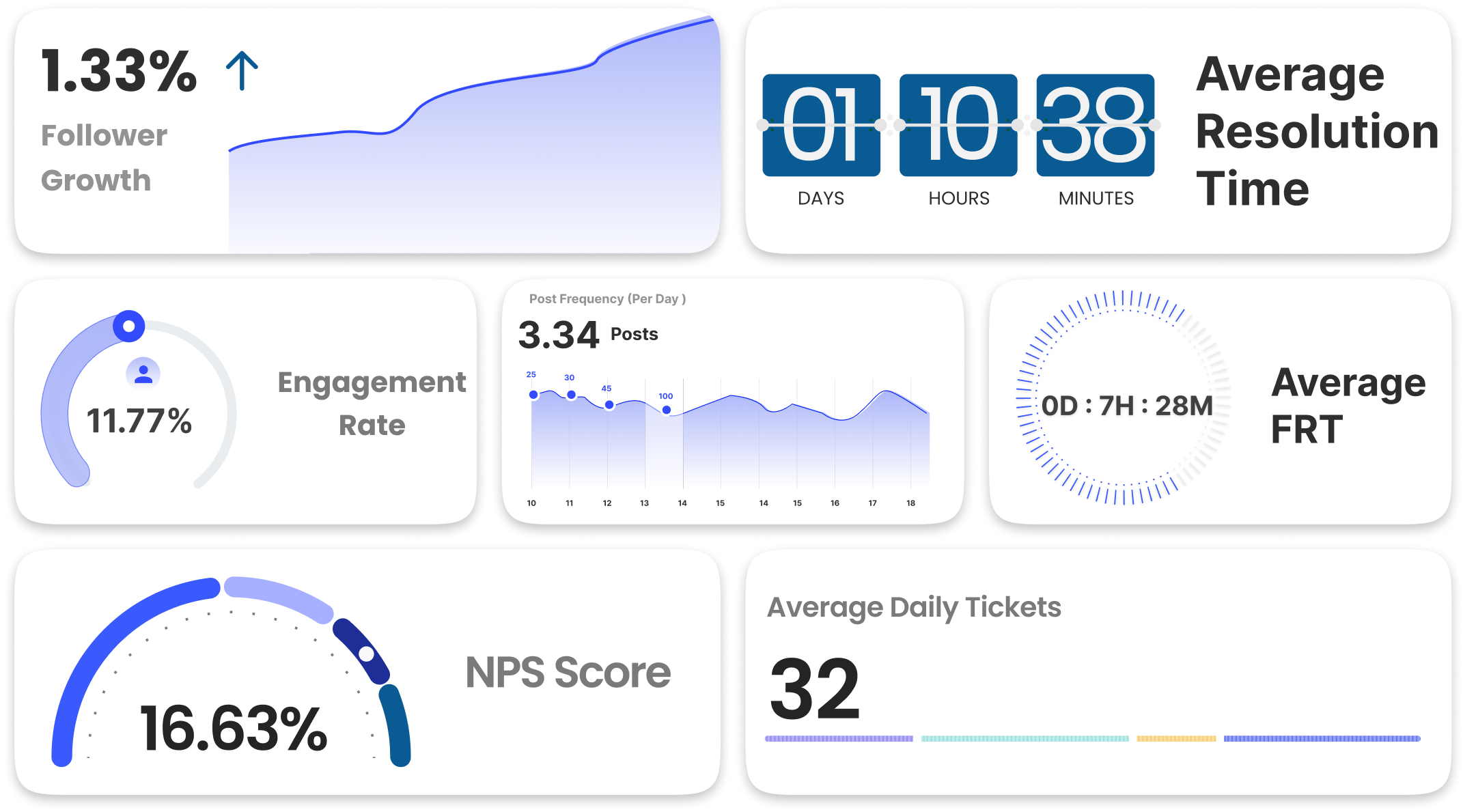
In real estate, trust is currency. Customers don’t just buy homes—they invest their savings, their aspirations, and often their family’s future. September’s numbers reflect an industry that is generating healthy engagement and positive sentiment, but still grappling with slow service delivery timelines.
With engagement at 11.77% and a positive NPS of 16.63%, customers are showing both interest and satisfaction when interactions are handled well. Yet the service side reveals inefficiencies: an FRT of 7.5 hours and average resolution time of more than 1.5 days suggest that even with a relatively light ticket load (32 per day), responses aren’t as timely as they could be. For high-value, emotionally charged transactions, those delays create anxiety that undermines confidence.
KPI Snapshot
|
KPI |
Value |
|
Follower Growth |
1.33% |
|
Engagement Rate |
11.77% |
|
Post Frequency (per day) |
3.34 |
|
First Response Time (FRT) |
7 hours, 28 minutes |
|
Average Resolution Time |
1 day, 10 hours, 38 minutes |
|
Net Promoter Score (NPS) |
16.63% |
|
Average Daily Tickets |
32 |
CXM Diagnosis: What the Data Tells Us
The sector is winning attention—steady 1.33% follower growth paired with high engagement shows that customers are curious about listings, projects, and updates. Positive NPS further suggests that when customers receive the support they need, the experience is rewarding.
However, responsiveness is inconsistent. An FRT nearing 8 hours may feel manageable for other industries, but for customers exploring property investments, delays raise doubts. The resolution window of 1.5 days highlights process bottlenecks that slow down decision-making, often at critical stages of the buyer journey. Despite relatively low ticket volumes, the experience still feels slow-moving.
What’s Driving Customer Frustration or Sentiment
- Delayed responses to queries about property availability, pricing, or documentation.
- Lack of proactive communication during ongoing negotiations or transactions.
- Inconsistent follow-ups leading to missed opportunities.
- Perception of bureaucracy in resolving basic concerns.
- Positive drivers: customers appreciate transparency when provided—clear pricing, detailed virtual tours, and proactive updates build trust.
CX Priorities for October
- Tighten initial responses: Bring FRT down from 7+ hours to under 2 hours to reassure potential buyers quickly.
- Streamline resolution processes: Aim to close tickets within 24 hours, especially for information-based queries.
- Proactive communication: Don’t wait for follow-ups—provide status updates at every stage of the customer journey.
- Build trust through clarity: Simplify property information and remove ambiguity from pricing and legal terms.
- Leverage engagement opportunities: Use high social engagement to create nurturing touchpoints that convert interest into sales.
Final Word
In real estate, speed and clarity often decide whether curiosity turns into commitment. September’s benchmarks show an industry with goodwill and engagement on its side, but lagging behind in response efficiency. The brands that rise above will be those who treat every inquiry as the beginning of a long-term relationship, not just a transaction.
Hospitality Industry Monthly CXM Report: September 2025

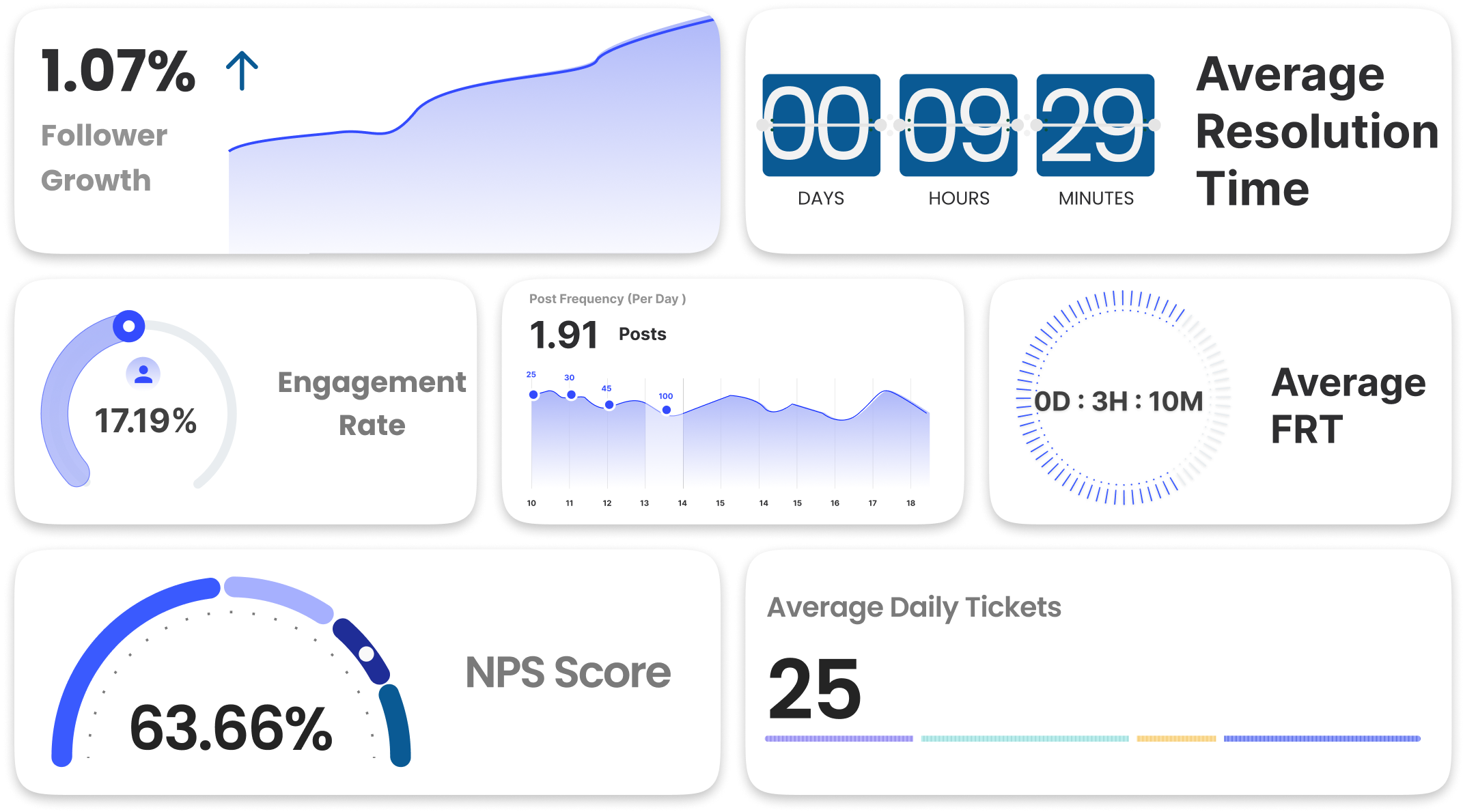
Hospitality is an industry where experiences define reputation—and September’s data tells a story of strength. Engagement is remarkably high at 17.19%, reflecting that guests aren’t just consuming services, but actively sharing feedback, reviews, and stories. More importantly, sentiment is overwhelmingly positive, with an NPS of 63.66%, one of the highest across all sectors.
What stands out is the balance: while ticket volumes are modest (just 25 per day), service teams are performing strongly with a 3-hour FRT and 9.5-hour resolution time. Guests are being acknowledged quickly and seeing their concerns resolved within the same day—an operational rhythm that reinforces trust and amplifies positive word of mouth.
KPI Snapshot
|
KPI |
Value |
|
Follower Growth |
1.07% |
|
Engagement Rate |
17.19% |
|
Post Frequency (per day) |
1.91 |
|
First Response Time (FRT) |
3 hours, 10 minutes |
|
Average Resolution Time |
9 hours, 29 minutes |
|
Net Promoter Score (NPS) |
63.66% |
|
Average Daily Tickets |
25 |
CXM Diagnosis: What the Data Tells Us
Hospitality brands are winning on all fronts: strong engagement shows that customers are emotionally invested, while high NPS proves that experiences exceed expectations. With low ticket volumes, service teams have the capacity to respond personally, which is reflected in the 3-hour FRT.
The same-day resolution cycle (under 10 hours) is especially impactful in hospitality, where a delayed response can turn a pleasant stay into a lasting grievance. Instead, brands are delivering fast, empathetic fixes—whether for booking issues, in-stay requests, or post-visit feedback. This is why the sector enjoys some of the most loyal advocates among industries.
What’s Driving Customer Frustration or Sentiment
- Occasional lapses in check-in/check-out efficiency.
- Complaints about inconsistent service standards across properties.
- Delays in responding to booking modification requests.
- Positive: high praise for staff hospitality, personalized service, and quick issue resolution.
- Positive: strong buzz generated by seasonal campaigns, events, and loyalty programs.
CX Priorities for October
- Maintain momentum: Preserve the quick response and resolution rhythm even as volumes fluctuate seasonally.
- Standardize service excellence: Ensure consistent quality across all properties and touchpoints.
- Enhance loyalty engagement: Use high NPS momentum to deepen rewards and retention campaigns.
- Proactive guest care: Anticipate common needs (check-in, transport, dining) and address them before guests reach out.
- Spotlight advocates: Amplify positive stories and guest experiences to reinforce brand reputation.
Final Word
Hospitality lives and dies by moments, and in September, the industry turned moments into memories. With strong engagement, fast service, and a stellar NPS, this sector sets the benchmark for how CX can become a growth engine. The opportunity ahead lies in scaling this excellence—ensuring that every guest, at every property, enjoys the same level of care and delight.
Telecommunications (Telecom) Industry Monthly CXM Report: September 2025
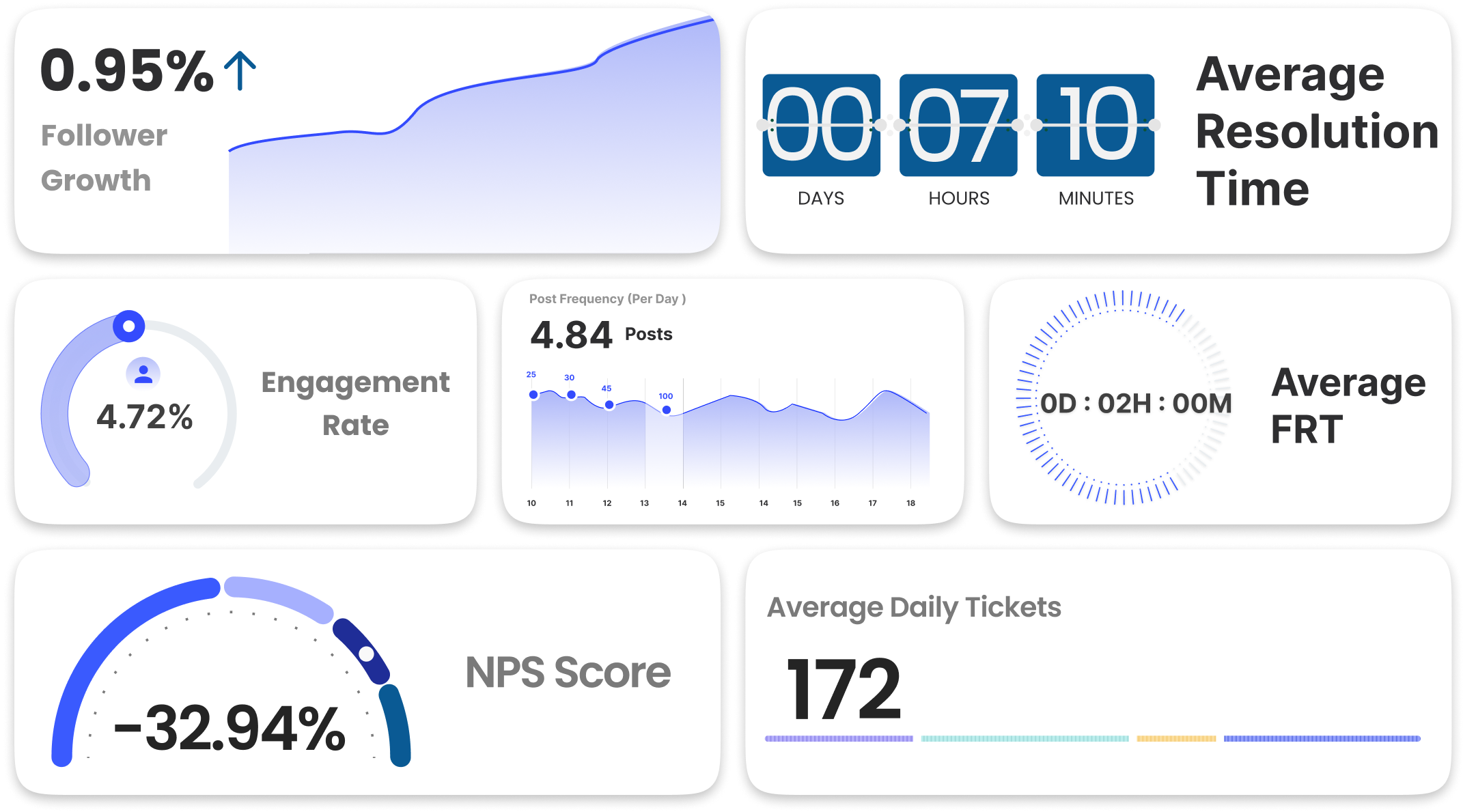
Telecom remains one of the toughest industries for CX. Customers expect reliability as a baseline, and any disruption sparks immediate frustration. September’s benchmarks reflect this reality: while FRT is fast at just 2 hours and resolution times are competitive at 7 hours, 10 minutes, sentiment remains deeply negative, with an NPS of -32.94%.
Follower growth is slow at 0.95%, and engagement is modest at 4.72%, showing that customers interact mainly to flag issues rather than celebrate service. Despite strong operational metrics on speed, the perception gap remains—the sector struggles not because it fails to respond, but because customers feel the quality of solutions doesn’t match their expectations.
KPI Snapshot
|
KPI |
Value |
|
Follower Growth |
0.95% |
|
Engagement Rate |
4.72% |
|
Post Frequency (per day) |
4.84 |
|
First Response Time (FRT) |
2 hours, 0 minutes |
|
Average Resolution Time |
7 hours, 10 minutes |
|
Net Promoter Score (NPS) |
-32.94% |
|
Average Daily Tickets |
172 |
CXM Diagnosis: What the Data Tells Us
Operationally, telecom service teams are performing well. A 2-hour FRT is among the fastest across industries, and same-day resolutions position the sector as efficient. Yet these numbers don’t translate into loyalty. The negative NPS signals that customers perceive responses as transactional rather than empathetic, and that issues—once resolved—often reoccur.
With 172 daily tickets, volumes are high but manageable. The real challenge is improving the quality of service outcomes. Customers don’t just want acknowledgment and speed; they want reassurance that problems won’t resurface, whether it’s billing disputes, network outages, or plan confusion.
What’s Driving Customer Frustration or Sentiment
- Recurring billing errors or unclear charges.
- Network coverage complaints, especially during peak hours.
- Poor clarity around bundled plans, roaming, and promotions.
- Frustration with repeated escalations when problems persist.
- Positive: appreciation for fast acknowledgment and occasional proactive outage updates.
CX Priorities for October
- Shift from speed to quality: Ensure faster responses are paired with durable solutions.
- Improve billing transparency: Simplify charges and proactively clarify common disputes.
- Enhance outage management: Provide clear, real-time updates during service disruptions.
- Invest in empathy training: Move away from script-based replies to human, context-aware communication.
- Use NPS feedback loops: Actively re-engage detractors to prevent churn.
Final Word
Telecom customers judge service not by how quickly brands respond, but by how reliably issues stay fixed. September’s benchmarks show speed is in place, but sentiment is still eroded by repeat frustrations and lack of clarity. The next step is to pair operational efficiency with empathy and trust-building solutions that keep customers connected—and confident.
Electronics Industry Monthly CXM Report: September 2025

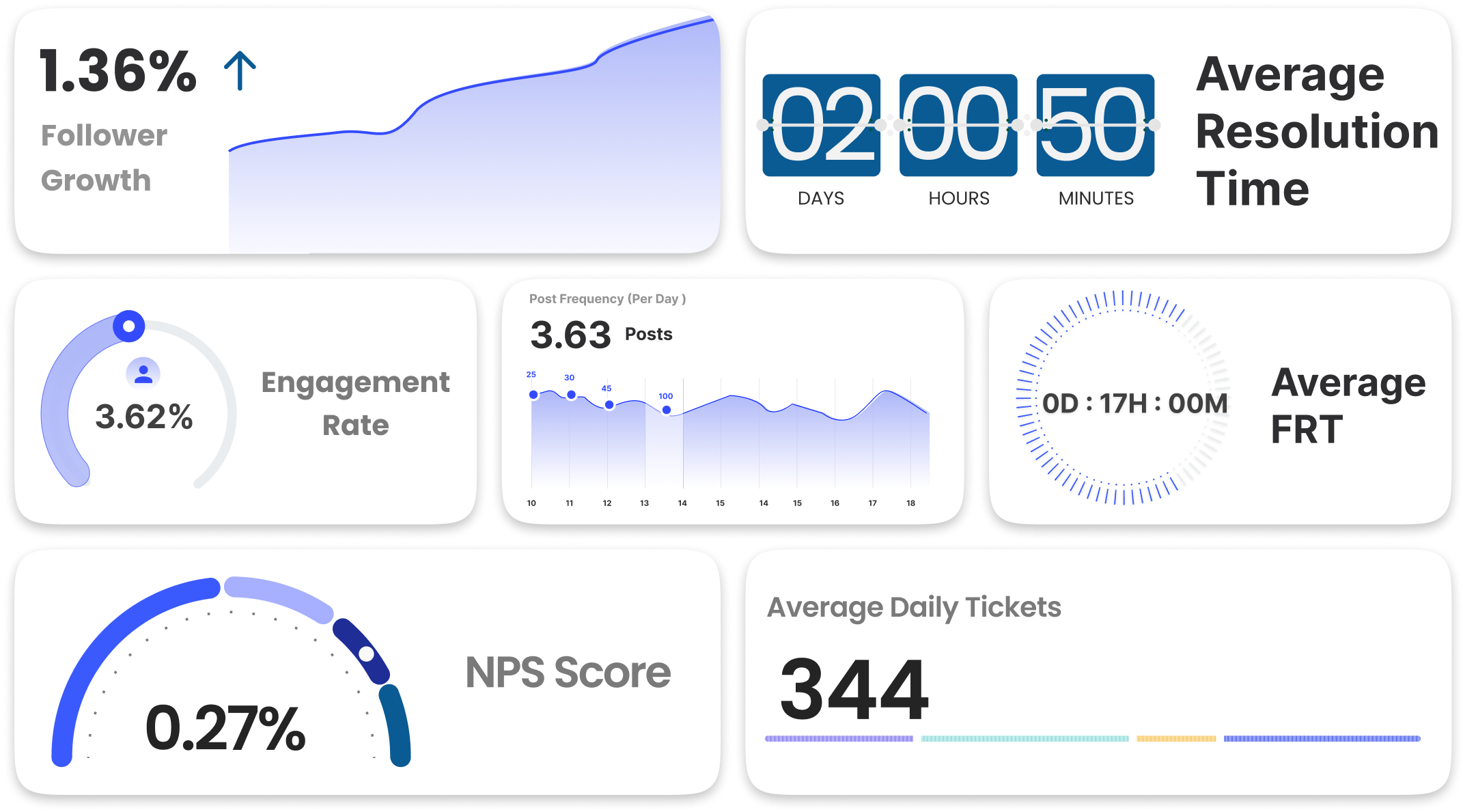
The electronic accessories sector operates in a competitive, fast-evolving landscape where customers expect affordable products and dependable support. September’s benchmarks highlight a challenging month: while brands remain active with 3.63 posts per day and steady 1.36% follower growth, engagement is modest at 3.62%, suggesting customers interact mainly when service is required.
The biggest red flag is service speed. A 17-hour FRT combined with resolution times averaging just over 2 days is far below customer expectations for relatively low-complexity products. This explains why sentiment is fragile, with an NPS of 0.27%—neither strongly positive nor negative, but indicating that trust could easily tip in the wrong direction if service gaps persist.
KPI Snapshot
|
KPI |
Value |
|
Follower Growth |
1.36% |
|
Engagement Rate |
3.62% |
|
Post Frequency (per day) |
3.63 |
|
First Response Time (FRT) |
17 hours, 0 minutes |
|
Average Resolution Time |
2 days, 0 hours, 50 minutes |
|
Net Promoter Score (NPS) |
0.27% |
|
Average Daily Tickets |
344 |
CXM Diagnosis: What the Data Tells Us
Ticket volume is relatively high at 344 per day, reflecting both the popularity of accessories and the frequency of issues around durability, compatibility, or after-sales service. Yet the sector’s processes aren’t keeping pace. A delayed 17-hour FRT sets the wrong tone, and a 2-day resolution cycle leaves customers waiting far too long for what are often straightforward fixes or replacements.
The near-neutral NPS tells us that experiences are inconsistent—some customers walk away satisfied, others disillusioned. This inconsistency erodes loyalty in a category where switching costs are low and competition is abundant.
What’s Driving Customer Frustration or Sentiment
- Long waits for acknowledgment of warranty or replacement requests.
- Prolonged resolution timelines for basic issues like faulty units or missing parts.
- Confusion around compatibility with devices (phones, laptops, etc.).
- Lack of proactive updates once tickets are logged.
- Positive: customers appreciate affordability, design variety, and quick fixes when delivered smoothly.
CX Priorities for October
- Cut FRT significantly: Reduce from 17 hours to under 3 hours to build immediate confidence.
- Streamline returns/replacements: Simplify processes so customers don’t wait days for routine resolutions.
- Clarify compatibility: Provide clear guides and proactive FAQs to prevent repetitive queries.
- Boost proactive communication: Keep customers updated throughout the resolution process.
- Stabilize NPS: Focus on consistent experiences that move sentiment from neutral to strongly positive.
Final Word
Electronic accessories are often small-ticket items, but the CX impact is anything but small. September’s benchmarks reveal a sector that risks losing loyalty through slow service in a highly competitive market. The brands that succeed will be those that combine affordability with speed—acknowledging quickly, resolving simply, and building trust one accessory at a time.
Gaming Industry Monthly CXM Report: September 2025

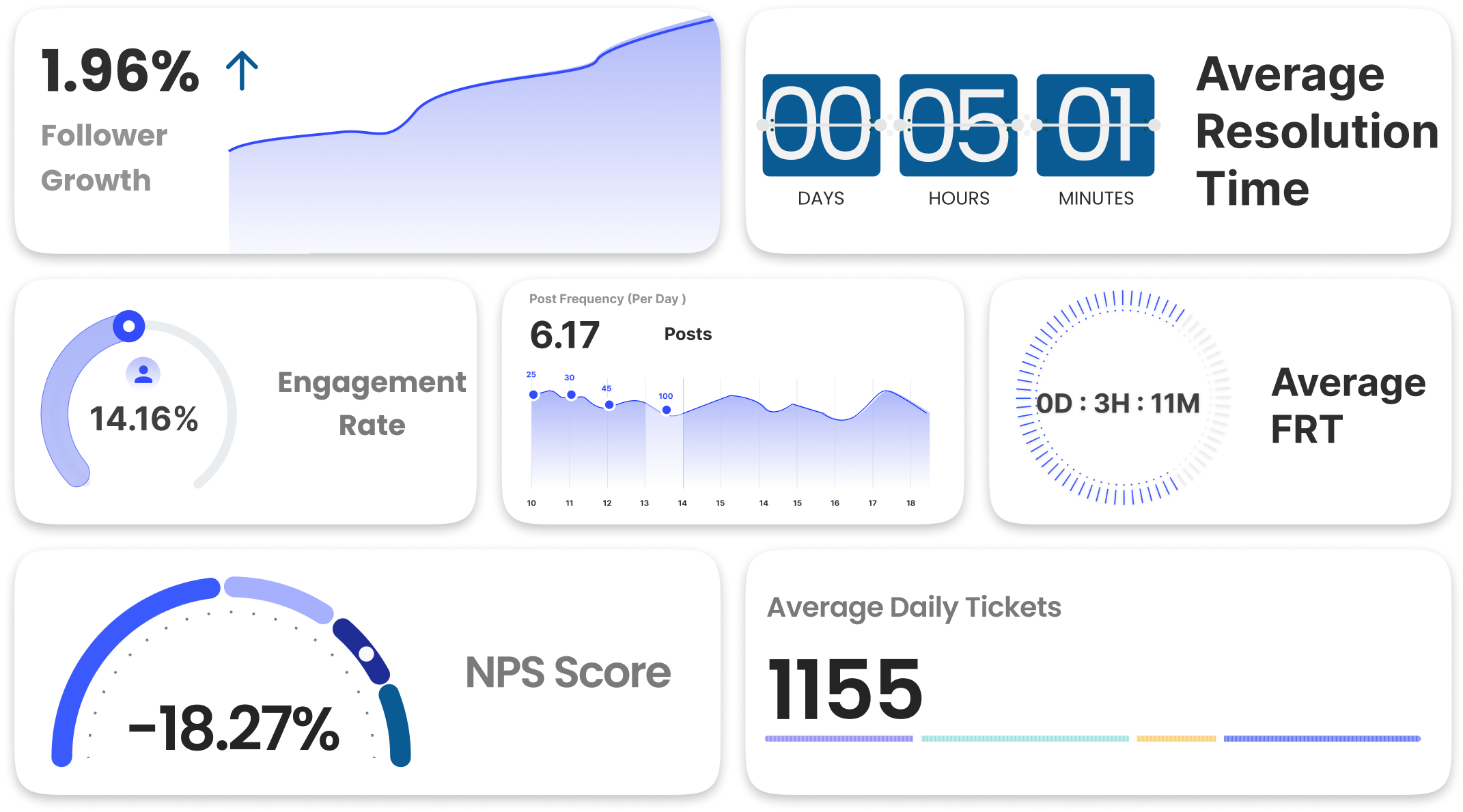
Gaming continues to be one of the most high-intensity CX sectors—fast-moving, highly engaged, and unforgiving when expectations aren’t met. September’s numbers underline this reality: engagement is among the highest across industries at 14.16%, and daily ticket volumes soar past 1,100, showing just how vocal and invested gamers are in their experiences.
The strength here is speed. With a 3-hour FRT and 5-hour resolution time, gaming brands are among the quickest in responding and closing tickets. Yet sentiment remains negative, with an NPS of -18.27%, signaling that speed alone isn’t enough. Players care about accuracy, empathy, and fairness as much as timing—and gaps in those areas continue to hurt trust.
KPI Snapshot
|
KPI |
Value |
|
Follower Growth |
1.96% |
|
Engagement Rate |
14.16% |
|
Post Frequency (per day) |
6.17 |
|
First Response Time (FRT) |
3 hours, 11 minutes |
|
Average Resolution Time |
5 hours, 1 minute |
|
Net Promoter Score (NPS) |
-18.27% |
|
Average Daily Tickets |
1,155 |
CXM Diagnosis: What the Data Tells Us
Gaming thrives on community, and the 14.16% engagement rate shows fans are deeply involved—not just consuming content but actively interacting with brands. Ticket volume of 1,155 per day reflects the sector’s scale, but also its volatility: every bug, outage, or perceived imbalance becomes a flashpoint for feedback.
Service speed is a bright spot. With average resolution times just over 5 hours, gaming CX teams are delivering faster turnarounds than almost any other industry. However, the negative NPS reveals that players still leave interactions dissatisfied. Why? Because resolution doesn’t always equate to fairness or empathy. A fast “no” or generic reply does little to ease frustration when players feel unheard.
What’s Driving Customer Frustration or Sentiment
- Server outages, lag issues, and patch-related instability.
- Perceived unfairness in monetization models (loot boxes, microtransactions).
- Account bans or access issues with little clarity.
- Escalation fatigue when problems resurface after quick fixes.
- Positive: strong appreciation for developer transparency, community events, and timely content updates.
CX Priorities for October
- Pair speed with empathy: Ensure fast responses are also personalized and context-driven.
- Improve transparency: Communicate openly about outages, delays, and balance changes before frustration spikes.
- Address monetization concerns: Provide clarity and fairness in pricing models to reduce long-term dissatisfaction.
- Invest in proactive care: Use monitoring to identify and fix widespread issues before ticket volumes surge.
- Nurture community advocates: Highlight player stories, reward loyal fans, and amplify positive engagement to balance negativity.
Final Word
In gaming, speed is expected—it’s table stakes. What separates winners from laggards is how well they combine responsiveness with fairness and empathy. September’s numbers show an industry that’s fast but still fragile. The brands that thrive will be those who don’t just fix issues quickly, but who also make players feel genuinely valued in every interaction.
Over-The-Top (OTT) Platform Industry Monthly CXM Report: April 2025
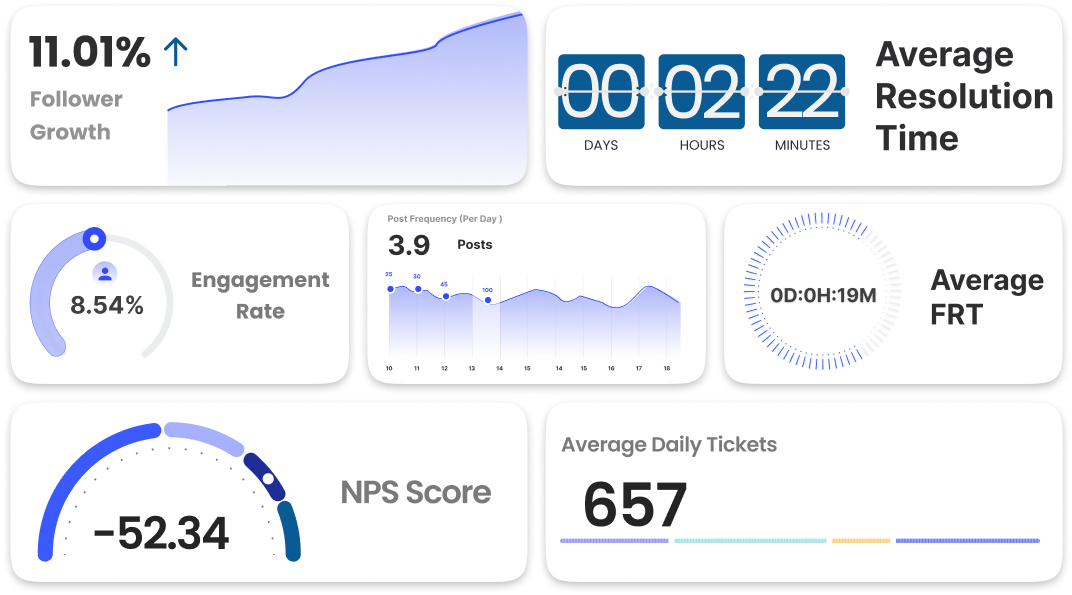
April 2025 showcased the paradox of digital entertainment: massive engagement, rapid growth, and yet a deepening challenge with customer sentiment. OTT platforms continue to dominate user attention spans, but delivering seamless, always-on experiences across millions of screens has never been more demanding. While operational metrics like response and resolution times are impressive, the low NPS reveals an urgent need for better customer experience design.
Digital Engagement and Growth Metrics
- Follower Growth: 11.01%
The OTT industry continues its steep digital ascent. With more users subscribing and following across social platforms, brands must be prepared to handle higher volumes of interaction—not just in content promotion but in real-time customer support. - Engagement Rate: 8.54%
Strong engagement underscores audience interest in show announcements, trailers, cast interactions, and meme-worthy moments. However, rising engagement also acts as a double-edged sword—exposing service issues, pricing dissatisfaction, and content criticisms in equal measure. - Post Frequency: 3.90 per day
A high publishing cadence keeps OTT brands top-of-mind. The opportunity here is to strike a balance between promotional posts and service-oriented communication that addresses user concerns (e.g., outage clarifications, subscription guides, and content navigation tips).
Customer Service Performance
- Average First Response Time (FRT): 19 minutes
Exceptionally fast. Most OTT platforms have mastered real-time triaging using automation, which sets a high industry benchmark for others. Maintaining this pace during peak traffic moments (e.g., premiere weekends or outages) will be crucial. - Average Resolution Time: 2 hours, 22 minutes
A stellar resolution time, especially considering the scale. However, resolving quickly is not always equivalent to resolving well. Negative sentiment suggests that many users still leave these interactions unsatisfied. - Net Promoter Score (NPS): -52.34
A deeply concerning figure. While users flock to OTT platforms for entertainment, loyalty suffers due to pricing confusion, poor content recommendations, login or playback issues, and generic support responses. The emotional connection is shallow, and frustration escalates quickly. - Average Daily Tickets: 657
A high volume reflective of the low barrier to customer outreach. Platforms must not only scale efficiently but ensure that responses are empathetic and personalized—not just fast.
Strategic Recommendations for May 2025
- Rebuild Trust Through Personalization
Negative NPS often stems from users feeling unheard or underserved. Start by refining content recommendation algorithms, offering more control over profiles and billing, and personalizing support interactions beyond templated replies. - Use Social Listening to Pre-Empt Escalations
Customer complaints rarely start as tickets. By proactively monitoring social buzz around playback glitches, price hikes, or unpopular UI changes, platforms can get ahead of discontent and win back goodwill. - Balance Automation With Human Touch
While response speed is a win, low NPS suggests a disconnect. Introduce hybrid resolution flows—use bots for basics but escalate billing, access, and account complaints to trained agents. - Invest in Clearer Communication
Many users are confused by pricing tiers, trial cut-offs, and regional availability of content. Clear in-app guides, billing breakdowns, and proactive notifications can resolve friction before it becomes anger.
Looking Ahead to May 2025
The OTT industry doesn’t lack attention—it commands it. But attention isn’t loyalty. CX leaders in this space must move beyond vanity metrics and focus on delivering consistent, transparent, and emotionally intelligent service. Because in a world where switching platforms takes seconds, experience is the only long-term differentiator.
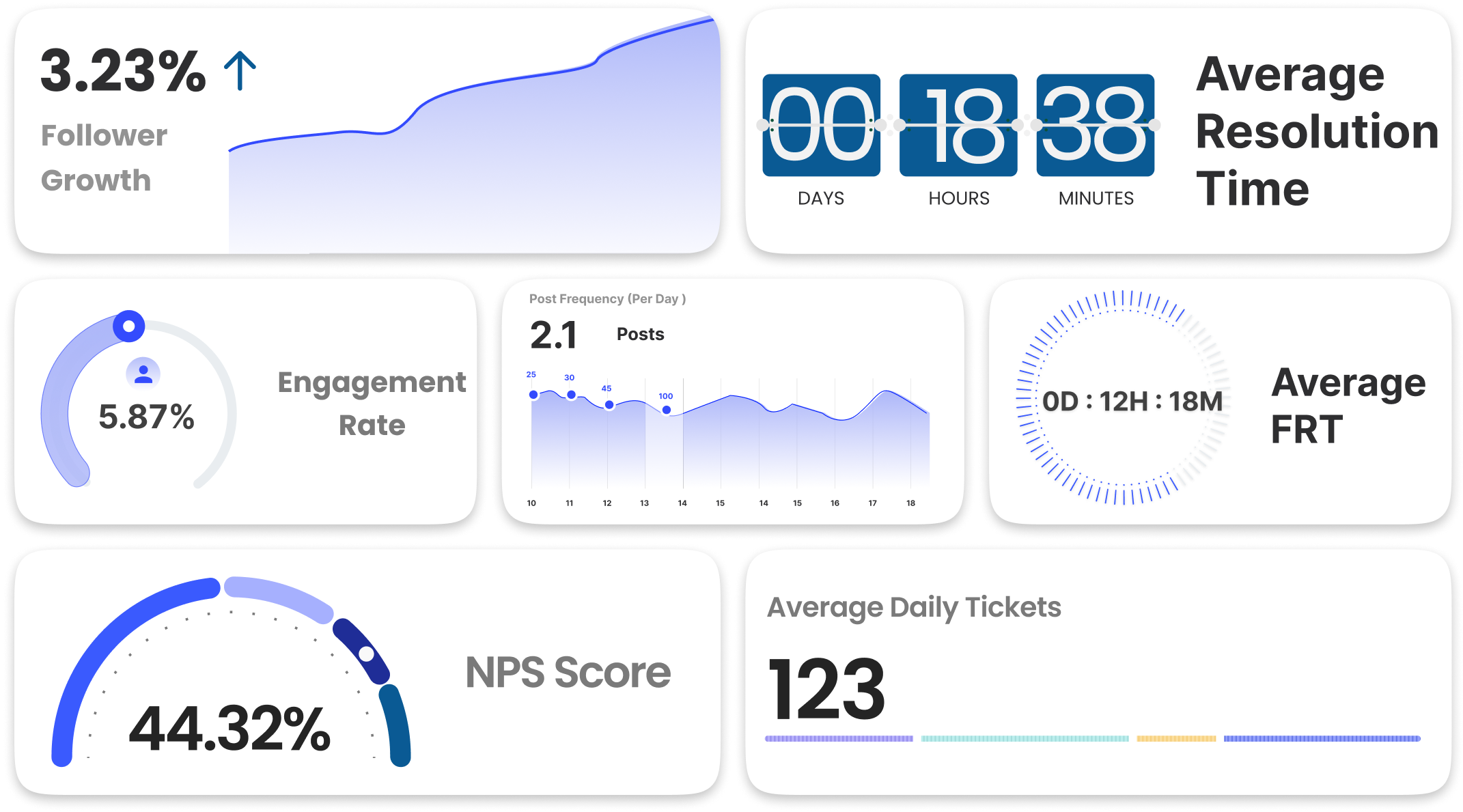
Manufacturing Industry Monthly CXM Report: September 2025

Manufacturing sits at the intersection of B2B partnerships, supply chains, and end-customer expectations. September’s benchmarks show a sector that is building trust effectively, with a positive NPS of 44.32%, one of the strongest across industries. Engagement is moderate at 5.87%, reflecting a sector where conversations are less about consumer buzz and more about reliability, performance, and problem-solving.
Service metrics, however, reveal room for improvement. An FRT of 12+ hours suggests customers wait half a day before acknowledgment, while average resolution times of nearly 19 hours indicate delays in delivering outcomes. These gaps are not catastrophic, but they risk straining relationships in an industry where every delay can ripple across supply chains.
KPI Snapshot
|
KPI |
Value |
|
Follower Growth |
3.23% |
|
Engagement Rate |
5.87% |
|
Post Frequency (per day) |
2.10 |
|
First Response Time (FRT) |
12 hours, 18 minutes |
|
Average Resolution Time |
18 hours, 38 minutes |
|
Net Promoter Score (NPS) |
44.32% |
|
Average Daily Tickets |
123 |
CXM Diagnosis: What the Data Tells Us
With 3.23% follower growth, manufacturing brands are attracting attention at a steady pace. Engagement sits at a healthy mid-level, showing that stakeholders are interacting but not at the intensity of more consumer-facing sectors.
The high NPS score is a standout—it signals strong satisfaction and advocacy once issues are resolved. Still, the service speed metrics show that interactions could feel sluggish, especially for time-sensitive concerns like equipment support or delivery schedules. With 123 daily tickets, the volume is manageable, meaning the delays are more about process inefficiencies than capacity.
What’s Driving Customer Frustration or Sentiment
- Long acknowledgment delays for urgent technical or service issues.
- Bottlenecks in resolving supply chain or delivery-related concerns.
- Perceived lack of proactive communication during disruptions.
- Complex escalation for warranty or after-sales support.
- Positive: customers praise transparency in service communication and product reliability when issues are addressed.
CX Priorities for October
- Accelerate FRT: Bring acknowledgment down from 12+ hours to under 3 hours to reassure partners quickly.
- Shorten resolution cycles: Aim for sub-12-hour resolutions by streamlining internal workflows.
- Strengthen proactive updates: Provide real-time alerts on delays, disruptions, or service changes.
- Empower frontline teams: Equip service agents with authority and tools to resolve without multiple handoffs.
- Leverage strong NPS: Turn satisfied customers into advocates by highlighting testimonials and case studies.
Final Word
In manufacturing, reliability is reputation. September’s benchmarks reveal a sector with strong customer trust but lagging responsiveness. The opportunity now is to match positive sentiment with faster, more proactive service. Those who close the speed gap will not only protect trust but also strengthen their role as indispensable partners in the value chain.